
Recurring alarms, controller communication loss and interface failures can be reviewed against the exact operating condition.
GEEKVALUE Semiconductor Equipment Repair
Semiconductor Equipment Repair
Repair support for semiconductor equipment with machine failures, recurring alarms, unstable operation and production interruptions.
Send the model, alarm, symptoms and available photos or video. Our two-shift online team can begin remote troubleshooting before complete-machine shipment is considered.
For the wider repair, parts and replacement service path, visit semiconductor repair services.
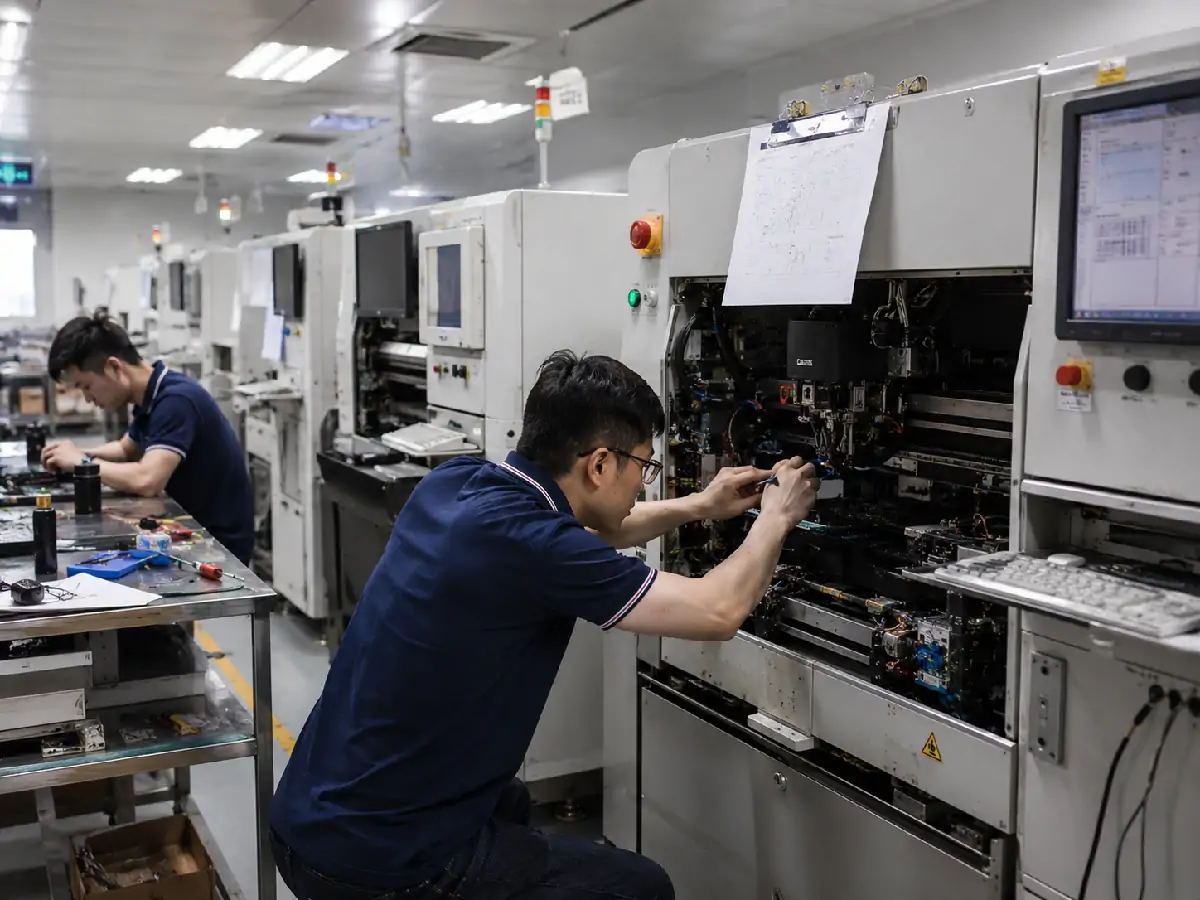
Two-Shift Online Support
Start with the fault, not a guessed part.
Remote review can narrow the affected function before a machine or removable assembly is moved.
Machine down or unstable
Semiconductor Equipment Fault Diagnosis and Repair
When a semiconductor machine stops, the first risk is losing more time to the wrong repair direction. An alarm may point toward one system while the actual failure remains elsewhere in the machine.
The first review should establish what can be checked remotely, whether the fault has narrowed to a component, and whether on-site work, parts support or replacement equipment should be prepared.
Axis, motor, drive, positioning and material-handling symptoms are narrowed before a mechanical or electrical part is blamed.
Unstable vacuum, temperature control, power supply or process conditions require the affected system to be isolated first.
Camera, lighting, recognition and faults that appear only under certain cycles need operating context as well as an alarm record.
Two-shift online review
Remote Equipment Troubleshooting
Repeated alarms, abnormal motion, communication faults, intermittent failures or a function that no longer runs reliably can enter review without waiting to ship the complete machine.
Useful starting information identifies the equipment, shows the symptom and explains when the fault appears. The customer then receives a clearer fault direction and the next useful check.
A clear description of when the fault appears is often more useful than replacing a suspected component before the affected system has been narrowed.
01
Machine Identity
Brand, model, configuration, and nameplate information when available.
02
Fault Evidence
Alarm information, HMI screen, photos, and a short video when useful.
03
Operating Context
Note what the machine was doing, when the problem began, and whether the fault repeats under the same condition.
04
Suspected Assembly, If Known
If a board, controller, drive, motor, power supply, or other assembly is already suspected, include its label or part number.
Fault isolation
Machine-Level Fault Isolation
A machine alarm or production symptom does not automatically identify the failed component. The useful path is to connect the symptom to the affected function, narrow the problem to a system, and only then decide which assembly needs attention.
Observed SymptomStart with what is actually happening: an alarm, abnormal motion, unstable handling, failed process action, communication fault, or loss of performance.
Affected FunctionCompare when the problem appears with the machine action or process stage that stops behaving normally.
Likely SystemNarrow the evidence toward motion, control, power, sensing, communication, handling, process, or another affected system.
Failed AssemblyWhen the evidence supports it, isolate the board, drive, controller, motor, power supply, module, or other assembly that should move into repair.
The goal is to avoid replacing the wrong component or moving more equipment than the repair actually requires.
Equipment scope
Semiconductor Equipment We Support
Repair support is reviewed against the exact brand, model, installed configuration, condition and reported problem. Mature platforms are included when the available repair, parts and equipment resources still support a practical production result.
Wafer ProcessingWafer preparation, grinding, mounting, dicing, cleaning, and related process equipment.
Assembly & BondingDie bonding, wire bonding, flip chip bonding, and related semiconductor assembly equipment.
Test & HandlingProbe stations, testers, test handlers, sorting, and related device-handling equipment.
Packaging & BackendMolding, trim and form, electroplating, marking, and other backend equipment.
Component repair
Machine Fault or Component Failure?
A machine-level fault does not always mean the complete semiconductor machine needs to be moved or repaired as one unit.
If troubleshooting points to a board, controller, drive, power supply, motor, module, or another removable assembly, the project can move directly to component-level repair or parts support.
Machine Stays On SiteThe complete equipment does not automatically need to move internationally when the fault has been narrowed to one removable assembly.
Failed Assembly IdentifiedThe identified board, drive, controller, power supply, motor, or module becomes the focus of repair and parts evaluation.
Move to Parts RepairOnce the failed component is known, the project can leave machine-level troubleshooting and focus on that assembly.Open Semiconductor Parts Repair →
Repair result and field support
Equipment Repair Testing and Support
Repair confidence comes from checking the function connected to the original fault. The available test, evidence, report and warranty scope should be agreed for the actual machine before work proceeds.
Remote review remains the first step for overseas projects. Selected locations and suitable projects may move to on-site technical support; our service experience includes equipment repair support delivered in Malaysia.
Reported FaultKeep the original alarm, symptom and affected function tied to the repair result.
Available TestConfirm whether functional checks, machine-level verification or another test method is available.
Result EvidenceAgree which photos, video, records or report can be supplied for the work performed.
Field SupportDiscuss on-site work only after the fault, location, access and project conditions have been reviewed.
Replacement equipment
Replacement Equipment Options
If repeated faults, parts delays or changing production requirements make another machine more practical, compare current equipment as part of the repair-or-replace decision.
Replacement still needs a machine-level match.
Availability, configuration and production fit must be confirmed before any listed machine is treated as a practical alternative.
Availability, configuration and production fit must be confirmed before any listed machine is treated as a practical alternative.
- Compare the replacement against the actual production task.
- Review available configuration and installed options.
- Separate platform specifications from current machine condition.
- Coordinate equipment sourcing with parts and remote technical support.
Popular Semiconductor Equipment
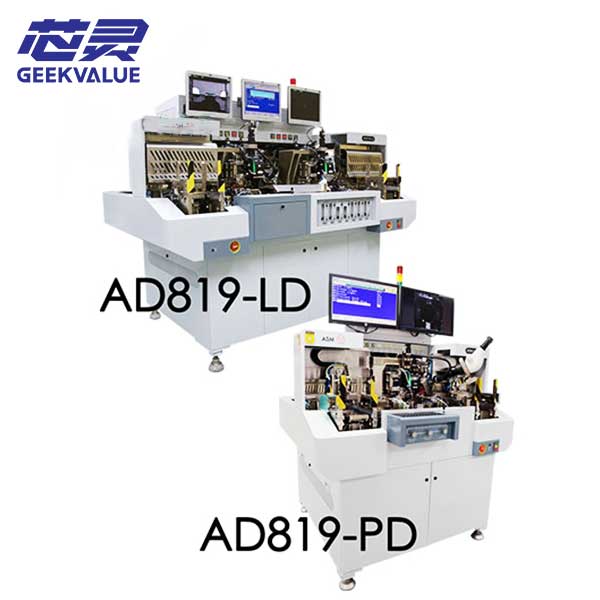
ASM die bonder AD819
ASM die bonder AD819 is an advanced semiconductor packaging equipment used to accurately place chips on substr...
View equipment
ASM Die Bonder machine AD800
ASM AD800 is a high performance fully automatic die bonder with many advanced functions and features
View equipmentThe equipment list supports the repair-or-replace decision. Compare the actual process, configuration, condition and production requirement before treating another machine as a suitable replacement.
Browse Semiconductor EquipmentCommon questions
Semiconductor Equipment Repair FAQ
The machine model, alarm message, symptoms, HMI or screen photos, recent changes in operation, and a short video when useful provide a good starting point for troubleshooting.
Usually not as the first step. Overseas projects can begin with remote review. If the problem is later traced to a removable component, that part may be handled separately.
Some faults can be narrowed using alarm information, machine context, photos, video, and customer-side observations. Physical inspection or measurements may still be required for some problems.
If a specific removable component is identified, the project can move to component-level repair, parts sourcing, or replacement review rather than treating the complete machine as the repair object.
Depending on the equipment and available resources, the route may include repairing the original component, sourcing another suitable part after compatibility is confirmed, or considering a wider equipment solution.
Often, but the machine, failed system, repairable components and available parts need to support a practical result. Continued repair should also make sense for the production line.
The available check follows the original fault and affected function. Functional testing, machine-level verification, photos, records and report scope are confirmed for the specific project.
It may be available for selected locations and suitable projects after the fault, machine, access and site conditions are reviewed. Remote troubleshooting remains the normal first step.
Start an Equipment Fault Review
Share the machine model, alarm or symptom and the information already available. Our online team can begin narrowing the affected system and identify whether troubleshooting, component repair, field support or replacement deserves attention.