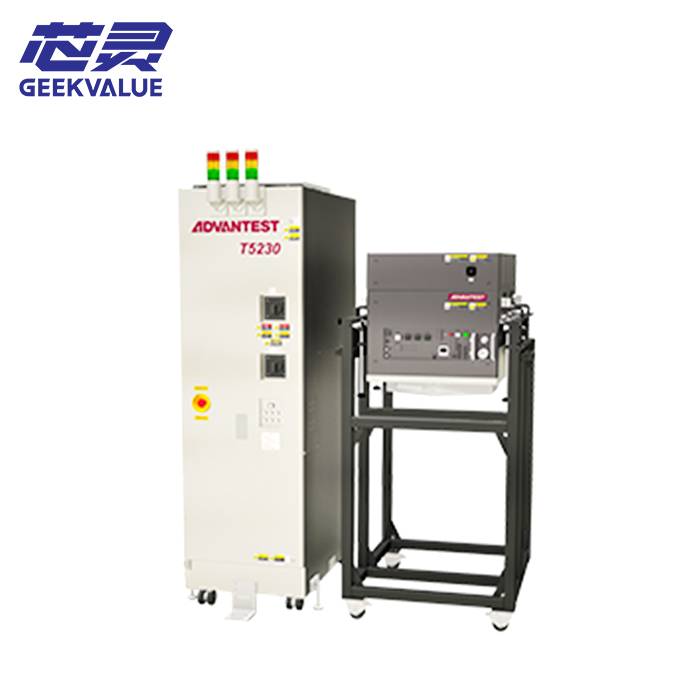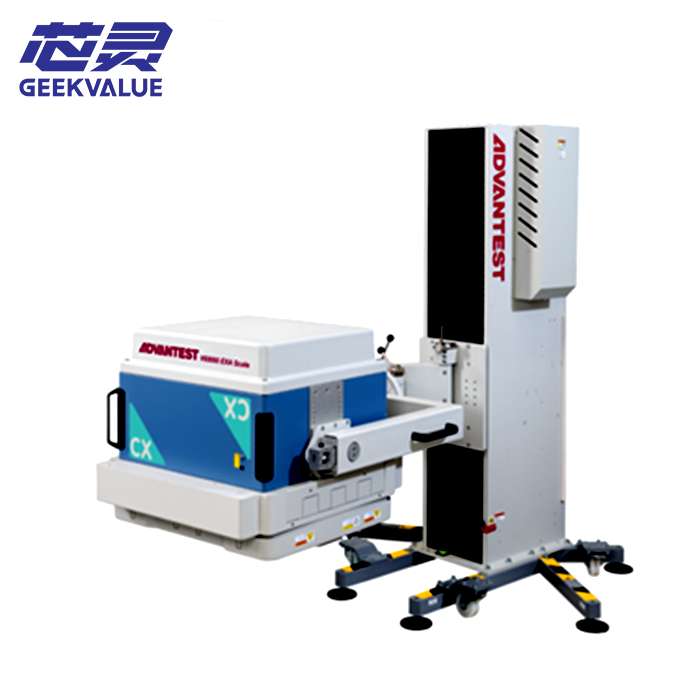
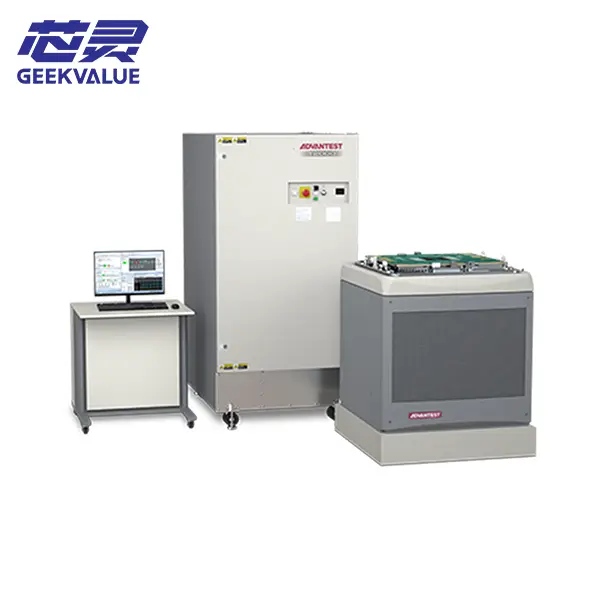
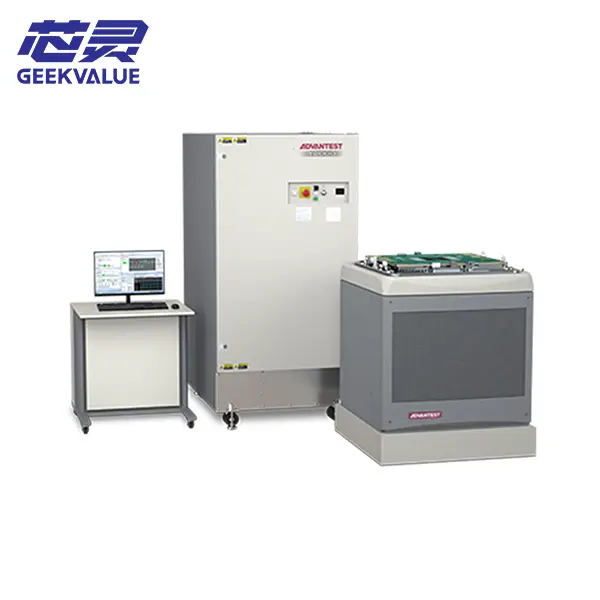
 The Advantest T2000 is a versatile SoC (System-on-Chip) test platform renowned within the industry for its exceptional flexibility, highly efficient parallel testing capabilities, and robust analog/mixed-signal testing functions. Since its introduction in 2003, the platform has established itself as a mainstream fixture in the global ATE (Automated Test Equipment) market, enjoying particular prestige in the fields of analog and mixed-signal testing. Its core design philosophy centers on addressing the challenges associated with "low-volume, high-mix" chip testing, utilizing a modular architecture to accommodate a wide spectrum of diverse testing requirements.
The following section provides a comprehensive overview of the T2000 test system. To facilitate rapid comprehension of key information, I have summarized the essential details in the concise reference table below:
**Core Features** | **Detailed Description**
**Device Type** | SoC (System-on-Chip) / Analog & Mixed-Signal Automated Test System (ATE)
**Core Architecture** | Modular and scalable; configurations range from 13-slot air-cooled systems to 52-slot liquid-cooled systems, supporting up to 8,192 digital channels.
**Key Application Areas** | Graphics Processors, Microcontrollers (MCU), RF SoCs, Baseband Processors, Power Management ICs (PMIC), CMOS Image Sensors (CIS), Automotive Electronics (supporting high-voltage DC testing up to 320V), etc.
**Software Environment** | Windows Operating System + Rapid Development Kit (RDK) + System Software Emulator
**Core Advantages** | **Exceptional Flexibility:** Rapid reconfiguration is achieved simply by swapping modules, allowing the system to adapt to the specific testing requirements of various chip types.
**Powerful Parallel Testing Capabilities:** Supports up to 8,192 digital channels, delivering a parallel test throughput that is more than double that of previous-generation models.
**Leading Development Efficiency:** Employs a unique "multi-client" architecture, enabling up to 8 users to perform independent development and debugging tasks simultaneously.
**Convenient Software Ecosystem:** A unified program development environment, combined with the RDK, significantly simplifies the process of developing and porting test programs. **Core Architecture: Modularity and Scalability**
The core essence of the T2000 system lies in its flexible, modular architecture. You can visualize it as a "Lego-style" system that allows for free-form assembly:
**On-Demand Configuration:** Depending on the specific type of chip under test, users can flexibly select and combine various modules—such as digital modules, high-performance analog modules, power/mixed-signal modules, or image acquisition modules—drawn from an extensive library of functional components. **Highly Scalable:** The system's scale can range from a minimum configuration of a 13-slot air-cooled system (typically used for R&D or small-batch production) to a maximum configuration of a 52-slot liquid-cooled system (custom-tailored for high-performance, mass production environments).
**Target Applications: Beyond the SoC Realm**
The T2000’s application scope is extensive, encompassing everything from consumer electronics to automotive electronics. Specifically, it primarily addresses testing requirements across the following major categories:
**Core SoC Testing:** Including GPUs, MCUs, RF SoCs, baseband processors, and similar devices.
**Power Management IC (PMIC) Testing:** The T2000 is equipped with a dedicated IPS (Integrated Power Device Test) solution, designed specifically for the high-performance, high-throughput testing of automotive electronics and power management chips. The system supports high-voltage DC testing for automotive devices—reaching voltages of up to 320V—thereby meeting today's most stringent testing standards.
**CMOS Image Sensor (CIS) Testing:** The T2000 offers a dedicated ISS (Image Sensor Solution) capable of simultaneously testing up to 64 devices equipped with MIPI C-PHY interfaces. It supports high-speed image acquisition rates of up to 1.2 Gbps and features high-resolution dual-bank image acquisition memory, along with an independent image processing engine dedicated to each test site.
**Specialized Interface Testing:** Leveraging dedicated modules such as the 8GDM (8 Gbps Digital Module), the system effectively addresses the testing challenges posed by ultra-high-speed interfaces.
**Performance and Productivity: Breakthrough Testing Efficiency**
The T2000 boasts several key technologies for enhancing testing efficiency:
Unparalleled Parallel Testing Capabilities: The T2000 offers industry-leading multi-site and parallel testing capabilities, crucial for reducing the cost of testing a single chip.
Highly Efficient Multi-Site Controller: Unlike conventional methods, the T2000's multi-site controller eliminates the additional communication overhead associated with parallel testing of multiple DUTs (Device Under Test), significantly reducing overall test time and achieving high throughput.
Concurrent Test Execution: The T2000 supports concurrent testing, seamlessly switching between sequential and parallel execution within a single test program, further shortening the testing time for complex chips.
Multi-Client Concurrent Development: Its unique architecture allows up to eight engineers to simultaneously log into a single test machine, independently developing and debugging test programs, significantly reducing time-to-market and saving engineering costs.
Software Ecosystem: Convenient Development Environment
Programming-Friendly: Based on the Windows operating system and Rapid Development Kit (RDK), it provides an environment for simplified coding, high code reusability, and rapid debugging.
Offline Development Support: Provides a system software simulator, enabling engineers to develop and debug test programs in advance without actual hardware.
Rich Debugging Tools: Built-in intuitive debugging tools such as waveform tools, Shmoo graphs, and a pattern editor simplify the diagnostic process.
Market Position and Milestones: Widely Recognized in the Industry
The T2000 has achieved widespread market recognition and significant milestones:
Milestone Achievement: The 1000th T2000 system has been delivered to leading global semiconductor manufacturers, including Xilinx.
Extensive Global Customer Base: With 55 unique global customers, deeply integrated into advanced semiconductor design and production lines.
Top Customer Preference: Toyota has adopted the T2000 platform for testing its IGBT power devices.
Industry Widespread Recognition: Viewed by a growing number of IDMs, fabless companies, and OSATs worldwide as a platform to ensure higher engineering productivity and efficiency.
Summary: T2000's Industry Positioning
Advanced Test Systems positions the T2000 and its flagship V93000 platform as a complementary strategic combination. In short, the T2000 targets the broad market of flexible, efficient, and mid-to-high-end products, while the V93000 specializes in testing ultra-large-scale, ultra-complex top-tier SoCs.
What it excels at: Processing chips with rich analog/mixed-signal processing, power management chips, image sensors, etc.
Its core value: With extremely high flexibility and modularity, it quickly adapts to changing products, and through leading parallel testing capabilities and a user-friendly software ecosystem, it effectively reduces testing costs while ensuring high quality, accelerating product time-to-market.
This is a comprehensive introduction to the T2000 testing system. Would you like to further understand its comparison with other platforms (such as...)