

An SMT line (Surface Mount Technology line) is a fully automated assembly system that places and solders electronic components onto PCBs. A modern SMT production line typically includes a solder paste printer, pick-and-place machine, reflow oven, AOI system, and conveyors — all synchronized for continuous operation. The SMT line is the foundation of today’s electronics manufacturing, powering smartphones, automotive electronics, and IoT devices with speed, precision, and efficiency.
In modern electronics manufacturing, an SMT line is the backbone of production, enabling:
High throughput – tens of thousands of components per hour
Precision assembly – accurate placement down to ±0.05 mm
Scalability – flexible from prototyping to mass production
Cost efficiency – reduced labor and faster cycle times
Without SMT lines, high-density products like smartphones, laptops, automotive ECUs, or 5G base stations could not be produced at scale.
What exactly is SMT Line
SMT technology is becoming increasingly popular in the electronics manufacturing industry—and for some good reasons.
In the past, the process of manufacturing electronic devices was long and complicated. Engineers and technicians had to manually insert component leads through drilled holes in the PCB and use wires to connect them. Any small mistake could mean reworking the entire board, which was time-consuming and expensive.
However, things have changed dramatically with the rise of Surface Mount Technology (SMT). Today, manufacturers can mount components directly onto the surface of PCBs without using wires or drilling holes. This advancement has made it possible to design and produce smaller, lighter, and more efficient electronic devices.
Just think about the gadgets we use every day—smartphones, tablets, smartwatches, even modern vehicles—all of them rely on SMT technology to achieve compactness, performance, and cost-effectiveness.
Compared with traditional through-hole assembly, SMT brings several clear advantages:
High component density
High reliability
Low manufacturing cost
Miniaturization of products
Smooth process automation
Thanks to SMT, the electronics industry has entered an era of precision and speed.
So yes, SMT technology is fascinating—but what exactly makes up an SMT line, sometimes called an SMT production line? How does it work, and which machines bring printed circuit boards (PCBs) to life through this process?
Let’s explore the structure and workflow of a modern SMT line to understand how these technologies come together to power today’s electronic innovations.
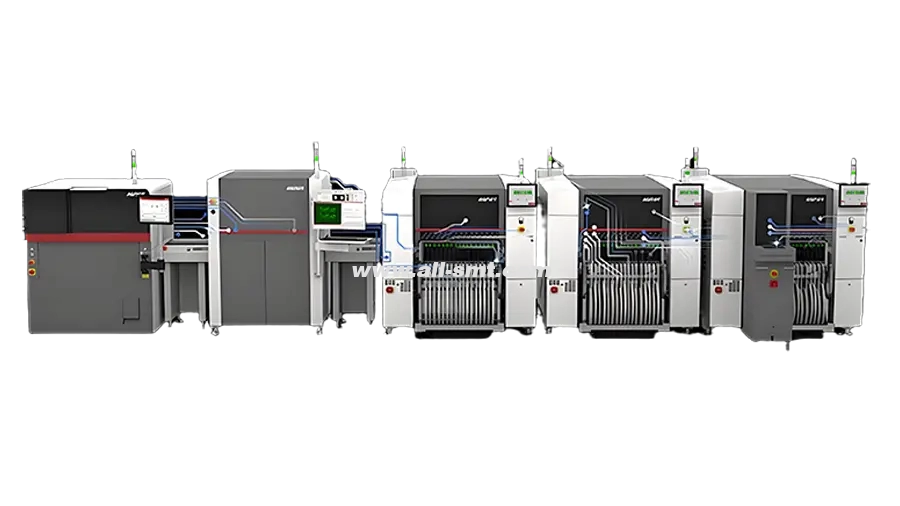
What Is an SMT Line and How Does It Work?
An SMT line is more than just a group of machines — it’s a complete automated production ecosystem. From stencil printing to reflow soldering, every step in the SMT production line is designed for high-speed, high-precision, and repeatable results. Understanding how an SMT line works helps engineers design efficient workflows and reduce production costs.
SMT Line Process and Workflow
DFM/DFA Check
Before the production team starts building a single board, they first need to validate the PCB design itself. This is done through a Design for Manufacturability (DFM) and Design for Assembly (DFA) check.
During this stage, the engineering team reviews all design documents—Gerber files, Bill of Materials (BoM), and centroid data—to make sure everything matches perfectly. They also verify crucial details such as:
Proper component spacing
Accurate footprints and pad dimensions
Clear polarity and orientation marks
The main goal here is to detect and eliminate any potential design errors before production begins. A well-executed DFM/DFA check prevents costly mistakes later in the SMT line and ensures the PCB can be assembled efficiently and correctly.
PCB Fabrication
Once the DFM/DFA verification is complete, the order moves into the PCB fabrication phase. At this point, the factory produces the bare board according to the confirmed design specifications.
The process involves several precise steps:
Material lamination – stacking and bonding PCB layers together
Drilling – creating holes for vias and through-connections
Copper etching or deposition – forming the electrical traces
Alongside the PCB fabrication, the solder paste stencil is also created—an essential tool for the printing process that follows.
Afterward, the production team applies surface finishing (such as HASL, ENIG, or OSP) and solder mask to protect copper layers, then prints the silkscreen for labeling and reference marks. These steps prepare the board for smooth, error-free component placement later in the SMT line.
Material Inspection (Incoming Quality Control)
When the bare boards are ready, the focus shifts to materials and electronic components. To ensure there are no delays in assembly, the procurement and fabrication teams coordinate closely so that all materials are available when needed.
Before any component enters storage, it must pass through the Incoming Quality Control (IQC) stage. The IQC team meticulously checks each part to guarantee it meets quality standards and functions as expected.
This inspection includes:
Sample operation testing to confirm functionality
Date code verification for traceability
Data entry into the component management system
Modern SMT facilities use advanced ERP or MES software that applies the FIFO (First In, First Out) principle. This ensures that older batches are used first, reducing the risk of component aging or degradation.
By enforcing strict material inspection and traceability at this stage, the SMT line maintains consistent quality and minimizes the chance of production defects down the line.
Main Machines in an SMT Line
A standard SMT line consists of several interconnected machines, each performing a specific task.
1. Solder Paste Printer
Uses a stencil to apply solder paste to PCB pads.
Paste volume accuracy directly affects solder joint quality.
2. Pick-and-Place Machine
Places SMDs (resistors, capacitors, ICs, BGAs) onto the board.
Leading brands: Fuji, Panasonic, ASM, Yamaha, JUKI, Samsung.
High-end machines exceed 100,000 CPH (components per hour).
3. Reflow Oven
Melts solder paste under controlled heating zones.
Can use convection, vapor phase, or nitrogen atmosphere for high-reliability assemblies.
4. AOI (Automated Optical Inspection)
Detects missing, misaligned, or tombstoned parts.
X-ray inspection is added for BGAs and QFNs.
5. Conveyors and Buffers
Ensure smooth PCB transfer between stages.
Buffers help balance speed differences between machines.
6. Optional Modules
SPI (Solder Paste Inspection) – before placement
Wave soldering – for mixed technology boards
Conformal coating machine – for high-reliability applications
Different Types of SMT Production Lines
SMT lines vary depending on production goals, budget, and product type.
High-Speed SMT Line
Designed for large-volume consumer electronics.
Multiple high-speed placement machines in parallel.
Flexible SMT Line
Balances speed and versatility.
Ideal for EMS providers handling many product types.
Prototype/Low-Volume SMT Line
Compact, cost-effective, and easy to reconfigure.
Often used in R&D or small batch runs.
Dual-Line Configuration
Two SMT lines connected to one reflow oven for efficiency.
Suitable for double-sided PCB assembly.
SMT Line Setup Guide (Step-by-Step)
Production Planning – Define PCB design, BOM, and process requirements.
Stencil Preparation – Ensure correct aperture size and paste thickness.
Machine Programming – Import pick-and-place coordinates, feeders setup.
Line Balancing – Match printer, placement, and reflow throughput.
Trial Run – Run test boards, check alignment, solder quality.
Full Production – Optimize for yield and cycle time.
Key Considerations in Designing an SMT Line
Throughput requirements (CPH vs. lot size).
Component types (fine-pitch BGAs, 01005 passives, large connectors).
Budget – machine cost vs. ROI.
Factory layout – space, power, HVAC, ESD control.
Quality standards – IPC-A-610 Class 2/3, IATF 16949, ISO 13485.
SMT Line Cost and Investment Analysis
The cost of setting up an SMT line depends on capacity, brand, and configuration:
Entry-level line: USD 200,000 – 400,000 (basic printer + mid-speed placer + oven).
High-speed line: USD 800,000 – 2 million (multiple high-end placers + AOI + X-ray).
Prototype line: USD 100,000 – 200,000 (compact, manual support).
Additional costs include consumables, feeders, nozzles, maintenance, training, and MES integration.
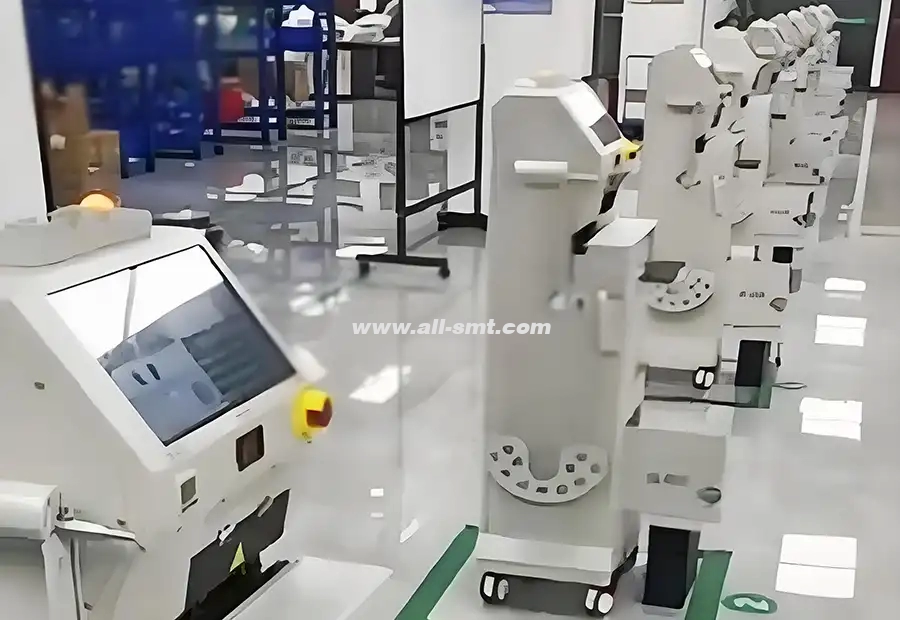
How to Choose the Right SMT Line for Your Factory
Choosing the right SMT line configuration depends on product type, component density, and production volume. For small-batch or R & D use, a compact prototype SMT line offers flexibility and lower cost. For high-volume consumer products, a high-speed SMT production line ensures maximum throughput and ROI. Evaluate factors such as placement rate (CPH), machine brand, feeder capacity, and after-sales support before investing.
Advantages of an SMT Line
High automation – minimal manual labor.
Superior efficiency – supports mass production.
Flexibility – easy to adapt for different PCB designs.
Improved quality – real-time defect detection.
Scalability – one line can run 24/7 with proper planning.
Challenges of Running an SMT Line
High initial investment.
Maintenance complexity – requires trained engineers.
Downtime risk – one failure can halt the line.
Material management – feeder setup and component supply must be precise.
Process tuning – reflow profile and stencil design must be optimized.
Applications of SMT Lines
Consumer electronics – smartphones, laptops, TVs.
Automotive – safety systems, infotainment, engine ECUs.
Medical devices – diagnostic tools, monitoring systems.
Aerospace & defense – avionics, radar systems.
Telecommunication – routers, base stations, IoT devices.
Future Trends in SMT Lines
AI-powered placement optimization.
Smart factories with MES and Industry 4.0 integration.
Green manufacturing – lead-free solder, energy-efficient ovens.
3D printing & additive manufacturing integration.
Flexible electronics production – SMT lines for curved or textile-based PCBs.
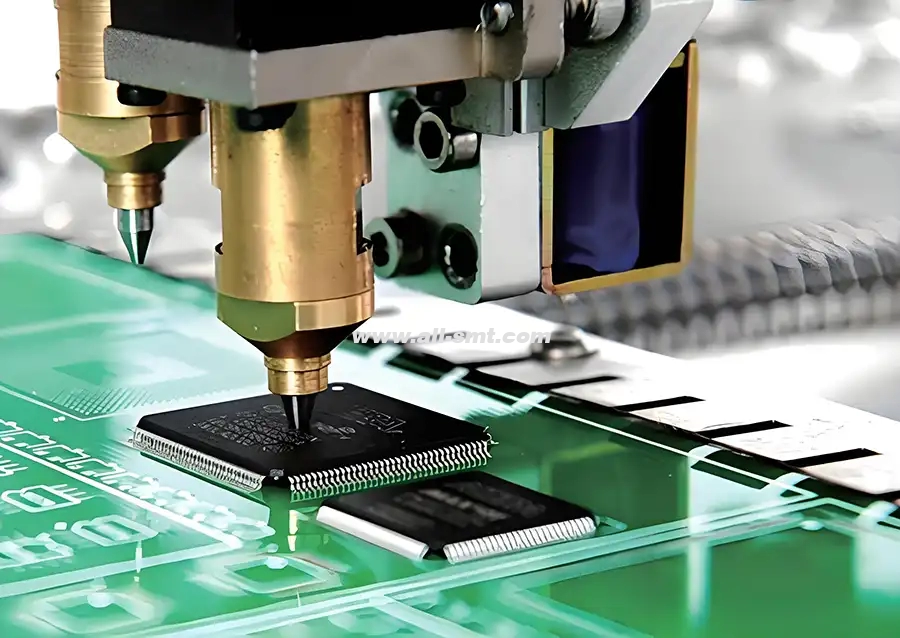
An SMT line truly forms the heart of modern electronics manufacturing. By seamlessly combining automated solder paste printers, high-speed pick-and-place machines, precision reflow ovens, and advanced optical inspection systems, an SMT line delivers the speed, accuracy, and cost efficiency that older manual assembly methods could never achieve.
Whether you’re a startup building prototype boards or a global OEM running large-scale production, choosing and designing the right SMT line can make all the difference. The right setup not only improves productivity but also defines the overall product quality and competitiveness of your brand in today’s fast-moving electronics market.
Frequently Asked Questions About SMT Lines
What is an SMT line used for?
An SMT line is used to automatically place and solder surface-mounted components onto printed circuit boards in electronic manufacturing.How much does an SMT line cost?
The cost of an SMT production line varies from $100,000 for small prototype setups to over $2 million for full-scale automated factories.Which machines are in an SMT line?
A standard SMT line includes a solder paste printer, pick-and-place machine, reflow oven, and AOI system.What is the difference between SMT line and DIP line?
An SMT line mounts components on the surface of PCBs, while a DIP (through-hole) line inserts components into drilled holes.Can SMT lines produce double-sided boards?
Yes. Many dual-lane SMT lines can handle double-sided assembly using one or two reflow passes.
As technologies such as AI, 5G, IoT, and Industry 4.0 continue to evolve, SMT lines are becoming even smarter and more connected—able to self-optimize, analyze data in real time, and predict maintenance needs. In short, the SMT line will remain the driving engine behind the next generation of electronic innovation.