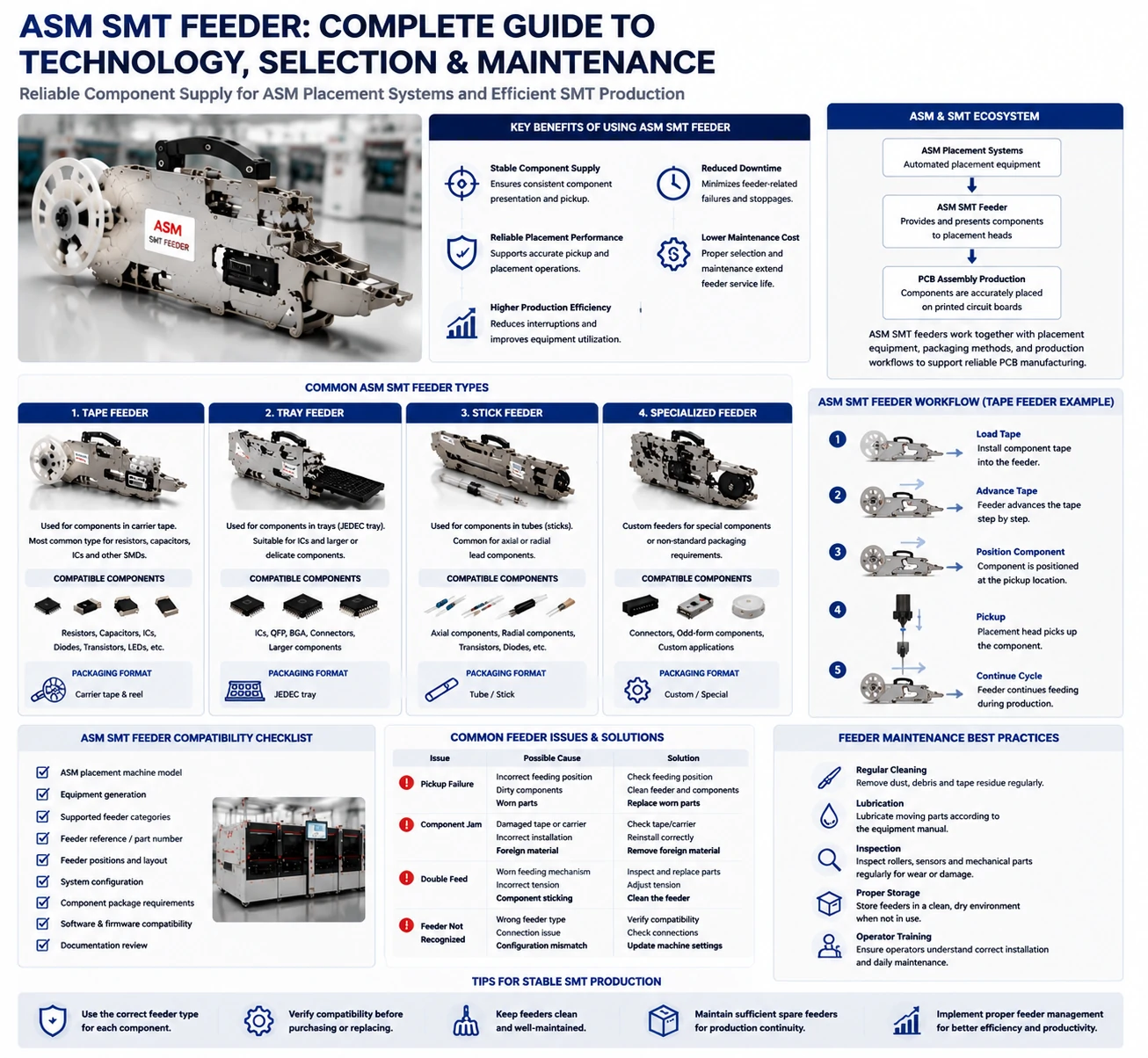

Selecting the right feeder for an SMT production environment requires more than choosing an available component. Manufacturers need to evaluate machine compatibility, component requirements, production conditions, feeder configuration, and long-term maintenance planning.
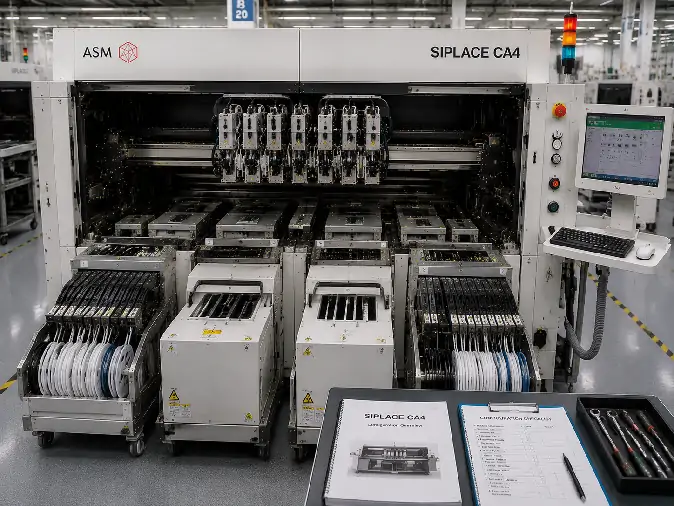
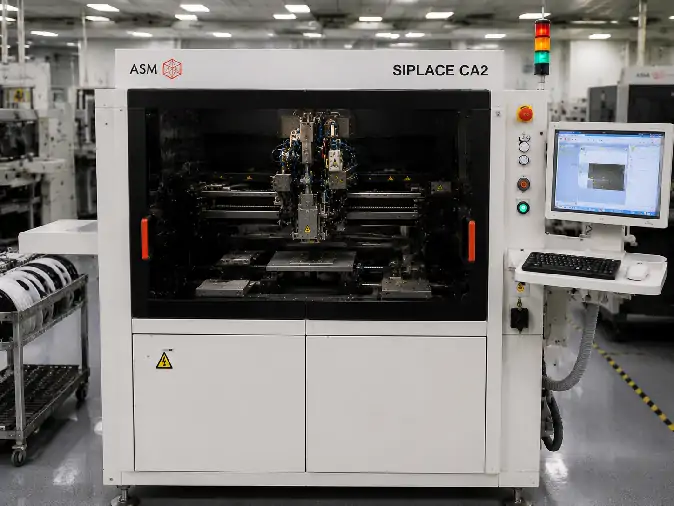
The SIPLACE Feeder plays an important role in automated PCB assembly by supplying components to SIPLACE placement machines. A suitable feeder solution helps maintain stable component presentation, reliable pickup operations, consistent placement quality, and efficient SMT production workflows.
For SMT engineers, equipment technicians, and production managers, proper feeder selection and maintenance are essential parts of maintaining reliable placement operations.
This guide explains how to evaluate SIPLACE Feeder requirements, verify compatibility, select suitable feeder solutions, manage replacement decisions, troubleshoot common problems, and maintain feeder performance over time.
Understanding SIPLACE Feeder Requirements
Before selecting or replacing a SIPLACE Feeder, manufacturers should first understand their production requirements. Different SMT environments may require different feeder solutions depending on component types, placement machine configurations, product variety, and manufacturing goals.
A suitable feeder selection process should consider:
Component packaging format
SIPLACE placement machine compatibility
Feeder category requirements
Production volume
Maintenance and replacement strategy
Starting from production needs helps engineers avoid selecting feeders only based on availability, appearance, or general descriptions.
Why Feeder Selection Matters in SMT Production
Feeders are directly connected with component supply stability. Since placement machines depend on feeders to provide components accurately, feeder selection can influence overall assembly performance.
An unsuitable feeder solution may affect:
Component presentation accuracy
Pickup reliability
Placement consistency
Production continuity
Equipment utilization
In high-volume SMT manufacturing environments, proper feeder management is an important factor in maintaining stable production workflows.
SIPLACE Feeder Compatibility Guide
Compatibility is one of the most important considerations when selecting or replacing a SIPLACE feeder. Not all feeders are interchangeable because compatibility depends on equipment configuration, feeder category, machine generation, and production requirements.
A feeder that works in one SIPLACE system may not necessarily be suitable for another configuration.
Machine Compatibility Verification
Before purchasing or replacing a SIPLACE feeder, engineers should verify:
SIPLACE placement machine model
Equipment generation
Supported feeder categories
Existing feeder references
Machine configuration requirements
Correct compatibility verification helps prevent installation problems, incorrect purchases, and unexpected production interruptions.
SIPLACE Feeder and Placement Machine Relationship
SIPLACE feeders operate as part of a complete SMT placement system. The relationship between feeder and placement machine can be summarized as:
The feeder stores and advances electronic components.
The placement machine manages feeder configuration and production information.
The feeder presents components at the pickup position.
The placement head collects and places components onto the PCB.
Because feeder performance directly affects component availability and pickup consistency, proper matching between feeder and placement system is essential.
Feeder Configuration Considerations
In practical SMT production environments, feeder configuration is part of production planning.
Manufacturers should consider:
Required component types
Number of feeder positions needed
Product changeover frequency
Feeder inventory availability
Maintenance requirements
Efficient feeder configuration helps SMT production lines improve flexibility and reduce unnecessary setup changes.
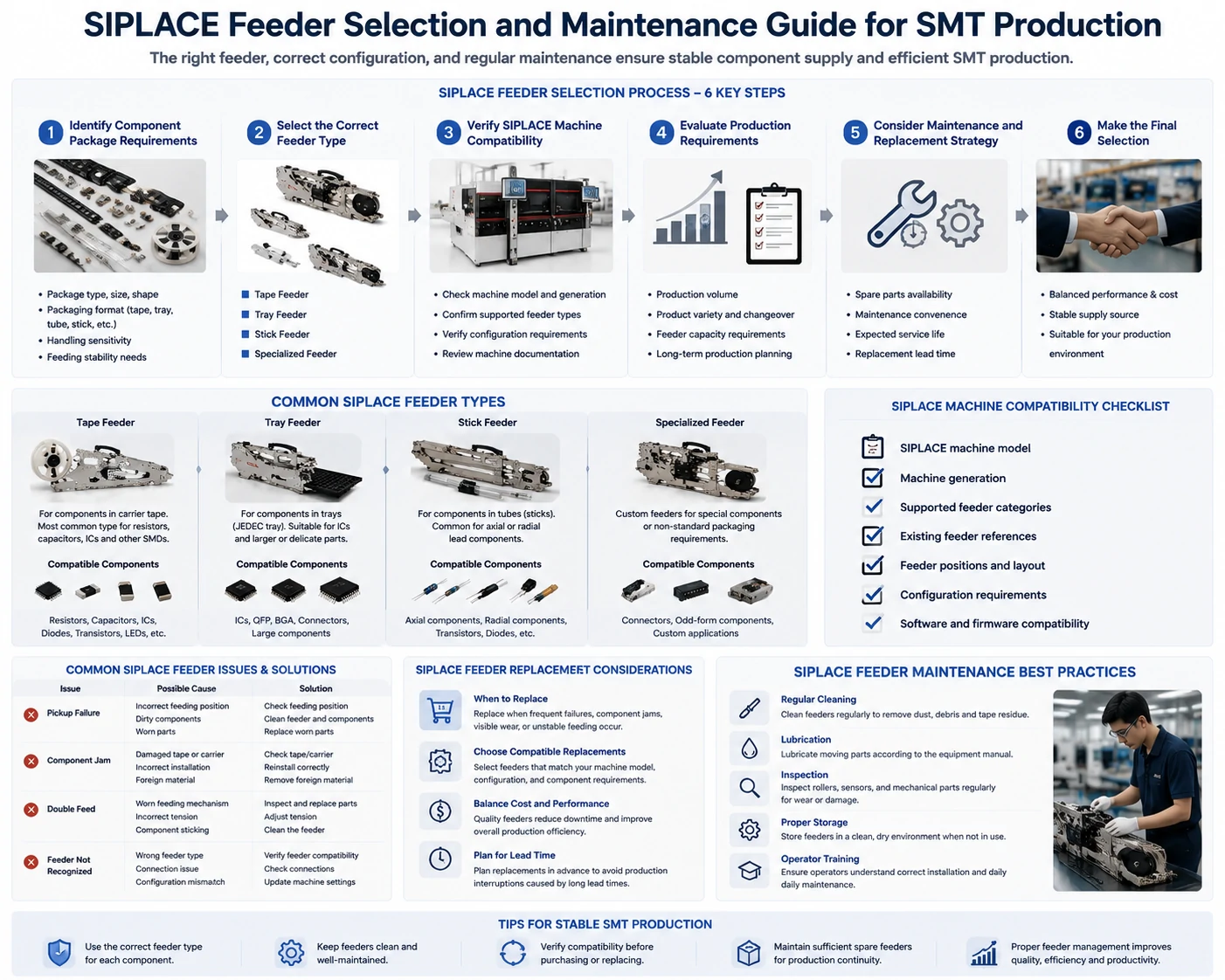
SIPLACE Feeder Selection Process
Choosing the correct SIPLACE feeder requires evaluating the relationship between components, feeder type, placement machine compatibility, and production requirements.
A practical selection process includes several steps.
Step 1: Identify Component Package Requirements
Component characteristics are one of the most important factors when selecting an SMT feeder.
Manufacturers should evaluate:
Component package type
Component size and shape
Packaging format
Handling sensitivity
Feeding stability requirements
Understanding component requirements helps engineers determine the most suitable feeder category.
Step 2: Select the Correct Feeder Type
Different component packaging formats require different feeding methods.
The basic relationship can be summarized as:
Tape-packaged components → Tape feeder
Tray-based components → Tray feeder
Tube or stick-packaged components → Stick feeder
Special component formats → Special application feeder
Selecting the correct feeder type improves component presentation stability and supports reliable pickup operations.
Step 3: Verify SIPLACE Machine Compatibility
After selecting a feeder category, engineers should confirm that the feeder matches the SIPLACE placement system.
Verification should include:
Machine model compatibility
Feeder category support
Equipment configuration
Production line requirements
A feeder that matches the component requirement but does not match the machine configuration may create operational problems.
Step 4: Evaluate Production Requirements
Production conditions also influence feeder selection decisions.
Manufacturers should consider:
Production volume
Product variety
Changeover frequency
Feeder quantity planning
Maintenance resources
High-volume production environments may prioritize continuous feeding stability, while flexible manufacturing environments may focus more on adaptability and efficient feeder management.
Step 5: Consider Maintenance and Replacement Support
Maintenance requirements should also be considered during SIPLACE feeder selection because feeder condition directly affects SMT production performance.
Important considerations include:
Cleaning requirements
Inspection procedures
Spare part availability
Repair options
Feeder lifecycle management
Considering maintenance support during the selection process helps manufacturers reduce future downtime and improve long-term equipment reliability.
Selecting SIPLACE Feeder Type Based on Components
The correct SIPLACE feeder type depends largely on component packaging format, physical characteristics, and production requirements.
Different component formats require different handling approaches to maintain stable component presentation.
Tape Feeder Selection
Tape feeders are commonly selected for components supplied in carrier tape formats. They are widely used in SMT production because many standard surface mount components are packaged in tape.
Tape feeder selection factors include:
Tape format
Component dimensions
Feeding accuracy requirements
Placement machine compatibility
Production volume requirements
A suitable tape feeder helps maintain consistent component advancement and reliable pickup performance.
Tray Feeder Selection
Tray feeders are used for components that require tray-based handling instead of tape feeding.
They are often considered for:
Larger semiconductor packages
Special component formats
Components requiring individual positioning
Devices with specific handling requirements
Tray feeder selection depends on package structure, component protection requirements, and placement system configuration.
Stick Feeder Selection
Stick feeders support components supplied in tubes or stick packaging formats.
They provide an alternative feeding method when components cannot be supplied through standard tape formats.
Important considerations include:
Component packaging style
Feeding stability
Component orientation requirements
Production workflow needs
Special Application Feeder Selection
Some SMT production environments require specialized feeders for unique component formats or special handling conditions.
These feeders are selected based on:
Component characteristics
Special handling requirements
Production flexibility needs
Equipment configuration
SIPLACE Feeder Applications in SMT Production
SIPLACE Feeders are used in SMT manufacturing environments where automated component placement is required.
They support production workflows by providing stable component supply for placement operations.
High-Volume SMT Production Lines
High-volume SMT production requires reliable feeder operation because placement machines depend on continuous and accurate component presentation.
Feeder performance influences:
Pickup consistency
Production stability
Workflow efficiency
Equipment utilization
Proper feeder planning helps manufacturers maintain continuous PCB assembly operations.
Electronic Manufacturing Services (EMS)
EMS manufacturers often produce multiple PCB products, creating different feeder management requirements.
These environments may require:
Flexible feeder configuration
Efficient product changeover
Accurate component management
Effective feeder inventory planning
Efficient feeder management helps EMS manufacturers support different production requirements while maintaining stable SMT operations.
Multi-Product SMT Manufacturing
Manufacturers producing multiple PCB product types often need flexible feeder strategies because different assemblies may require different component combinations.
Important considerations include:
Product changeover frequency
Feeder setup planning
Component identification accuracy
Production scheduling requirements
Effective feeder organization helps reduce setup time and improve manufacturing flexibility.
SIPLACE Feeder Replacement Process
Replacing a SIPLACE feeder requires careful verification. Selecting a replacement without confirming equipment requirements may lead to installation issues, feeding problems, or production interruptions.
Step 1: Identify the Existing Feeder
The first step is confirming the current feeder information.
Engineers should review:
Existing feeder model
Feeder reference information
Equipment records
Maintenance history
Step 2: Verify Machine Compatibility
After identifying the feeder, compatibility with the SIPLACE placement system should be confirmed.
Verification should include:
Placement machine model
Feeder category
Equipment configuration
Production requirements
Step 3: Confirm Component Requirements
The replacement feeder should support the component packaging format and handling requirements used in production.
Engineers should evaluate:
Component format
Feeding method
Pickup requirements
Production application
Step 4: Install and Validate Operation
After replacement, the feeder should be checked before returning to full production.
Validation may include:
Feeder installation confirmation
Component feeding verification
Pickup operation testing
Production workflow confirmation
A complete replacement process helps reduce risks and supports stable SMT production recovery.
SIPLACE Feeder Maintenance and Troubleshooting
Regular maintenance is essential because feeder condition directly affects component supply stability, pickup reliability, and PCB assembly performance.
A proper SIPLACE feeder maintenance strategy helps manufacturers reduce feeding problems, improve equipment availability, and maintain stable SMT production workflows.
Common SIPLACE Feeder Problems
Feeder-related problems may affect SMT production when components are not presented correctly to the placement machine.
Common issues may include:
Feeding inconsistency:Components are not advanced smoothly through the feeder mechanism.
Pickup failure:The placement head cannot collect components correctly.
Component presentation problems:Components are not positioned accurately for pickup.
Setup errors:Feeder settings do not match the production configuration.
Mechanical issues:Wear, contamination, or damage affects feeder operation.
SIPLACE Feeder Troubleshooting Checklist
A structured troubleshooting process helps technicians identify feeder-related problems more efficiently.
Engineers can check the following areas:
Component loading:Confirm that components are correctly loaded into the feeder.
Feeder installation:Verify that the feeder is correctly installed on the placement machine.
Feeding mechanism:Check whether components advance correctly.
Pickup position:Confirm that components are presented at the correct location.
Machine settings:Verify feeder configuration matches the production program.
This troubleshooting approach helps reduce unnecessary replacement decisions and supports faster SMT production recovery.
Cleaning and Inspection
Routine cleaning and inspection help maintain stable feeder operation. Dust, production residue, and mechanical wear can affect feeding accuracy over time.
Maintenance activities may include:
Removing dust and production residue
Checking mechanical movement
Inspecting feeder components
Confirming proper feeder operation
Reviewing feeder condition regularly
Preventive Maintenance Practices
Preventive maintenance helps identify potential feeder issues before they affect SMT production.
Recommended practices include:
Regular inspection schedules
Maintenance record tracking
Condition monitoring
Operator training
Planned replacement strategies
Good maintenance practices help maintain consistent component feeding and reduce production interruptions.
SIPLACE Feeder Spare Parts and Lifecycle Management
Spare part management is an important part of SMT equipment maintenance. Proper planning helps manufacturers respond faster when feeder components require repair or replacement.
SIPLACE Feeder Repair and Replacement Decisions
When a SIPLACE feeder requires attention, manufacturers should evaluate whether repair or replacement is the more suitable option.
Decision factors may include:
Feeder operating condition
Repair feasibility
Availability of replacement options
Production requirements
Long-term equipment strategy
The best decision depends on equipment condition, maintenance resources, and production objectives.
Maintaining Spare Inventory
Effective spare inventory management helps reduce downtime caused by unexpected feeder problems.
Manufacturers should maintain records for:
Feeder model information
Replacement history
Critical feeder components
Available spare resources
Maintenance records
Organized spare management supports faster maintenance response and improves SMT production availability.
Reducing SMT Production Downtime
Feeder-related downtime can affect overall SMT line efficiency. Proper preparation helps manufacturers reduce production interruptions.
Manufacturers can improve equipment availability through:
Preventive maintenance planning
Fast feeder identification
Prepared replacement solutions
Accurate equipment records
Effective maintenance procedures
SIPLACE Feeder Maintenance Checklist
Before placing a SIPLACE feeder into production or returning it after maintenance, engineers can review the following checklist:
Compatibility Check:Confirm feeder compatibility with the SIPLACE placement machine.
Component Verification:Confirm the feeder supports the required component packaging format.
Mechanical Inspection:Check feeder movement and operating condition.
Cleaning Verification:Ensure the feeder is free from contamination.
Production Validation:Verify stable feeding operation before full production use.
Frequently Asked Questions
How do I identify the correct SIPLACE Feeder model?
The correct SIPLACE Feeder model can be identified by checking feeder references, machine records, equipment documentation, and configuration information.
Are all SIPLACE Feeders compatible with every machine?
No. Compatibility depends on feeder type, machine generation, and system configuration. Verification is required before replacement or purchase.
How do I choose the right SIPLACE Feeder?
The correct SIPLACE feeder should be selected based on component packaging format, placement machine compatibility, production requirements, and maintenance considerations.
Should I repair or replace a SIPLACE Feeder?
The decision depends on feeder condition, repair feasibility, replacement availability, production requirements, and long-term maintenance strategy.
What causes SIPLACE Feeder pickup problems?
Pickup problems may result from feeding inconsistency, contamination, incorrect setup, component presentation issues, or mechanical feeder conditions.
How does feeder maintenance improve SMT production?
Proper feeder maintenance helps maintain stable component supply, improve pickup reliability, reduce interruptions, and support consistent SMT production performance.
Conclusion
Managing a SIPLACE Feeder requires careful consideration of machine compatibility, component requirements, selection strategy, replacement planning, and maintenance practices.
Correct feeder selection and proper lifecycle management help SMT manufacturers reduce production problems, maintain placement consistency, and improve equipment reliability.
For teams working with SIPLACE equipment, accurate feeder identification, compatibility verification, troubleshooting procedures, and preventive maintenance are essential parts of effective SMT production management.