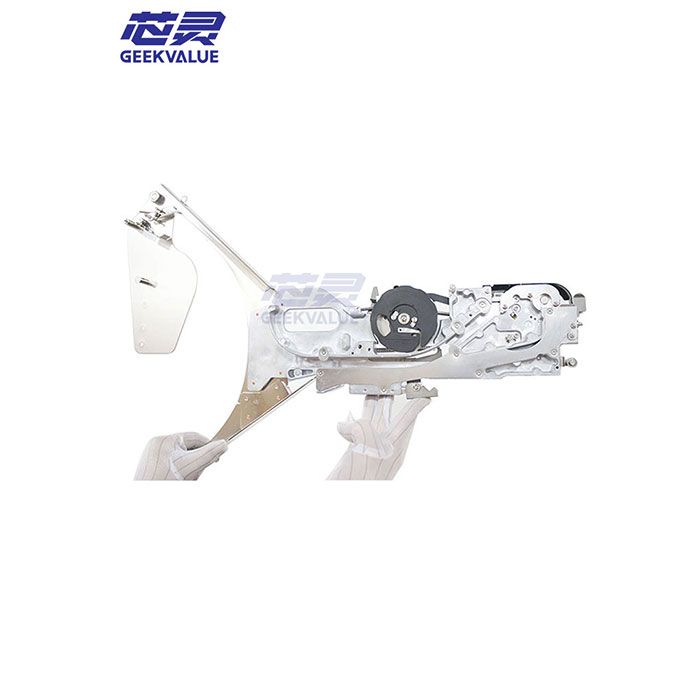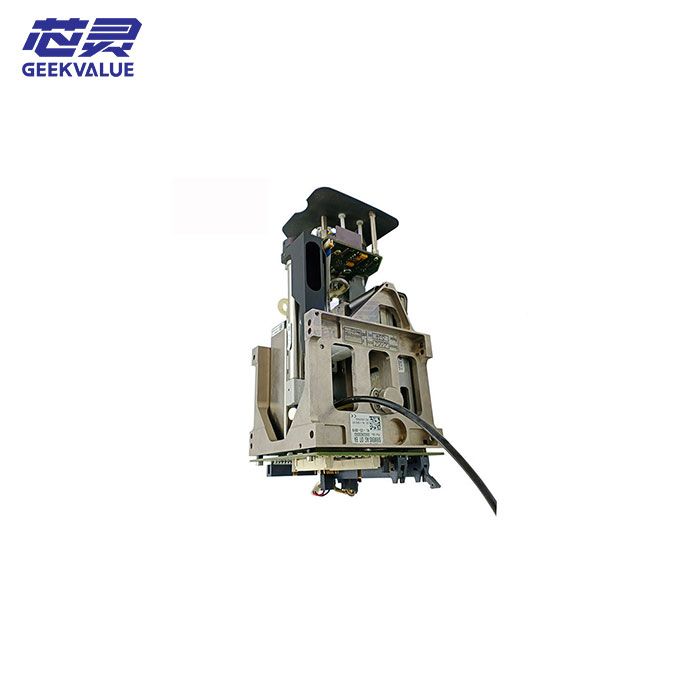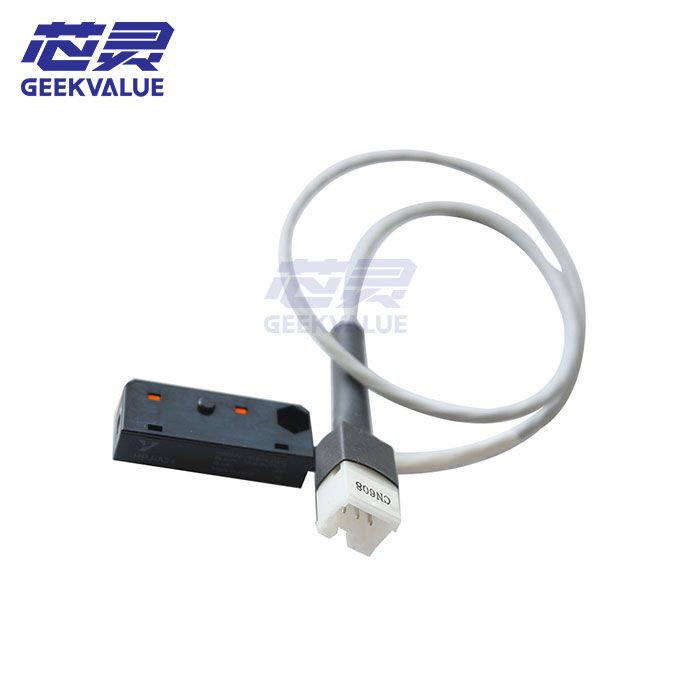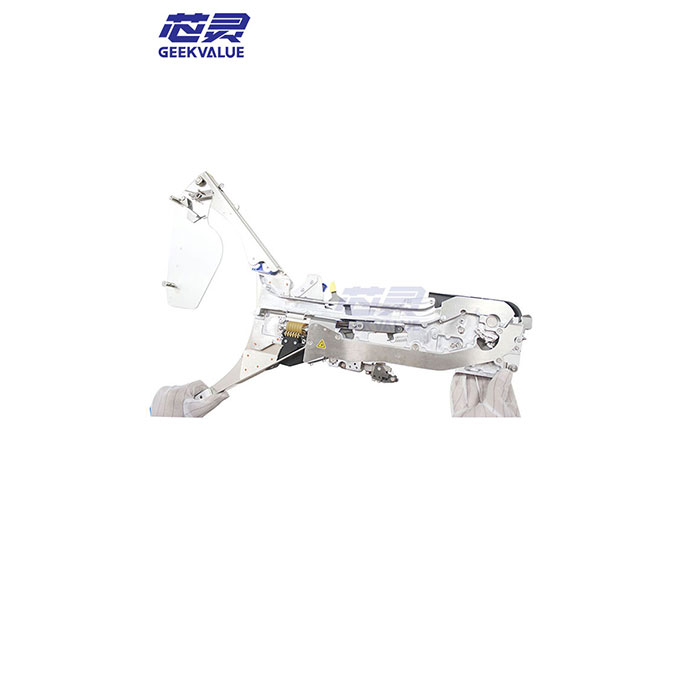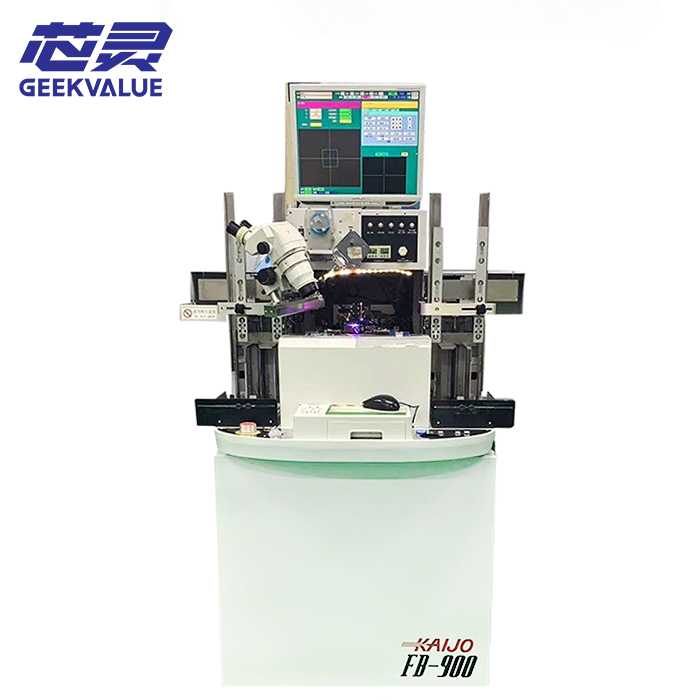
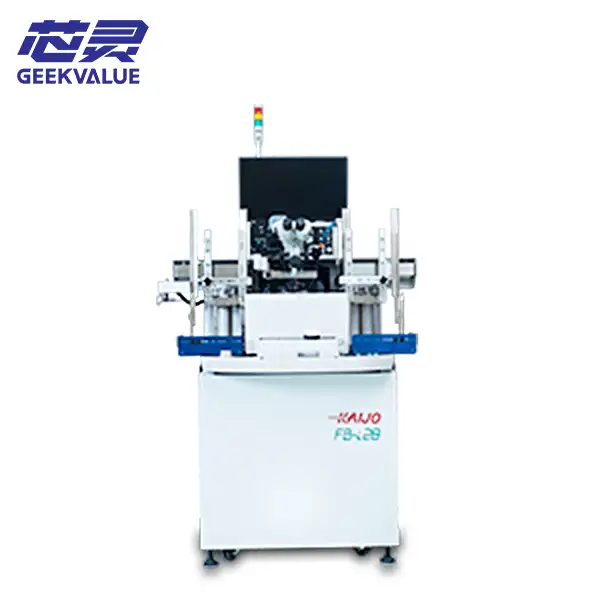
 The KAIJO FB-i28 is a medium-to-high-speed, high-precision, universal fully automatic thermal ultrasonic wire bonding machine, primarily designed for high-density, fine-pitch, and small-to-medium-sized packaging applications. It strikes a balance between speed, precision, and cost, making it a mainstay model for mass production in consumer electronics, analog ICs, LEDs, and discrete devices.
I. Positioning and Core Applications
Positioning: Fully automatic ball bonding/wedge bonding machine, high precision, high cost-effectiveness, medium-to-high-speed universal model.
Typical Applications:
Consumer Electronics: Mobile phone/tablet ICs, power management chips (PMICs), sensors.
Analog/Mixed-Signal ICs: Operational amplifiers, ADCs/DACs, driver ICs.
Optoelectronics: LEDs, laser diodes, optical module components.
Discrete Devices: MOSFETs, diodes, transistors, small-signal transistors.
Compatible Wires: Gold wire (Φ15–30μm), copper wire (Φ20–30μm), silver alloy wire (optional).
II. Core Specifications (2026 Mainstream Configuration)
Wire Bonding Area: 56mm (X) × 88mm (Y)
Working Area: 295mm × 100mm (suitable for small and medium-sized frames/substrates)
Wire Bonding Speed: 0.045 seconds/line (1333 lines/minute)
Repeatability: ±2.0μm (3σ); Minimum pad spacing 35μm
Line Length/Arc Height: Maximum line length 8mm; Arc height 0.5–5mm (controllable)
Welding Method: Thermo-sonic ball bonding/wedge bonding; Dual-frequency ultrasonic (standard)
Body Dimensions (W×D×H): 1065×1175×1725mm (2025mm including alarm light)
Weight: Approximately 550kg
III. Structure and Key Technologies
1. High-rigidity lightweight welding head (core selling point)
Composite material Z-arm: High rigidity + Low inertia, excellent vibration suppression, and strong stability in fine-pitch applications.
Low impact pressure design: Bonding pressure control accuracy ±0.1N, minimum welding pressure ≤1.2N, protecting thin chips/brittle substrates.
Type 1701 ultrasonic resonator: Low thermal drift, stable output, compatible with copper/silver alloy wires, and stable yield.
2. α-Eye Vision System
Next-generation recognition algorithm: Anti-reflective, anti-dirt, and anti-color difference; recognition accuracy ±1μm; low-contrast substrate recognition rate ≥99.9%.
Multi-template learning: Supports dense pins, irregularly shaped pads, and array layouts; automatically corrects offset/rotation.
3. Step Bond Sequence (Step-by-Step Welding Visualization)
Visualization of all welding process parameters: Ultrasonic power, pressure, time, and temperature are adjustable in segments.
Precise control of ball diameter, wedge width, and wire arc shape, suitable for fine-pitch (35μm) and high-density scenarios.
4. Automation and Connectivity
Fully Automatic Loading and Unloading: 2–3 material bins (30–115mm wide), automatic threading, needle wiping, and capillary cleaning.
Industry 4.0 Standard Features: SECS/GEM, KISS (KAIJO Equipment Management System), real-time monitoring, traceability, and remote diagnostics.
Windows 10 Touchscreen Interface: 15-inch large screen, icon-based operation, one-click parameter access, yield statistics, and anomaly alarms.
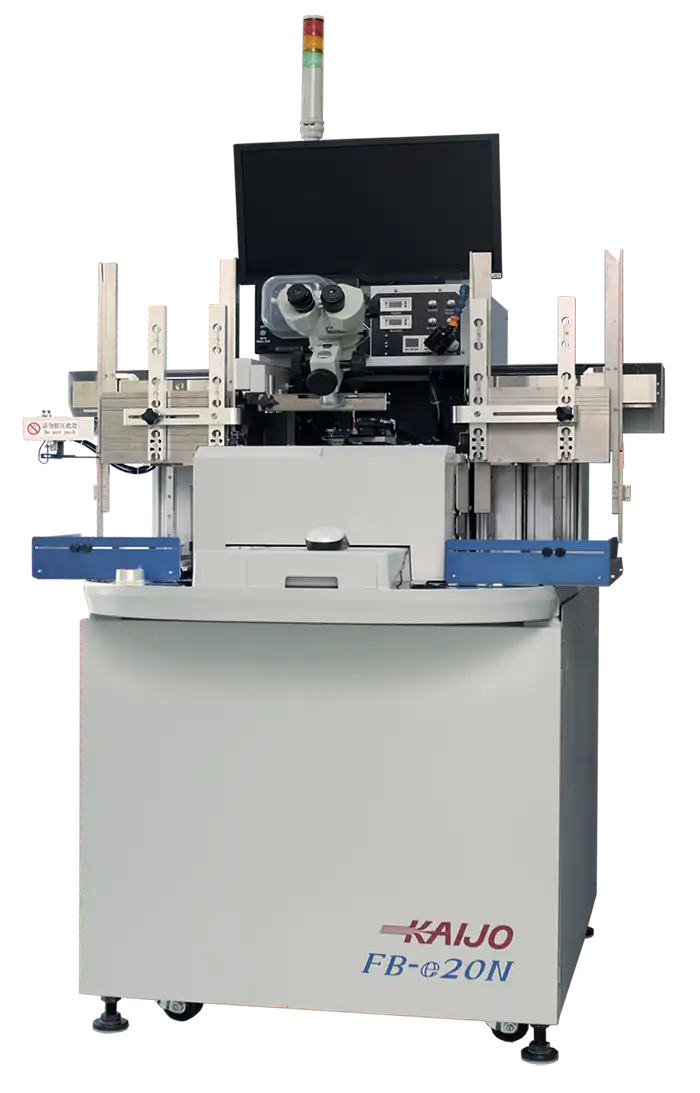
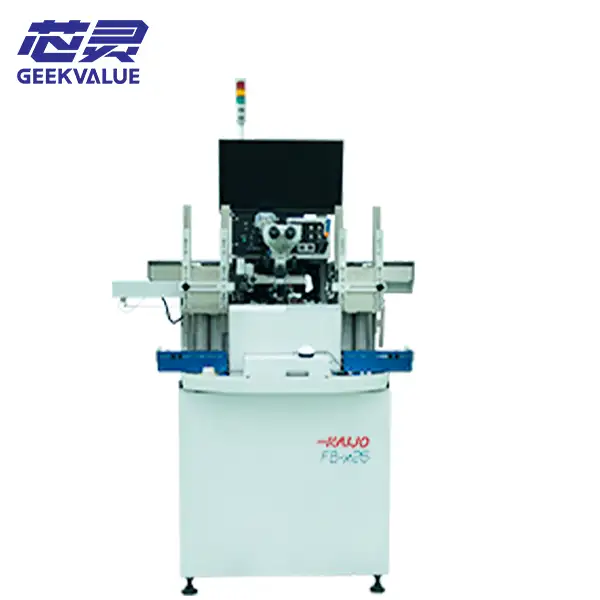
IV. Advantages Comparison (vs FB-e20N / FB-x26)
Speed: i28 (0.045s/line) ≈ e20N (0.043s/line) > x26 (0.045–0.055s/line)
Accuracy: i28 (±2.0μm) > e20N (±3.0μm) ≈ x26 (±2.5μm)
Solder Area: i28 (56×88mm) < x26 (56×95mm) > e20N (56×80mm)
Line Length: i28 (8mm) = e20N (8mm) < x26 (12mm)
Weight: i28 (550kg) < e20N / x26 (approx. 850kg) → Smaller footprint, more flexible deployment
Cost: i28 Highest cost-performance ratio, suitable for medium-batch, multi-variety production.
V. Summary and Selection Recommendations
Core Values: High precision (±2μm), medium-high speed, low impact, high cost-performance, solving pain points in fine-pitch/high-density packaging, yield ≥99.5%.
Selection Recommendations:
Consumer electronics, analog ICs, LEDs/discrete devices → FB-i28
Fine pitch (35μm), small to medium-sized frames, medium-batch mass production → FB-i28
Extra-large size/long-distance bonding wires (>8mm) → FB-x26
Ultra-high speed short-arc mass production (LEDs/discrete devices) → FB-e20N