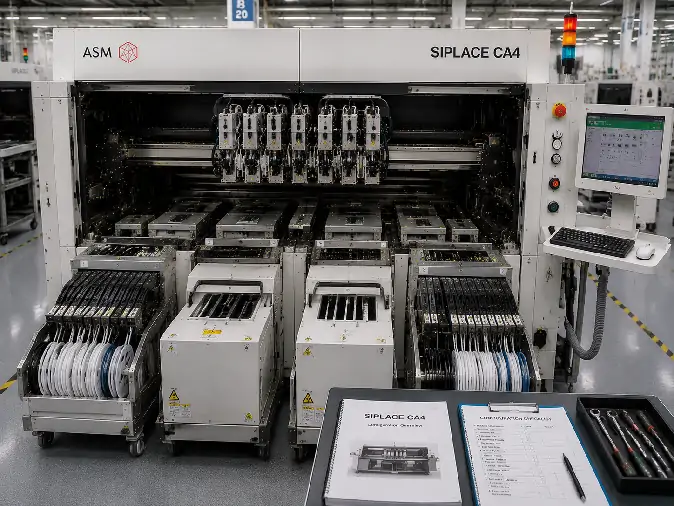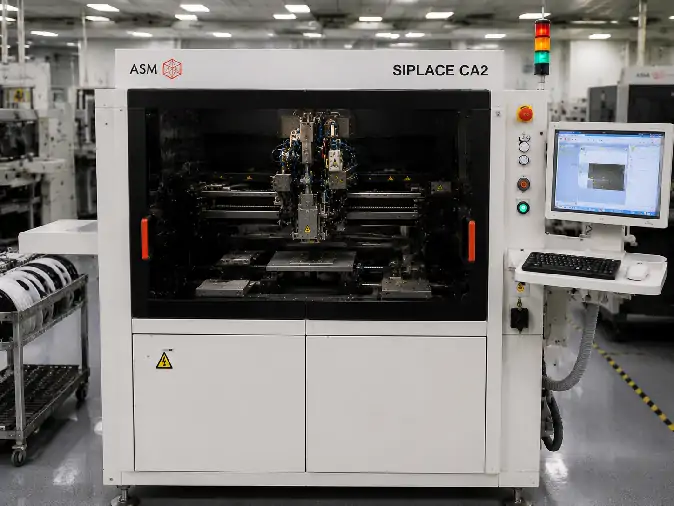

In SMT manufacturing, stable component supply is essential for maintaining reliable PCB assembly workflows. An ASM SMT Feeder is a production-critical component that supports automated placement systems by ensuring electronic components can be delivered consistently during assembly operations.
In real SMT production environments, feeder operation is closely connected with placement stability, manufacturing continuity, and workflow efficiency. A well-managed feeder system helps ASM placement equipment maintain a consistent component supply process throughout production.
This article explains how ASM SMT Feeder management supports SMT production stability, how feeder practices influence automated PCB assembly workflows, and why effective feeder management is an important part of manufacturing operations.
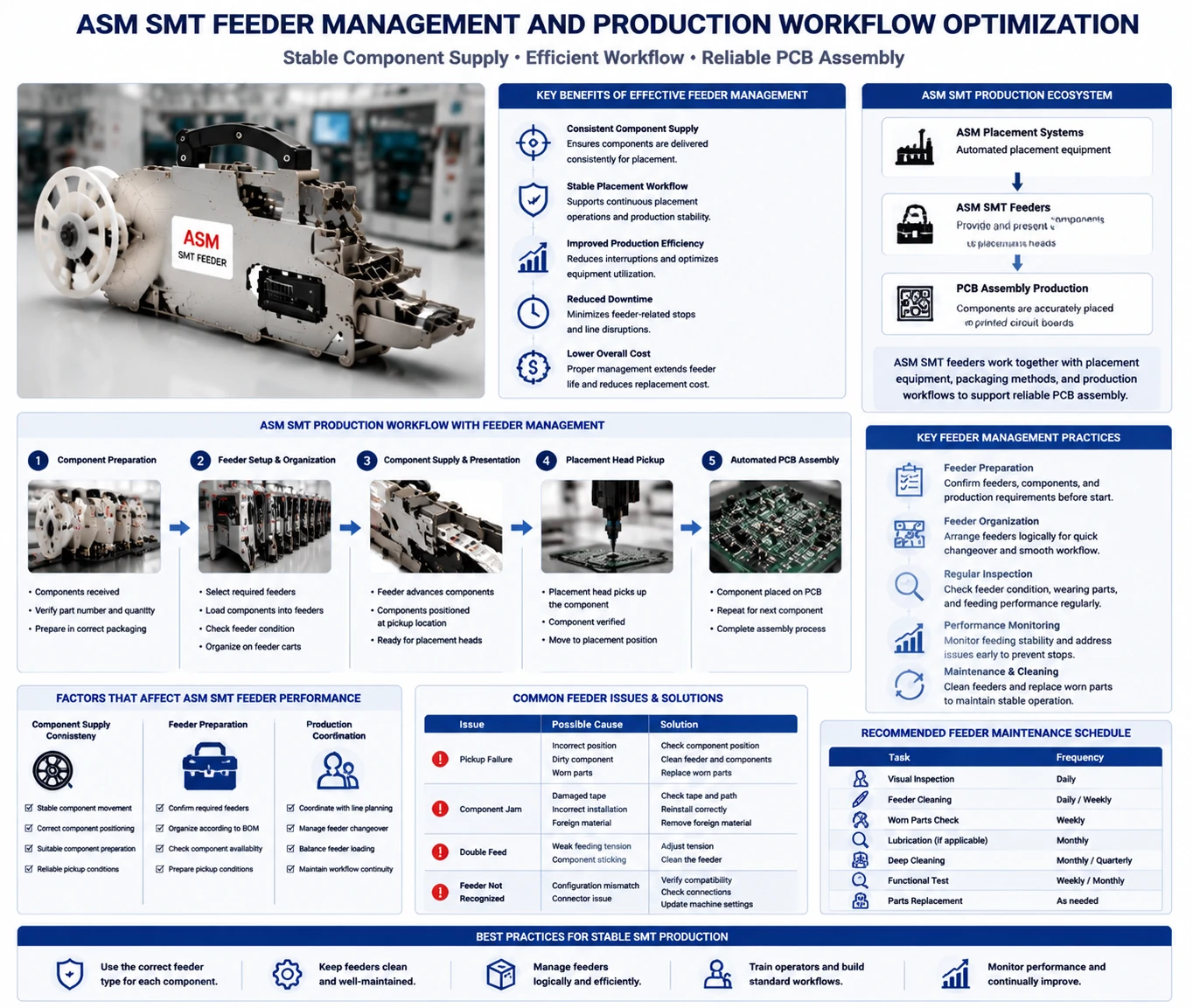
Why ASM SMT Feeder Management Matters in SMT Production
An ASM SMT Feeder is more than a component supply device. In an automated SMT production environment, it acts as an important connection point between component preparation and placement operations.
The role of feeder management is not only to maintain individual feeder operation but also to support the complete manufacturing workflow.
ASM SMT Feeder management helps production teams maintain:
Consistent component supply
Reliable component presentation
Stable placement workflows
Efficient production preparation
Predictable SMT manufacturing operations
Because ASM placement systems depend on a continuous supply of correctly presented components, feeder management becomes an important part of overall production control.
Feeder as a Production Control Point
In an SMT production line, multiple processes must work together to achieve stable PCB assembly. The feeder connects component availability with automated placement operations.
The relationship can be understood as:
Component Preparation → ASM SMT Feeder Management → Component Presentation → Placement Operation → PCB Assembly
When feeder operation remains consistent, production teams can better maintain workflow continuity and reduce unnecessary interruptions.
Component Supply Stability and Manufacturing Continuity
Automated placement systems require reliable component presentation because placement heads depend on components being available at the correct time and position.
Stable feeder operation supports:
Continuous component availability
Reliable pickup preparation
Consistent placement workflows
Reduced supply-related disruptions
For manufacturing teams, feeder management is part of production optimization rather than only equipment maintenance.
How ASM SMT Feeder Supports Automated PCB Assembly Workflow
ASM SMT Feeder operation is closely connected with the overall PCB assembly workflow. The feeder supports the movement of components from preparation stages to automated placement processes.
A typical workflow includes:
Component preparation
Feeder setup and organization
Component supply and presentation
Placement head pickup
Automated PCB assembly
Component Supply Process
During SMT production, components are prepared in suitable formats and loaded into feeders according to production requirements.
The feeder then supports:
Component advancement
Pickup position preparation
Continuous supply during placement operations
A stable supply process helps ASM placement systems maintain consistent production flow.
Relationship Between Feeder Operation and Placement Workflow
Feeder operation directly supports placement workflow because the placement machine depends on components being presented correctly and consistently.
Stable feeder management helps support:
Reliable component pickup
Consistent placement preparation
Better production coordination
Reduced workflow interruptions
When feeder operation becomes unstable, the impact may extend beyond the feeder itself and influence the efficiency of the complete SMT production process.
Factors That Affect ASM SMT Feeder Performance
ASM SMT Feeder performance depends on several operational factors. Understanding these factors helps manufacturing teams maintain reliable production environments.
Component Supply Consistency
Consistent component presentation is one of the most important factors affecting feeder performance.
Production teams should consider:
Stable component movement
Correct component positioning
Suitable component preparation
Reliable pickup conditions
Consistent component supply helps placement systems operate more predictably during production.
Feeder Preparation Before Production
Proper feeder preparation is important before production starts, especially in environments with frequent product changes.
Preparation activities may include:
Confirming required feeders
Organizing feeders according to production needs
Checking component availability
Preparing the production setup
Effective preparation helps reduce unnecessary interruptions during manufacturing operations.
Production Coordination
Feeder performance is also influenced by how well feeder activities are coordinated with the overall SMT production process.
Important considerations include:
Production planning
Feeder organization
Changeover requirements
Equipment configuration
Good coordination helps manufacturing teams maintain smoother production workflows.
ASM SMT Feeder Management Practices in Manufacturing
Effective ASM SMT Feeder management focuses on maintaining reliable operation throughout the production cycle.
The goal is not only to manage individual feeders but also to support the complete SMT manufacturing workflow.
Feeder Organization and Production Changeover
Production changeovers often require different component arrangements and feeder configurations. Proper organization helps production teams transition between products more efficiently.
Good feeder management practices include:
Organizing feeders according to production requirements
Preparing components before changeover
Maintaining clear feeder identification
Reducing unnecessary setup delays
In high-mix SMT environments, organized feeder management helps improve production flexibility.
Feeder Monitoring and Operational Control
Continuous monitoring helps teams identify potential issues before they affect production.
Operational monitoring may include:
Checking feeder operating condition
Observing production behavior
Recording operational information
Reviewing recurring issues
A structured monitoring process helps support more predictable SMT production operations.
Production Records and Management Practices
Maintaining feeder-related production information can help manufacturing teams improve equipment management.
Useful records may include:
Feeder usage information
Production setup records
Maintenance history
Operational observations
These practices help teams better understand feeder performance within the overall SMT workflow.
ASM SMT Feeder and Manufacturing Efficiency
ASM SMT Feeder management contributes to manufacturing efficiency by supporting stable component supply and reducing workflow disruptions.
However, production performance depends on many factors, including equipment configuration, production planning, component requirements, and overall manufacturing management.
Supporting Production Stability
Stable feeder operation helps maintain consistent SMT workflows by supporting reliable component availability.
This contributes to:
More predictable production operations
Stable placement workflows
Improved production organization
Consistent PCB assembly processes
Reducing Workflow Disruptions
Effective feeder management helps manufacturers maintain better workflow control through proper preparation, organization, and monitoring.
Manufacturers can support stable operations through:
Proper feeder preparation
Organized production setup
Operational monitoring
Consistent management practices
Feeder management should be considered as part of the complete SMT production system rather than as an isolated equipment activity.
Frequently Asked Questions
Why are ASM SMT Feeders important in SMT production?
ASM SMT Feeders are important because they support the component supply process required by automated placement systems. Reliable feeder operation helps maintain consistent SMT production workflows.
How does feeder management affect PCB assembly?
Feeder management affects PCB assembly by influencing component supply consistency, placement workflow stability, and production continuity.
What role does ASM feeder play in automated placement?
ASM feeders connect component preparation with automated placement operations by presenting components for pickup during PCB assembly.
How can manufacturers improve ASM SMT Feeder utilization?
Manufacturers can improve feeder utilization through organized preparation, production planning, operational monitoring, and consistent feeder management practices.
What factors affect ASM SMT Feeder performance?
ASM SMT Feeder performance can be influenced by component preparation, feeder condition, production coordination, equipment configuration, and operational management practices.
Conclusion
ASM SMT Feeder management is an important part of maintaining stable SMT manufacturing operations.
Rather than being only a component supply device, the feeder plays an important role in connecting component preparation with automated placement workflow.
By improving feeder organization, production preparation, monitoring practices, and workflow coordination, SMT teams can better support reliable PCB assembly processes.
For users researching ASM feeder solutions, understanding feeder management provides a foundation for evaluating production practices, equipment usage, and future optimization opportunities.