 EN
EN id
id sk
sk sr
sr sv
sv it
it pt
pt bn
bn ms
ms be
be nl
nl fr
fr th
th vi
vi ru
ru ja
ja ko
ko de
de hy
hy az
az bs
bs bg
bg my
my cs
cs da
da dv
dv el
el et
et fil
fil fi
fi ga
ga gl
gl gn
gn he
he hi
hi km
km hr
hr hu
hu is
is kn
kn rw
rw lo
lo lv
lv lt
lt lb
lb lg
lg mi
mi mt
mt ne
ne no
no ny
ny or
or om
om per
per pl
pl ro
ro sa
sa so
so es
es sw
sw ta
ta tr
tr uk
uk ur
ur cy
cy xh
xh
A used ASM AMICRA AFC Plus should not be evaluated from the model name or a marketplace description alone. The platform belongs to ASMPT AMICRA’s precision die-bonding portfolio and is associated with die-attach and flip-chip applications, but individual machines may differ substantially in hardware, software, tooling and process history.
The practical question is whether the unit under review can support the required die, substrate and bonding process with enough credible evidence to justify further evaluation. That means examining the machine identity, installed modules, condition, process records and delivery scope as one connected system.
What the AFC Plus Model Name Can and Cannot Confirm
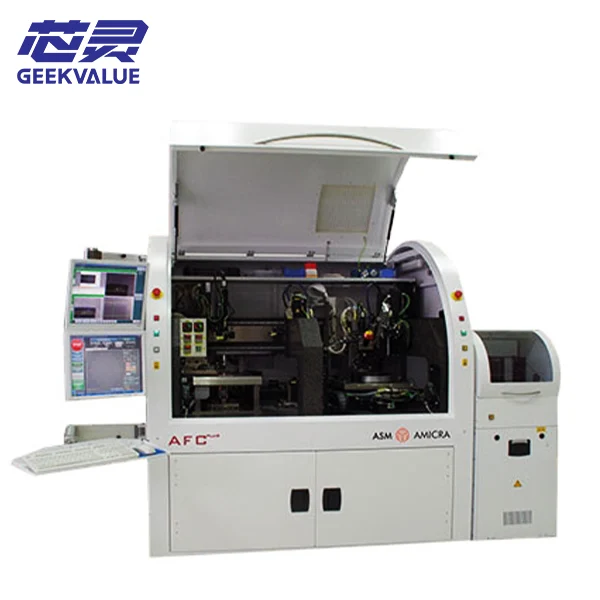
The AFC Plus appears within ASMPT AMICRA’s ultra-high-precision die-bonding portfolio and is associated with die-attach and flip-chip applications. This establishes the general equipment direction, not the ready-to-run capability of a particular used machine.
A listing may describe the equipment as a die bonder, flip-chip bonder or precision placement system. The wording may reflect the platform family, a previous application or the marketplace category selected by the seller. Flip-chip bonding, dispensing, heating, wafer mapping, UV curing and inspection should therefore remain conditional until the related modules, software, tooling and operating evidence have been reviewed.
Readers who need a broader explanation of the platform can refer to the separate ASMPT AMICRA AFC Plus bonding platform article. This guide has a narrower purpose: determining whether one used unit has enough verified process fit to remain under consideration.
Confirm the Machine Identity and Previous Application
Evaluation should begin with the physical machine record. Seller titles may omit suffixes or use ASM and ASMPT branding inconsistently. The nameplate and supporting documents should establish the manufacturer, exact model, serial number, manufacturing year where available and electrical identity before configuration or condition claims are accepted.
The review should also identify the machine’s current location, stated operating condition and previous production use. Where records are available, determine which die, substrate and bonding process the system previously handled.
Previous application can explain why certain heads, fixtures, vision programs or handling arrangements are installed. A machine that ran a related product may require less conversion than one configured for a very different process.
That history is useful context rather than proof of present capability. Equipment may have been modified, partly stripped, stored without power or separated from the software and tooling used in production. The former application should guide the next inspection steps, not replace them.
Match the Installed Configuration to the Bonding Process
The model identifies a platform. The installed process configuration determines whether the machine can support the project.
Define the intended process before reviewing the equipment: die dimensions and material, substrate or target, bonding method, required alignment, heating or material-application needs, input and output handling and any inspection requirement. These inputs provide a reference for evaluating the installed modules.
| Process Requirement | Machine Evidence to Request | Why It Matters |
|---|---|---|
| Die pickup and placement | Bonding-head details, pickup path, tools, vacuum response and representative handling evidence | The head and tooling must suit the die surface, dimensions and permitted contact area |
| Substrate or wafer handling | Installed tables, chucks, fixtures, loaders and material-presentation hardware | The machine must hold and position the intended target consistently |
| Vision and alignment | Cameras, optics, lighting, software functions, recipes and recognition results | Alignment depends on both the installed vision environment and the target features |
| Bonding process | Bonding-head configuration, temperature-control hardware and related process modules | Different bonding methods require different physical and process controls |
| Dispensing or material application | Installed dispensing hardware, controls, software and functional evidence where relevant | Material application cannot be inferred from the platform name |
| Inspection or curing | Installed inspection, UV-curing or post-bond modules and operating evidence | Optional stages may be essential to the intended production route |
This is an evidence framework, not a list of standard AFC Plus features. A machine may contain only part of the listed functionality, use a different arrangement or require additional conversion hardware.
Flip-chip capability deserves particular attention. Although the AFC Plus platform is associated with flip-chip applications, a usable process still requires the correct bonding head, handling hardware, alignment functions, tooling, software and demonstrated route. The same principle applies to dispensing, eutectic bonding, heating, curing and inspection.
Where a valid destination exists, the separate AFC Plus process configuration page can support detailed project and module matching. The used-machine review should remain focused on what is physically present and what can be demonstrated.
Review Software, Tooling and Documentation as One System
Hardware photographs cannot show whether a precision bonding machine can be commissioned for production. Software access, process files, calibration records, tools and fixtures often determine whether the installed hardware is usable.
Confirm successful software boot, authorized access, version information, licenses, process programs, recipes, vision files and available backups. Operation and maintenance manuals, electrical or mechanical documents, calibration records and repair history can help explain both the configuration and its current risks.
Tooling should be compared with the intended process rather than counted as a generic accessory package. Pickup tools, bonding tools, nests, chucks, substrate supports, fixtures and conversion parts may have been made for a previous die or product. Spare parts are valuable only when their identity, condition and relevance are documented.
Missing software or tooling can increase conversion cost, delay commissioning, restrict process development or make a representative trial impossible. License access and transferability should be checked rather than assumed, recipes may be difficult to reproduce, and discontinued tools may not be readily available.
Inspect Machine Condition Beyond Exterior Appearance
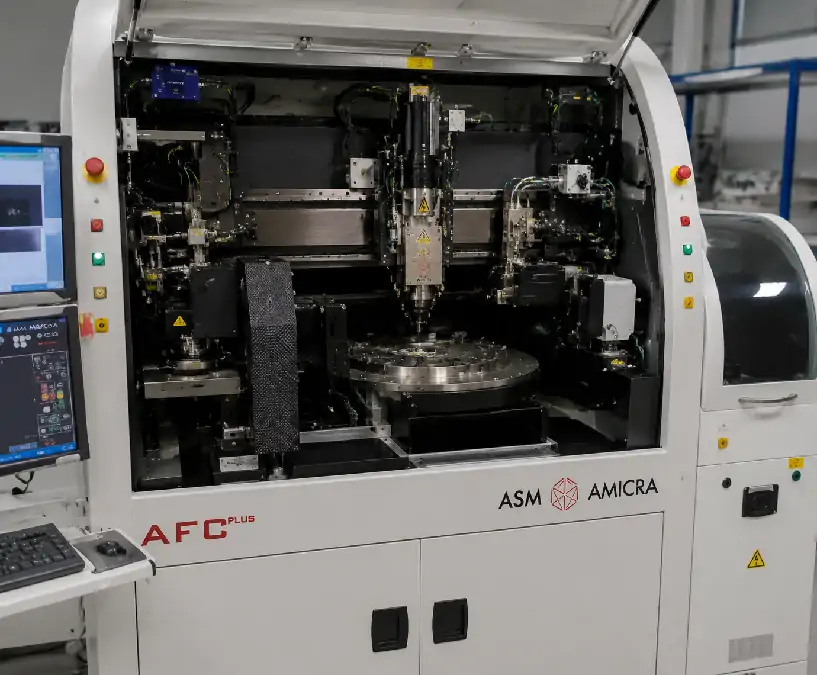
A clean exterior supports a positive first impression, but it does not establish the condition of the bonding work area, motion systems or process modules. Static appearance should be connected with functional evidence.
| Review Area | Evidence | Purchasing Meaning |
|---|---|---|
| Bonding work area | Close photographs, cleanliness, contamination, damage and missing parts | Shows whether the process area appears maintained, altered or incomplete |
| Motion and positioning | Homing, controlled movement, alarms and repeated functional cycles | Provides more information than static appearance without replacing formal calibration |
| Bonding head and tool interfaces | Installed head, tool mounting, pickup response and visible wear | Directly affects conversion requirements and representative testing |
| Vision and alignment | Live images, lighting, recognition response and available calibration records | Shows whether the vision environment can support further process evaluation |
| Installed process modules | Functional evidence for heating, vacuum, pneumatics or dispensing where present | Confirms whether listed modules are identifiable and operational |
| Controls and safety | Computers, cables, covers, guards, interlocks and alarm history | Helps reveal missing, substituted or non-operational components |
| Maintenance history | Service, repair, calibration and replacement records | Provides context for present condition and further inspection priorities |
This review cannot establish factory-level accuracy or full production readiness. Service tolerances, calibration limits and repair decisions require original documentation and qualified technical assessment. Its purpose is to determine whether the machine’s visible and functional condition is credible enough for process-relevant testing.
Move From Power-On Evidence to a Process-Relevant FAT
A power-on video can show that the software boots, the control system responds and selected axes move. It may also confirm that certain hardware remains installed. That is useful evidence, but it says little about stable die pickup, alignment, bonding quality, repeatability or compatibility with the intended die and substrate.
A practical evidence sequence moves from identification toward process relevance:
Static photographs establish visible machine identity and installed hardware.
Power-on evidence demonstrates limited boot and basic response.
Subsystem tests show selected motion, vision, vacuum, heating or dispensing functions where installed.
A representative trial combines relevant material, tooling, software and machine functions.
Target-process evidence evaluates the unit against the buyer’s actual or closely comparable application.
An effective FAT should demonstrate the functions that influence the purchase decision rather than reproduce a generic movement sequence. Depending on access and configuration, it may cover software boot, homing, controlled motion, pickup and release, vision recognition, alignment, bonding-head movement, substrate handling, recipe loading and alarm recovery.
Where practical, the trial should use a relevant die or substitute, a representative substrate, suitable pickup and bonding tools, an appropriate process program and realistic alignment criteria. Repeated functional cycles provide more useful evidence than one successful movement.
The achievable scope depends on material availability, tooling, software access, machine condition, seller capability and buyer requirements. A complete production qualification may not be possible before purchase, but unavailable evidence should remain visible so the remaining process risk can be assessed.
Verify Refurbishment Claims and Delivery Scope Separately
Used, inspected, repaired, refurbished and process-tested describe different levels of work and evidence. They should not be treated as interchangeable condition labels.
A documented refurbishment scope should identify what was cleaned, repaired, replaced, calibrated or tested. It should also state which software work was completed, which functions were demonstrated and which limitations remain. A general refurbishment claim is not enough to establish technical condition.
The delivery scope should separately identify the main machine, computers, monitors, bonding and pickup tools, fixtures, conversion parts, software, backups, manuals and spare parts. Optional modules should be listed explicitly rather than implied by the model name.
Packing, export preparation, installation, training, calibration, technical support and warranty should appear only when the quotation confirms them. Separating condition from delivery scope prevents a promising machine from being evaluated on tools or services that are not actually included.
Prepare a Qualified Used AFC Plus Inquiry
Before requesting a machine recommendation or quotation, describe the intended die, substrate and bonding method. Include the important material and surface constraints, alignment requirement, heating or dispensing needs, input and output handling and relevant inspection requirements.
Existing tooling and the desired FAT or trial scope should also be stated. This helps identify which installed modules need review, what conversion work may be required and which demonstrations would meaningfully reduce purchasing risk.
Contact the supplier by email or WhatsApp to request the machine record for used ASMPT AMICRA AFC Plus equipment. Ask for full-machine photographs, nameplate data, installed-module information, software details, tooling inventory, condition records, inspection or refurbishment evidence, FAT results and delivery inclusions.
Die drawings, substrate information, tooling photographs and process documents can be attached after the email or WhatsApp conversation is opened. Availability, compatibility, testing scope, price, warranty and delivery timing should be discussed after the unit and project requirements have been reviewed together.
Frequently Asked Questions About a Used ASM AMICRA AFC Plus
What should be checked before buying a used ASM AMICRA AFC Plus?
Review the exact machine identity, previous application, installed bonding and handling configuration, software access, tooling, documentation, physical condition, operating evidence and delivery scope. The required depth depends on the intended die, substrate and bonding process.
Is a power-on video enough to evaluate a used AFC Plus?
No. It can confirm limited boot and movement status, but it cannot establish die pickup, alignment, bonding performance, repeatability, tooling completeness or compatibility with the buyer’s product.
Does every AFC Plus support flip-chip bonding?
The platform is associated with die and flip-chip bonding applications, but usable capability depends on the installed hardware, software, tooling, alignment system and demonstrated process route of the individual machine.
What tooling should be included with a used AFC Plus?
The required tooling depends on the die, substrate and bonding method. The offer should identify pickup tools, bonding tools, fixtures, nests, chucks, substrate supports, conversion parts and any included spares.
Can a used AFC Plus be tested with the buyer’s product?
A representative or target-product trial may be possible when suitable material, tooling, software, process access and machine condition are available. The scope should be agreed for the unit under review rather than inferred from the model name.
What is the difference between used, inspected and refurbished?
A used machine is offered in its existing condition. Inspection records what was reviewed, while repair addresses identified faults. Refurbishment should follow a documented work scope, and process-tested status should be supported by defined operating evidence.
Conclusion: The AFC Plus model name is only the starting point in a used-machine evaluation. Suitability depends on the machine identity, previous application, installed process configuration, software, tooling and current condition. Process-relevant FAT or trial evidence provides more value than a listing or power-on video, while refurbishment claims and delivery inclusions require separate documentation. A quotation should follow initial technical qualification of both the equipment and the intended bonding process.