 EN
EN id
id sk
sk sr
sr sv
sv it
it pt
pt bn
bn ms
ms be
be nl
nl fr
fr th
th vi
vi ru
ru ja
ja ko
ko de
de hy
hy az
az bs
bs bg
bg my
my cs
cs da
da dv
dv el
el et
et fil
fil fi
fi ga
ga gl
gl gn
gn he
he hi
hi km
km hr
hr hu
hu is
is kn
kn rw
rw lo
lo lv
lv lt
lt lb
lb lg
lg mi
mi mt
mt ne
ne no
no ny
ny or
or om
om per
per pl
pl ro
ro sa
sa so
so es
es sw
sw ta
ta tr
tr uk
uk ur
ur cy
cy xh
xh
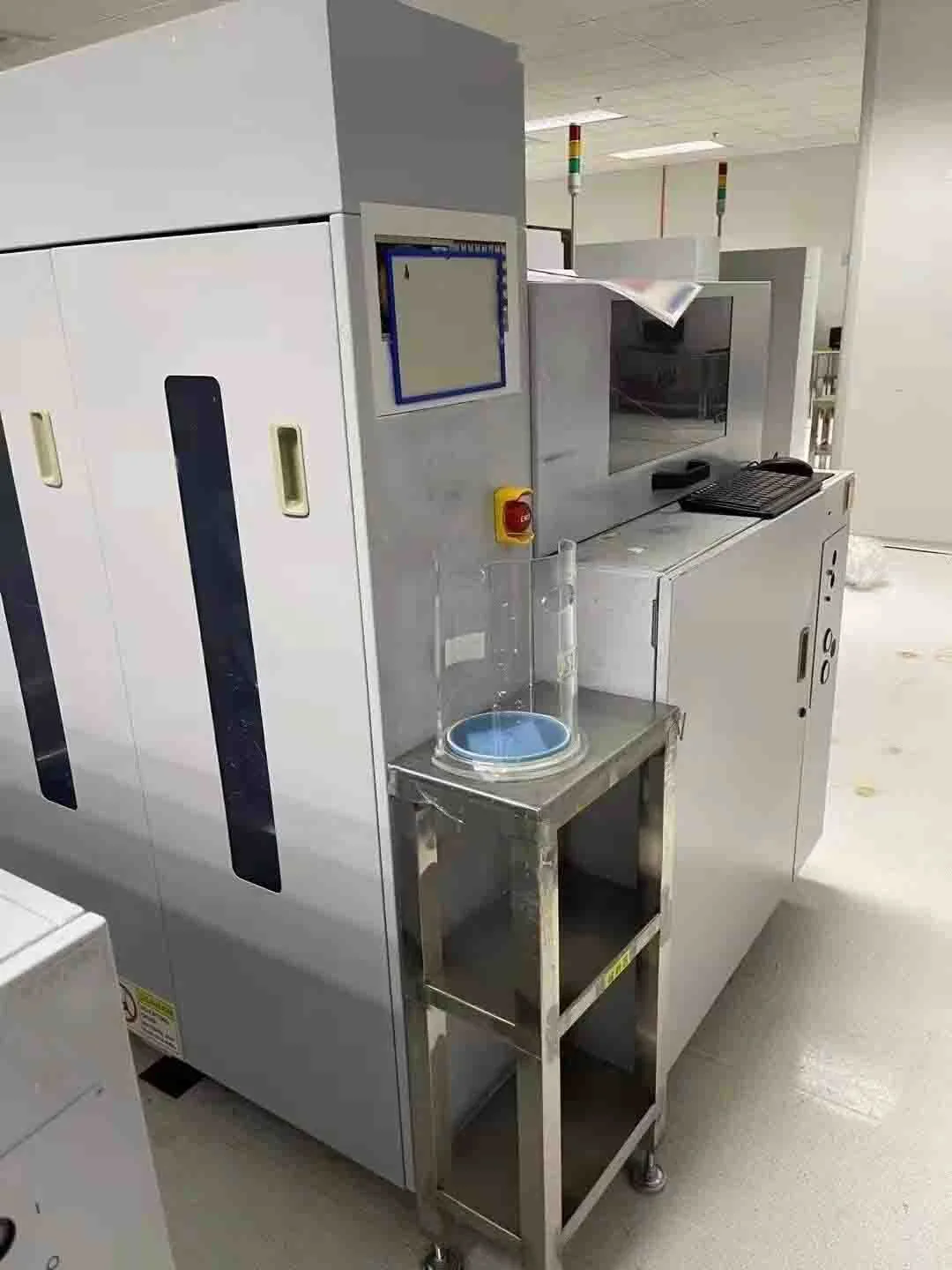
The ASMPT MS100 Plus, also frequently listed as the ASM MS100 Plus, is a legacy semiconductor platform commonly associated with wafer-map-based die or chip sorting. In a configured process, it may use map and recipe information together with installed pickup, alignment and output hardware to identify and route dies.
That platform identity does not establish the capability of a particular used machine. Wafer handling, pickup tooling, cameras, software, sorting destinations and included accessories can differ between units, so a buyer should evaluate the installed configuration rather than rely on the model name alone.
Accuracy note: This guide does not present a universal MS100 Plus specification set. Public figures for speed, accuracy, wafer range, head count and other technical details are not sufficiently verified and must be confirmed from the nameplate, original documentation and evidence from the individual machine.
What Type of Machine Is the ASM MS100 Plus?
The MS100 Plus is best treated as a legacy ASM semiconductor sorting platform used mainly through the secondary-equipment market today. It is commonly connected with processes in which dies are selected from a wafer or compatible frame and routed to assigned output locations according to available map, recipe or classification information.
Legacy equipment may carry ASM branding, while buyers often search for ASMPT MS100 Plus. For any specific unit, the manufacturer and model shown on the nameplate remain authoritative.
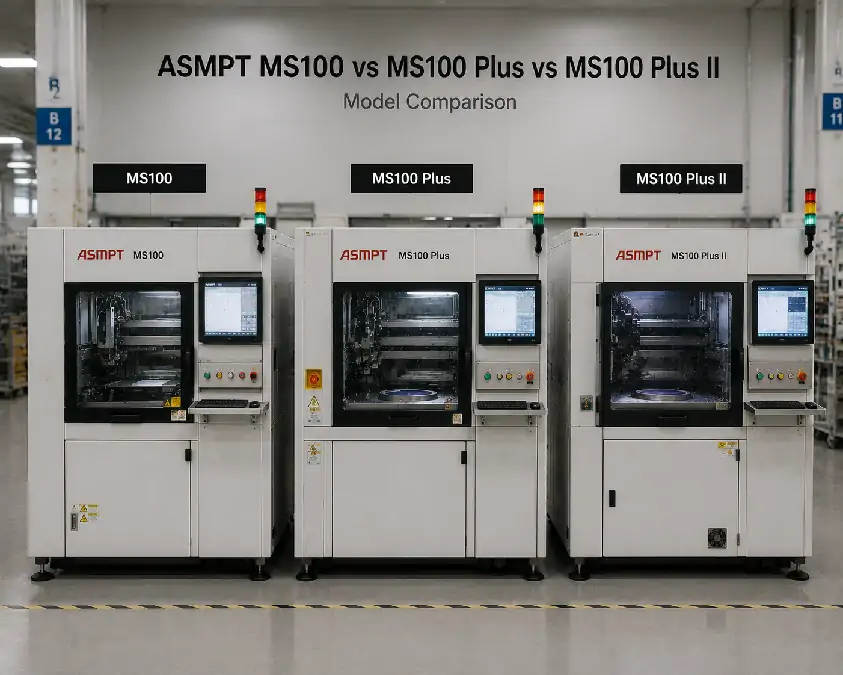
The MS100 Plus must also remain separate from the MS100, MS100 Plus II and MS90. Buyers seeking background on the earlier model can refer to the ASM MS100 platform guide, but specifications and photographs should not be transferred between the models.
Sorting, Electrical Testing and Die Bonding Are Different Process Roles
A wafer map sorter uses process or classification information to select dies and route them to defined outputs. The classification may have been produced during an earlier inspection or test process.
An electrical test handler performs a different role. It presents devices to compatible test sites and normally requires suitable sockets, contactors, test interfaces, ATE communication and supporting software. A die bonder also has a separate purpose because it places and attaches dies to a substrate, package or other target.
The MS100 Plus should therefore not be described as an electrical test handler or die bonder unless the installed machine and its process documentation provide clear evidence of those functions.
Why “MS100 Plus” Is Not a Complete Specification
The Plus designation identifies a platform, but it does not reveal the complete installed configuration. It does not confirm the number or type of pickup heads, the ejector arrangement, wafer-table setup, supported frames, camera system, output media, software release, licenses or available conversion tooling.
It also does not prove that the machine is faster than another model, supports a larger wafer format, contains dual heads or includes integrated vision inspection. These details must come from original documentation or the actual equipment record.
A unit previously used with one die, wafer frame and output carrier may require different pickup tools, ejector parts, recipes and conversion hardware for another process. The practical buying question is therefore not simply “Is this an MS100 Plus?” but “Does this particular MS100 Plus have the configuration needed for our product?”
Define the Target Process Before Reviewing the Machine
A useful equipment review begins with the die and process requirements. The buyer should provide the die dimensions and thickness, device or material type, surface sensitivity, allowed pickup area and required orientation.
The input side should describe the wafer or film-frame format, frame dimensions, wafer condition, loading method and available map or recipe source. Output requirements should identify whether the die must move to a tray, carrier, frame, bin or grade destination, including any reject or rework route.
Alignment, inspection, traceability, production use and expected changeover frequency should also be stated. These details do not imply that the MS100 Plus supports every listed format; they define what must be compared with the actual machine.
Check the Wafer and Frame-Handling Configuration
The input arrangement is one of the first compatibility points to verify. Buyers should compare the intended wafer or film frame with the installed wafer table, loading method, support arrangement and ejector configuration.
Frame dimensions, identification requirements and the condition of the incoming material can affect whether the machine can present the die correctly. Partial wafers, damaged wafers or special support conditions may require capabilities that are not present on a standard used unit.
A wafer range quoted in a resale listing is not enough to establish compatibility. The physical table, frame handling, ejector position and available loading hardware must match the intended media.
Review Die Pickup, Tooling and Changeover Needs
Die pickup depends on the relationship between the product and the installed tooling. Collets, nozzles or other pickup tools must suit the die dimensions, thickness, material, allowed contact area and surface sensitivity.
The ejector mechanism, vacuum condition and orientation requirement also affect the transfer process. Even when a die appears to fall within a broadly advertised size range, it may still need a different pickup tool, ejector part or process setup.
Buyers should identify which tooling is already installed, which conversion parts are included and whether suitable replacements can be obtained. Missing tooling can increase conversion cost and may delay a process trial or production start.
Verify Vision, Alignment and Software Functions
Vision capability should be evaluated from the installed cameras, optics, lighting and recognition results. Viewing direction, calibration state, available recipes and the appearance of the target die may all influence alignment and orientation control.
The presence of a camera does not prove that the machine can recognize the buyer’s die or perform a particular inspection task. A representative recognition result is more useful than a general statement that the machine has vision.
Software evidence is equally important. Confirm that the machine boots successfully, that authorized user access is available and that required licenses, passwords and program backups are included. The buyer should also review recipe availability, map loading, data-transfer method, alarm records and any available calibration documentation.
A machine may power on correctly but remain unsuitable if it cannot load the required map, access the necessary recipe or communicate with the intended process data.
Confirm the Output and Sorting Route
The output arrangement can differ significantly between used MS100 Plus machines. Buyers should confirm the installed carrier, tray, frame or bin format and how the available destinations are arranged.
The required grade logic, good-die route, reject handling, rework route and output orientation should be compared with the installed hardware and software. Traceability requirements may also affect whether the existing configuration is suitable.
An output system designed for one previous application may need conversion before it can support another sorting plan. The number of available destinations should not be assumed from the model name or a generic product description.
After the input, pickup, vision, software and output requirements have been defined, buyers can review the available ASM MS100 Plus equipment to determine what is actually installed on the current unit.
What to Check on a Used ASM MS100 Plus
A used-machine evaluation should establish four things: the exact identity of the unit, what hardware and software are installed, what currently operates and what will be included in the sale.
| Review Area | Evidence to Confirm |
|---|---|
| Machine identity | Nameplate, exact model, serial number, available manufacturing information and previous process |
| Mechanical condition | Motion, wafer table, pickup and ejector areas, cables, pneumatics, vacuum lines, guards and interlocks |
| Vision condition | Installed cameras, lighting, recognition result, calibration and representative-die repeatability where practical |
| Software condition | Boot status, alarms, user access, recipes, map loading, backups, passwords and licenses |
| Tooling and output | Pickup tools, ejector parts, frames, carriers, conversion kits, fixtures and included spares |
| Delivery scope | Machine, accessories, computers, manuals, software backups, inspection, refurbishment and support items actually included |
Visible appearance can help identify damage, corrosion or contamination, but it cannot confirm process capability. The condition review should be supported by operating evidence relevant to the intended application.
FAT and Sample Evidence Should Go Beyond Power-On Status
A useful factory acceptance test or operating demonstration should show more than a successful power-on sequence. Depending on the available machine and agreed test scope, evidence may include axis homing, wafer-table movement, pickup-head movement, vacuum response, camera images, recognition results and map or recipe loading.
Where the configuration allows, the demonstration may also include a pickup-and-placement cycle, routing to the installed output destinations, alarm recovery and repeated operation. Emergency-stop and interlock response may be checked according to the approved test procedure.
The scope must remain realistic. A machine without suitable tooling, sample material or software access may only support a basic functional demonstration. That should not be represented as a complete production FAT.
Why a Representative Die Trial Provides Better Compatibility Evidence
A generic motion test can show that major systems move, but it does not prove that the machine can handle the buyer’s die.
Where practical, a representative trial should use the target or a comparable die, the intended wafer or frame format, suitable pickup tooling, a compatible map or recipe and the required output carrier. Vision and orientation requirements should also be included where relevant.
This type of trial can reveal issues that are not visible from model descriptions, including pickup contact, ejector suitability, recognition quality, orientation control and output routing.
A target-die trial cannot always be offered. Its scope depends on sample availability, tooling, software access, machine condition, seller capability and project timing. Any untested compatibility points should remain clearly identified before purchase.
Confirm Conversion and Delivery Scope Before Quotation
A used-machine offer should state exactly what is included. The existing equipment may consist of the machine, computers, monitors, installed tooling, frames, carriers, manuals, software backups and available spare parts.
Required work should be listed separately. Inspection, calibration, product conversion, refurbishment, export packaging and other preparation should not be assumed to be part of the base machine offer.
Installation, training, destination support, freight arrangements and warranty or service terms must also be confirmed where applicable. A machine that appears suitable technically may still require a substantial conversion or support plan before it can enter production.
When the MS100 Plus May Not Be the Right Machine
Another equipment direction may be needed when electrical testing and ATE communication are the main requirements rather than wafer-map sorting.
The machine may also be unsuitable when the target input media cannot be supported, appropriate pickup tooling is unavailable, required map compatibility cannot be demonstrated or necessary vision functions are not installed.
Output routing, incomplete software access, impractical conversion requirements or the absence of meaningful operating evidence may also make another platform more appropriate. A replacement model should not be selected until the complete process requirements are known.
Check the Exact Configuration of an Available ASM MS100 Plus
Prepare the following project information before requesting a machine review:
Die dimensions and thickness
Wafer or frame format
Map and recipe requirements
Pickup restrictions
Vision or alignment requirements
Required output carrier and sorting logic
Existing tooling
Target production use
Required FAT or operating evidence
Delivery destination
Contact the All-SMT team by WhatsApp or email to request current photographs, nameplate and serial information, installed configuration, software and map evidence, available FAT records, included tooling, delivery scope and quotation for the specific machine.
Die information, reference images and process documents can be shared after the WhatsApp or email conversation is opened. Compatibility, availability, refurbishment, performance, price and delivery timing should only be confirmed after the actual unit and project requirements have been reviewed.
Frequently Asked Questions About the ASMPT MS100 Plus
What type of machine is the ASM MS100 Plus?
It is a legacy ASM semiconductor platform commonly associated with wafer-map-based die or chip sorting. Its exact capability depends on the hardware, software and tooling installed on the individual machine.
Is the ASM MS100 Plus an electrical test handler?
Not automatically. Electrical testing normally requires compatible test interfaces, contact hardware, ATE communication and supporting software. Map-based sorting alone does not prove those capabilities.
Is the MS100 Plus the same as the MS100?
No. They are separate model targets. Specifications, photographs and capability claims should not be transferred between them without original documentation or machine-specific evidence.
What wafer and die sizes can the MS100 Plus handle?
No universal range should be applied to every unit. Compatibility depends on the installed wafer table, frame arrangement, ejector, pickup tooling, vision system, software and conversion hardware.
What should be checked before buying a used MS100 Plus?
Confirm the nameplate and exact model, wafer handling, pickup tooling, vision, software access, map loading, output route, mechanical condition, FAT evidence and complete delivery scope.
Is a power-on video enough to evaluate the machine?
No. It confirms only limited machine status. A stronger evaluation also includes homing, movement, software access, map or recipe loading, recognition, pickup and placement and the required output route where practical.
Conclusion: The ASMPT MS100 Plus is a separate model target whose platform name does not define the configuration of an individual used machine. Buyers should verify the input arrangement, pickup tooling, vision, software, map handling and output route before judging compatibility. Power-on status alone is not sufficient; FAT evidence or a representative process trial provides stronger support, while conversion work and the complete delivery scope must be confirmed before a final quotation is accepted.