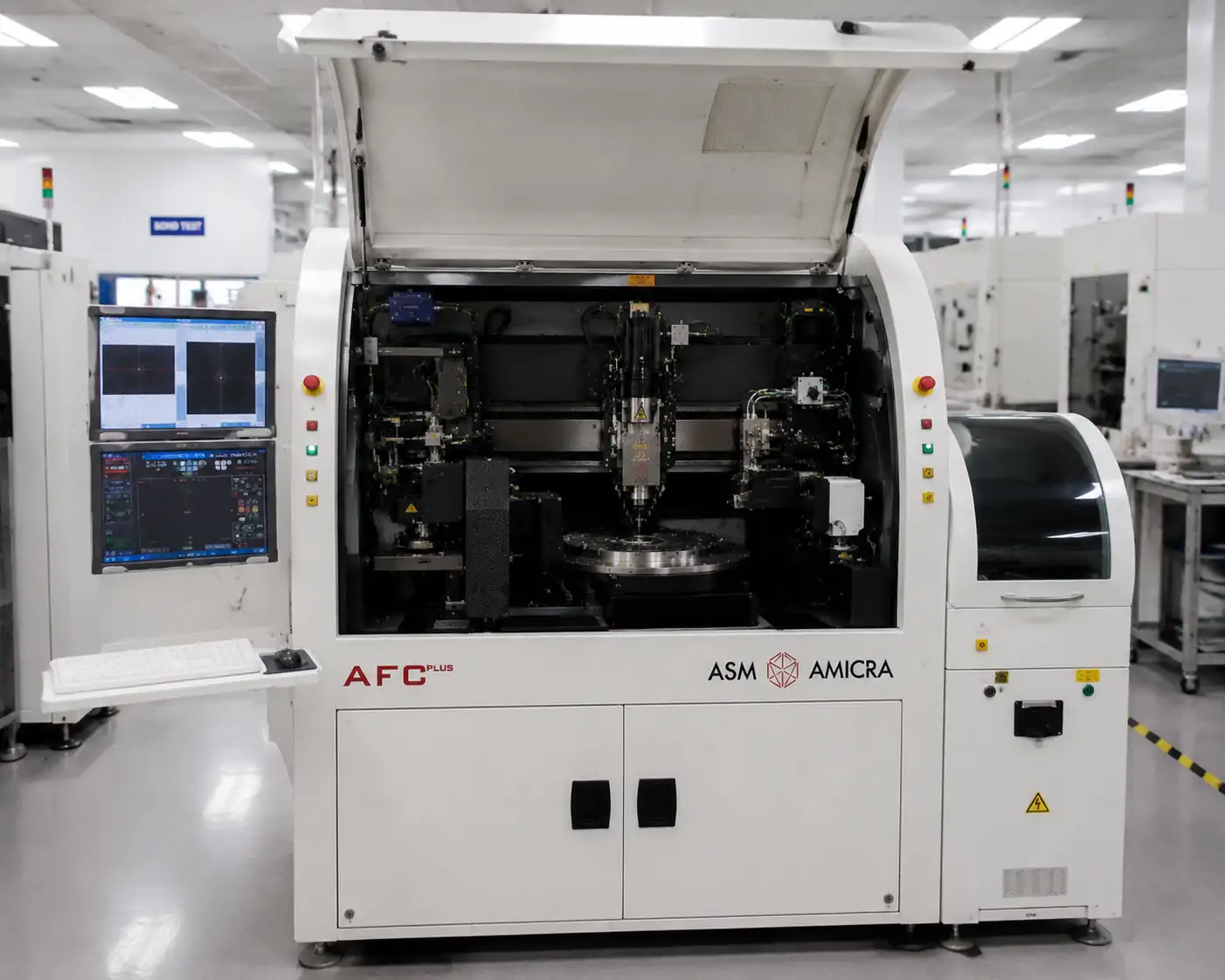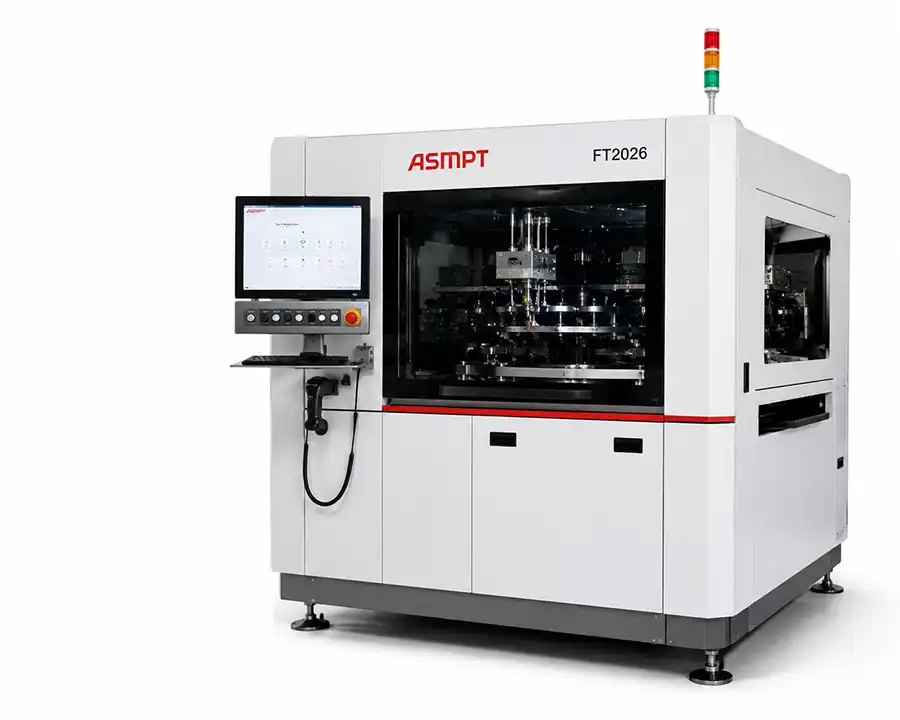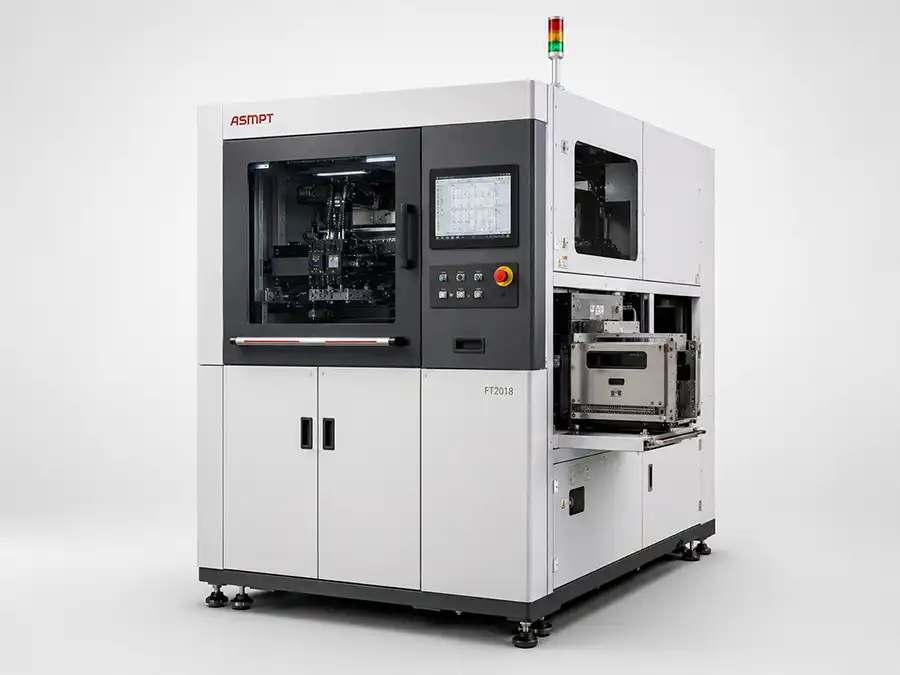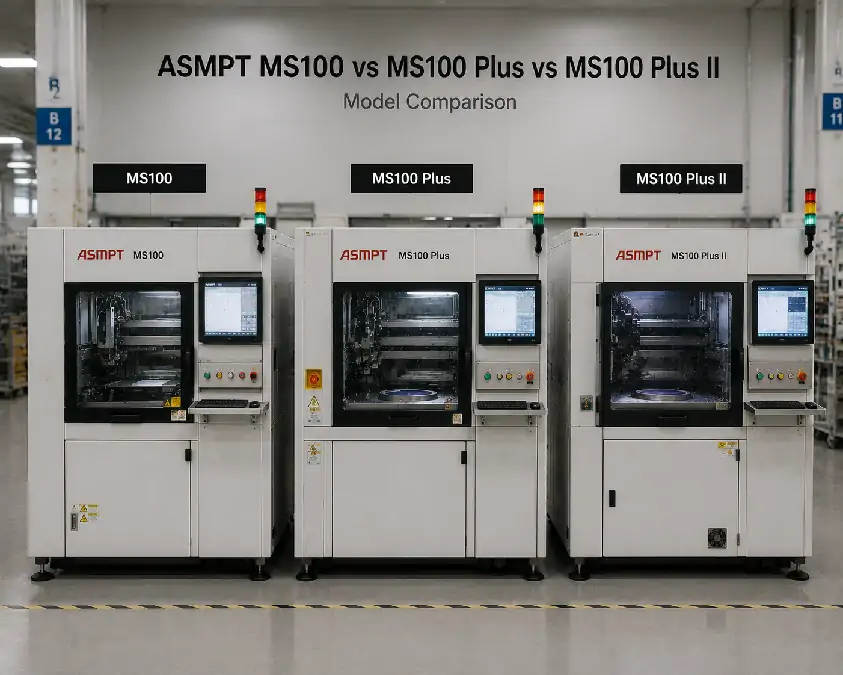
The ASMPT Test Handler is an automated semiconductor handling system designed to manage the complete movement and testing preparation process of semiconductor devices. In high-volume semiconductor manufacturing, test handlers play a critical role by ensuring that devices are transported, positioned, tested, and classified with high accuracy and repeatability.
Understanding how an ASMPT Test Handler works helps engineers and semiconductor professionals understand how automated testing systems maintain production efficiency and testing reliability. The machine is not only responsible for moving semiconductor devices but also coordinating mechanical systems, temperature control, testing interfaces, and automation processes.
This article explains the internal working process of ASMPT Test Handler machines, including device movement stages, control technologies, testing coordination, and the engineering principles behind reliable semiconductor test automation.
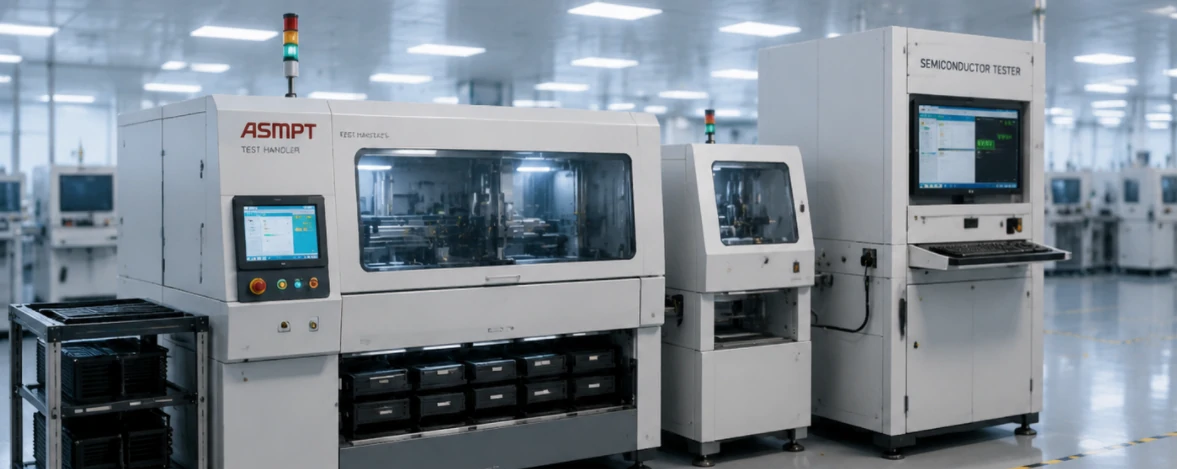
What Happens Inside an ASMPT Test Handler?
Inside an ASMPT Test Handler, semiconductor devices move through a carefully controlled sequence before, during, and after testing. Each operation is coordinated by mechanical systems and automation software to ensure that every device reaches the correct position under suitable testing conditions.
A typical semiconductor testing workflow inside a test handler includes:
Receiving semiconductor devices from input carriers.
Moving devices through internal handling paths.
Aligning devices with testing interfaces.
Maintaining required environmental conditions.
Connecting devices with semiconductor testers.
Sorting devices according to test results.
The main challenge of semiconductor handling is achieving both speed and precision. Semiconductor devices are often small and sensitive, which means inaccurate movement or unstable contact can directly affect test reliability.
ASMPT Test Handler Working Process Overview
The working principle of an ASMPT Test Handler can be understood as a continuous automated device journey. From loading to final classification, every stage is designed to maintain consistent handling performance and testing accuracy.
Although machine configurations may vary depending on application requirements, the general operating sequence follows several key stages.
| Process Stage | Main Operation | Key Technology | Purpose |
|---|---|---|---|
| Device Loading | Receive semiconductor devices from carriers or input systems. | Material handling mechanism | Prepare devices for automated testing. |
| Device Transfer | Move devices through internal machine pathways. | Precision motion control | Maintain stable and accurate transportation. |
| Alignment | Position devices correctly before testing. | Positioning system | Ensure reliable connection with test interfaces. |
| Temperature Control | Maintain required testing conditions. | Thermal management system | Support accurate device evaluation. |
| Testing Connection | Connect devices with semiconductor testers. | Interface control technology | Enable electrical measurement. |
| Sorting | Classify devices according to results. | Automation control system | Separate qualified and rejected devices. |
Stage 1: Device Loading Process
The first stage of ASMPT Test Handler operation is device loading. Semiconductor devices enter the machine through different input formats depending on the production environment, such as trays, carriers, or automated material handling systems.
The loading system transfers devices into the internal handling process while maintaining correct orientation and preventing unnecessary mechanical stress.
During the loading stage, the handler typically performs several operations:
Receiving semiconductor devices from input sources.
Identifying device positions.
Preparing devices for internal transfer.
Maintaining correct product orientation.
Accurate loading is important because any positioning error at the beginning of the process may influence later testing operations.
Importance of Initial Device Positioning
Semiconductor testing requires extremely consistent device placement. Before a device reaches the testing interface, the handler must ensure that its position and orientation meet the required conditions.
Poor initial positioning may lead to:
Incorrect electrical contact.
Unstable testing results.
Increased handling errors.
Reduced production efficiency.
Therefore, the loading mechanism is not simply a transportation function. It is the first step in maintaining the accuracy of the complete testing workflow.
Stage 2: Device Transfer and Movement Control
After loading, semiconductor devices are transferred through the internal movement system of the ASMPT Test Handler. This stage requires precise mechanical control because devices must travel through predefined paths while maintaining stable positioning.
The movement system coordinates multiple mechanical elements to achieve reliable device transportation.
| Movement Function | Purpose | Impact on Testing |
|---|---|---|
| Device Transportation | Move products between different machine areas. | Maintains continuous production flow. |
| Position Control | Maintain accurate device location. | Improves testing consistency. |
| Motion Synchronization | Coordinate movement timing with testing operations. | Reduces process variation. |
| Mechanical Protection | Prevent excessive force or damage. | Improves device handling reliability. |
Precision Movement Requirements
The movement system inside a test handler must balance speed and accuracy. High-speed operation improves production efficiency, but excessive movement variation can negatively affect testing performance.
For this reason, ASMPT Test Handler systems rely on controlled motion mechanisms to ensure repeatable device transfer during thousands or millions of production cycles.
Stage 3: Device Alignment Before Testing
Before semiconductor devices can be tested, they must be accurately aligned with the testing interface. This is one of the most important stages because electrical testing depends on reliable physical contact between the device and the tester.
The alignment process ensures:
Correct device orientation.
Accurate contact position.
Stable mechanical placement.
Repeatable testing conditions.
A small alignment error can affect signal connection quality and may result in unreliable test data. Therefore, precision positioning technology is a core part of ASMPT Test Handler operation.
Stage 4: Temperature Control During Testing
Temperature control is an important part of ASMPT Test Handler operation because semiconductor devices may behave differently under various thermal conditions. During testing, maintaining a stable temperature environment helps manufacturers evaluate device performance more accurately.
Depending on the semiconductor product and testing requirements, devices may need to be tested under different temperature conditions. The test handler works together with thermal management systems to ensure that devices reach and maintain the required testing environment before measurement.
Temperature management inside a test handler may involve:
Heating semiconductor devices to required test conditions.
Cooling devices for low-temperature evaluation.
Maintaining stable thermal conditions during testing.
Controlling temperature changes during production cycles.
Why Thermal Stability Matters
Semiconductor characteristics can change with temperature variations. If the testing environment is unstable, measurement results may become inconsistent.
A reliable temperature control process helps improve:
Test result repeatability.
Device performance evaluation accuracy.
Production consistency.
Reliability verification.
The thermal system is therefore an important part of the complete test handling workflow rather than an independent function.
Stage 5: Testing Interface Connection
After device alignment and temperature preparation, the semiconductor device moves into the testing position where it connects with the semiconductor tester.
This stage requires accurate mechanical positioning because the device must establish a stable electrical connection with the testing interface.
The testing interface process includes:
Precise device placement.
Controlled contact between device and test socket.
Communication between handler and tester.
Synchronization of testing sequences.
Role of the Handler During Testing
The ASMPT Test Handler does not perform the electrical measurement itself. Instead, it prepares and manages the physical conditions required for the semiconductor tester to evaluate the device.
The handler ensures that:
The correct device reaches the testing position.
The device remains stable during measurement.
Testing conditions are maintained.
Devices can continue through the production workflow after testing.
The cooperation between the test handler and semiconductor tester creates a complete automated testing system.
| System | Main Responsibility | Contribution to Testing |
|---|---|---|
| ASMPT Test Handler | Device movement, positioning, and environmental control. | Creates stable testing conditions. |
| Semiconductor Tester | Electrical measurement and performance analysis. | Generates test results. |
| Factory System | Production tracking and process management. | Supports automated manufacturing control. |
Stage 6: Test Result Processing and Device Sorting
After testing is completed, the ASMPT Test Handler processes the next step of the production workflow by sorting devices according to test results.
The sorting system receives classification information and moves devices into appropriate output locations.
Typical sorting operations include:
Separating qualified devices.
Identifying failed products.
Grouping devices according to performance categories.
Preparing output carriers for the next manufacturing stage.
Importance of Automated Sorting
Automated sorting improves manufacturing efficiency because devices can be classified immediately after testing without additional manual handling.
Benefits include:
Reduced human handling variation.
Improved production organization.
Faster post-test processing.
Better manufacturing traceability.
Key Technologies Behind ASMPT Test Handler Operation
The operation of an ASMPT Test Handler depends on several integrated technologies. Mechanical systems, automation software, and communication functions work together to maintain reliable semiconductor testing processes.
| Technology System | Main Function | Operational Importance |
|---|---|---|
| Precision Motion System | Controls device movement and positioning. | Maintains alignment accuracy and repeatability. |
| Automation Control System | Manages operating sequences. | Coordinates complete handling workflow. |
| Thermal Management System | Controls device temperature conditions. | Supports reliable testing environments. |
| Communication System | Connects handler with testers and factory systems. | Enables automated production integration. |
| Monitoring System | Tracks equipment status and process conditions. | Improves stability and troubleshooting. |
Precision Motion Control
Precision motion control is one of the most important technologies inside an ASMPT Test Handler. The system must move semiconductor devices accurately while maintaining repeatability during continuous operation.
The motion system controls:
Transfer paths.
Position accuracy.
Movement timing.
Mechanical stability.
High precision movement helps ensure that semiconductor devices consistently reach the correct testing position.
Automation Control System
The automation control system acts as the operational center of the test handler. It coordinates different machine functions and ensures that each process stage occurs in the correct sequence.
The control system manages:
Device movement commands.
Testing synchronization.
Process monitoring.
Error detection.
Machine status management.
Thermal Management Technology
Thermal management technology allows test handlers to support semiconductor testing under controlled temperature conditions.
The system must maintain stable conditions while devices move through the testing workflow.
Effective thermal control improves testing reliability by reducing temperature-related variation.
Tester Communication and System Integration
An ASMPT Test Handler must communicate effectively with semiconductor testers and factory automation systems to maintain a continuous testing workflow. The handler coordinates device movement with testing operations to ensure that each device follows the correct processing sequence.
Communication functions may include:
Receiving test commands.
Sending device status information.
Synchronizing movement with testing cycles.
Reporting equipment conditions.
Supporting production data tracking.
Reliable communication between systems is essential because semiconductor testing involves multiple pieces of equipment working together. Any synchronization issue can reduce production efficiency or affect test consistency.
Machine Monitoring and Process Control
Modern ASMPT Test Handler systems include monitoring functions that help maintain stable operation during semiconductor production.
The monitoring system observes equipment conditions and helps engineers identify abnormal situations before they affect production.
Typical monitoring functions include:
Equipment status monitoring.
Error detection.
Process condition tracking.
Production performance monitoring.
These functions support preventive maintenance and improve overall equipment reliability.
Why Accurate Handling Is Critical in Semiconductor Testing
Semiconductor testing requires much more than simply measuring electrical performance. Before a device can be tested successfully, it must be transported, positioned, connected, and maintained under controlled conditions.
The accuracy of a test handler directly influences the reliability of the entire testing process.
| Critical Factor | Why It Matters | Possible Impact |
|---|---|---|
| Positioning Accuracy | Ensures correct connection between device and tester. | Improves measurement reliability. |
| Movement Repeatability | Maintains consistent operation across production cycles. | Reduces process variation. |
| Temperature Stability | Keeps testing conditions consistent. | Improves test result accuracy. |
| System Synchronization | Coordinates handling and testing operations. | Improves production efficiency. |
| Device Protection | Reduces mechanical stress during handling. | Helps prevent product damage. |
Common Challenges in ASMPT Test Handler Operation
Although automated test handlers improve semiconductor manufacturing efficiency, maintaining stable operation requires careful control of multiple technical factors.
Alignment Accuracy Challenges
One of the main challenges in semiconductor handling is maintaining precise alignment throughout repeated production cycles.
Factors that may affect alignment include:
Mechanical wear.
Device variation.
Environmental changes.
Incorrect system calibration.
Regular calibration and equipment monitoring help maintain reliable positioning performance.
Device Protection Challenges
Semiconductor devices can be sensitive to mechanical stress and improper handling. The handler must move devices carefully while maintaining production speed.
Important considerations include:
Controlled movement force.
Stable transportation paths.
Proper device support.
Reduced unnecessary contact.
Thermal Stability Challenges
Maintaining consistent temperature conditions can be challenging when testing requires different thermal environments.
Stable thermal management is necessary to ensure that test results remain comparable throughout production.
Production Synchronization Challenges
A semiconductor test handler must operate together with testers and factory systems. Poor synchronization can create delays or reduce equipment utilization.
Efficient communication and automation control help maintain smooth production flow.
ASMPT Test Handler vs Manual Testing Workflow
Compared with manual semiconductor testing processes, automated test handlers provide higher consistency and better support for large-scale manufacturing.
| Comparison Area | Manual Handling | ASMPT Test Handler Automation |
|---|---|---|
| Device Movement | Performed by operators. | Controlled by automated mechanical systems. |
| Position Accuracy | Depends on operator consistency. | Maintained through precision motion control. |
| Production Volume | Limited by manual operation speed. | Supports continuous high-volume production. |
| Testing Consistency | May vary between operations. | Provides repeatable automated processes. |
| Process Tracking | Requires additional manual recording. | Supports automated monitoring and communication. |
Frequently Asked Questions
How does an ASMPT Test Handler work?
An ASMPT Test Handler works by automatically moving semiconductor devices through loading, alignment, testing preparation, environmental control, testing connection, and sorting stages. The system combines mechanical automation and software control to maintain reliable semiconductor testing workflows.
What happens inside a semiconductor test handler?
Inside a semiconductor test handler, devices are transported through controlled movement paths, positioned accurately, connected with testing interfaces, evaluated under required conditions, and classified according to test results.
What is the role of temperature control in a test handler?
Temperature control helps maintain specific testing conditions so semiconductor devices can be evaluated accurately under different operating environments.
Why is precision movement important in semiconductor testing?
Precision movement is important because semiconductor devices must be positioned accurately to establish reliable connections with testing interfaces. Accurate handling improves test consistency and reduces errors.
Does a test handler perform semiconductor testing itself?
A test handler does not perform the electrical measurement itself. Instead, it manages device handling, positioning, and testing conditions while working together with semiconductor testers.
What technologies are used inside ASMPT Test Handler machines?
ASMPT Test Handler systems use precision motion control, automation software, thermal management, communication systems, and monitoring technologies to support reliable semiconductor testing operations.
Conclusion: Understanding How ASMPT Test Handler Works
An ASMPT Test Handler is a complex semiconductor automation system that coordinates device movement, positioning, testing preparation, environmental control, and sorting operations. Each stage of the workflow contributes to achieving accurate and repeatable semiconductor testing results.
By combining precision mechanical systems, automation control, thermal management, and communication technology, ASMPT Test Handler machines help semiconductor manufacturers maintain stable and efficient testing processes.
Understanding the internal operation of a test handler allows engineers to better evaluate how semiconductor testing automation works and why accurate handling is essential for modern semiconductor production.
For technical evaluation, semiconductor handling consultation, or equipment compatibility discussion, contact our team to explore solutions based on your production requirements.