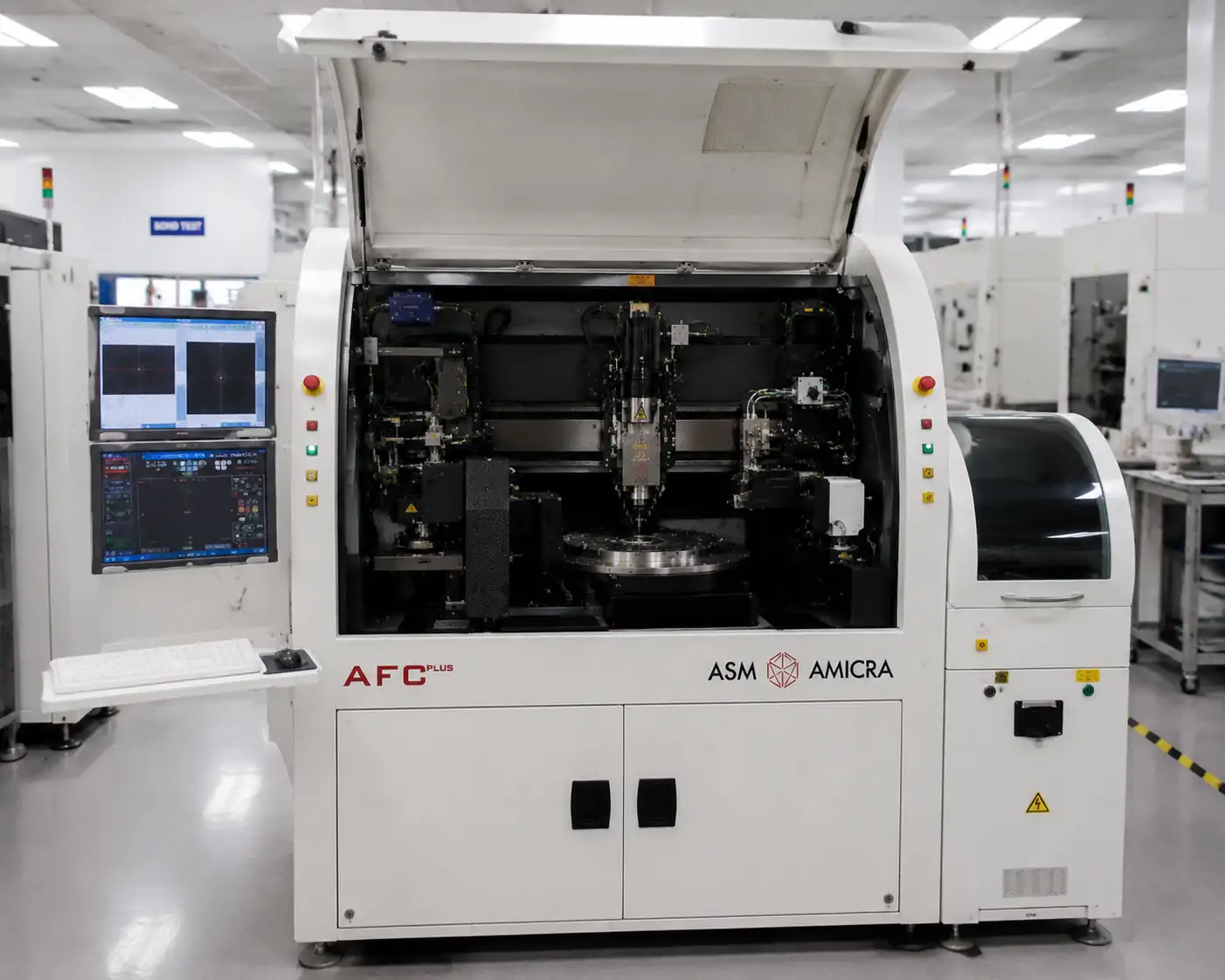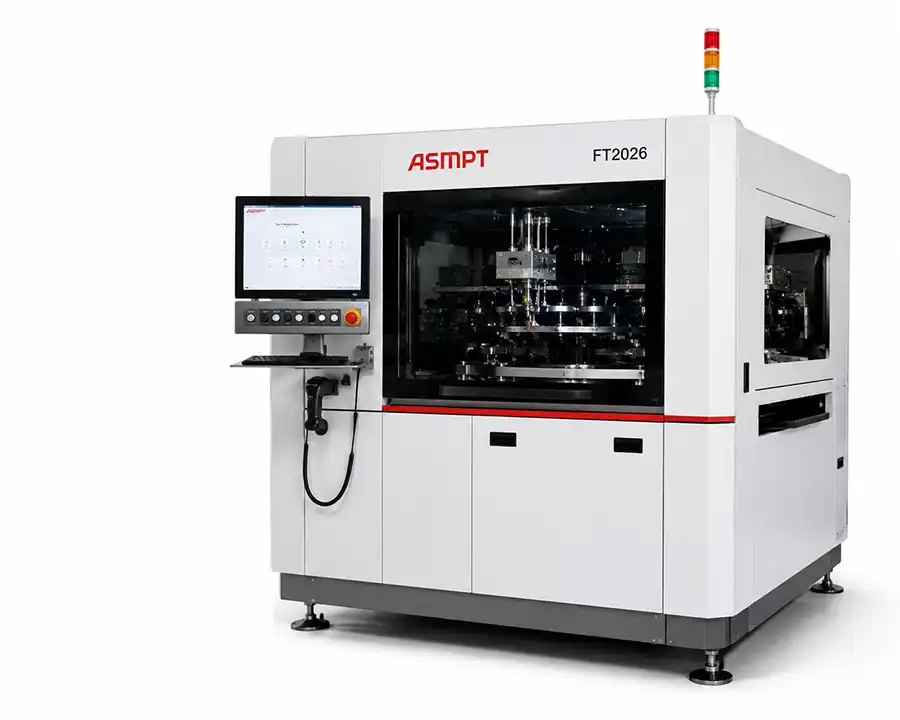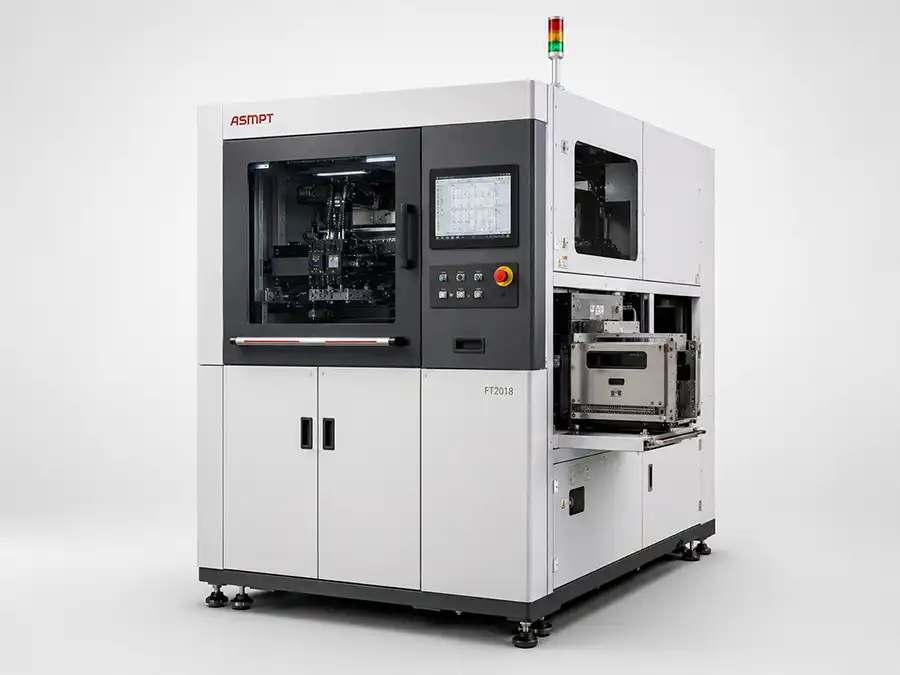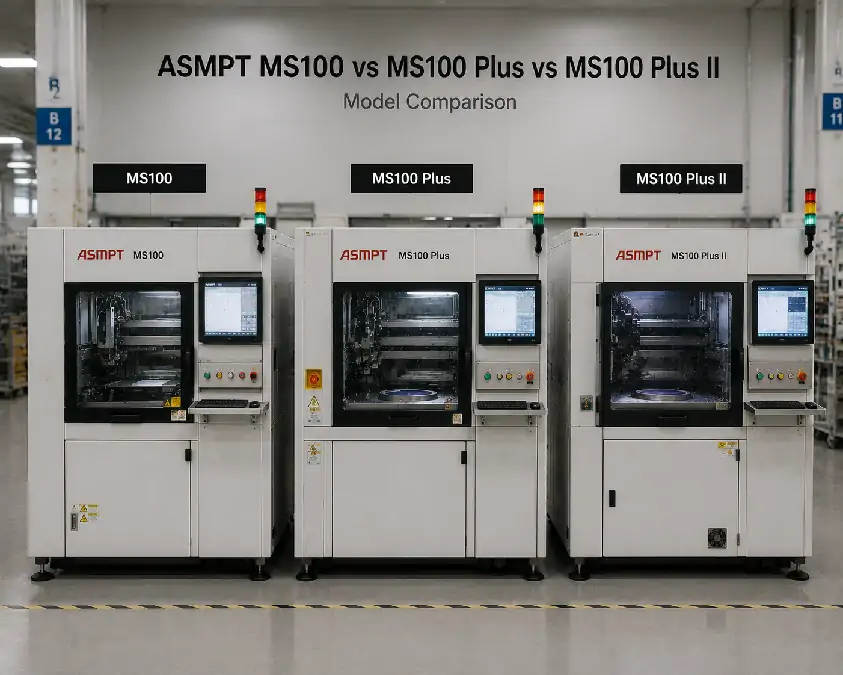
As semiconductor devices become increasingly complex and global production volumes continue to grow, semiconductor manufacturers require advanced automation solutions to maintain efficient, stable, and repeatable testing processes. The ASMPT Test Handler is part of automated semiconductor testing systems that help manufacturers manage device transportation, testing workflows, and production consistency.
In modern semiconductor manufacturing, test handlers serve as a critical connection between semiconductor devices and automated test equipment (ATE). They are responsible for accurately transferring, positioning, and organizing semiconductor devices during testing operations while supporting continuous production requirements.
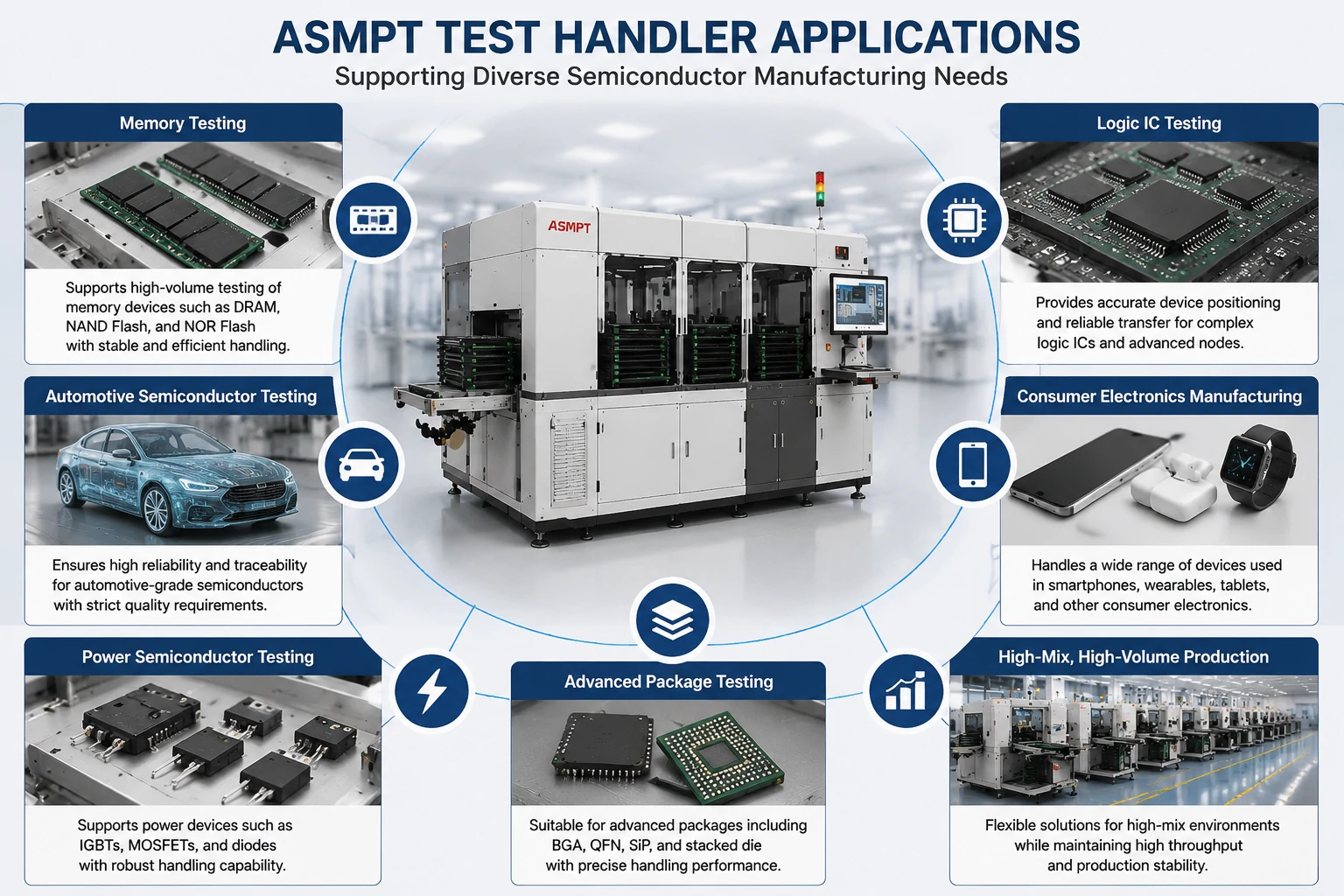
The applications of ASMPT Test Handler systems extend across different semiconductor manufacturing environments, including memory testing, logic IC production, automotive semiconductor testing, consumer electronics semiconductor manufacturing, and advanced package testing. Understanding these application scenarios helps engineers and procurement teams evaluate how automated handling technology supports specific production requirements.
Understanding the Role of Test Handlers in Semiconductor Production
Semiconductor manufacturing involves multiple complex stages, including wafer fabrication, assembly, packaging, testing, and quality verification. After semiconductor devices are manufactured and packaged, they must undergo electrical testing and functional evaluation before entering the market.
A semiconductor test handler supports this final testing stage by automatically moving semiconductor devices through testing operations. Instead of relying on manual device transfer, manufacturers use automated handling systems to improve workflow efficiency, reduce handling variation, and maintain stable production conditions.
The role of a test handler is not limited to device transportation. In a modern semiconductor factory, it works together with testing equipment, factory automation systems, and manufacturing execution systems (MES) to create a coordinated production environment.
From Wafer Processing to Final Testing
Test handling is positioned in the later stages of semiconductor manufacturing. After wafer processing and device packaging, semiconductor products enter testing processes where electrical characteristics, functional performance, and reliability requirements are evaluated.
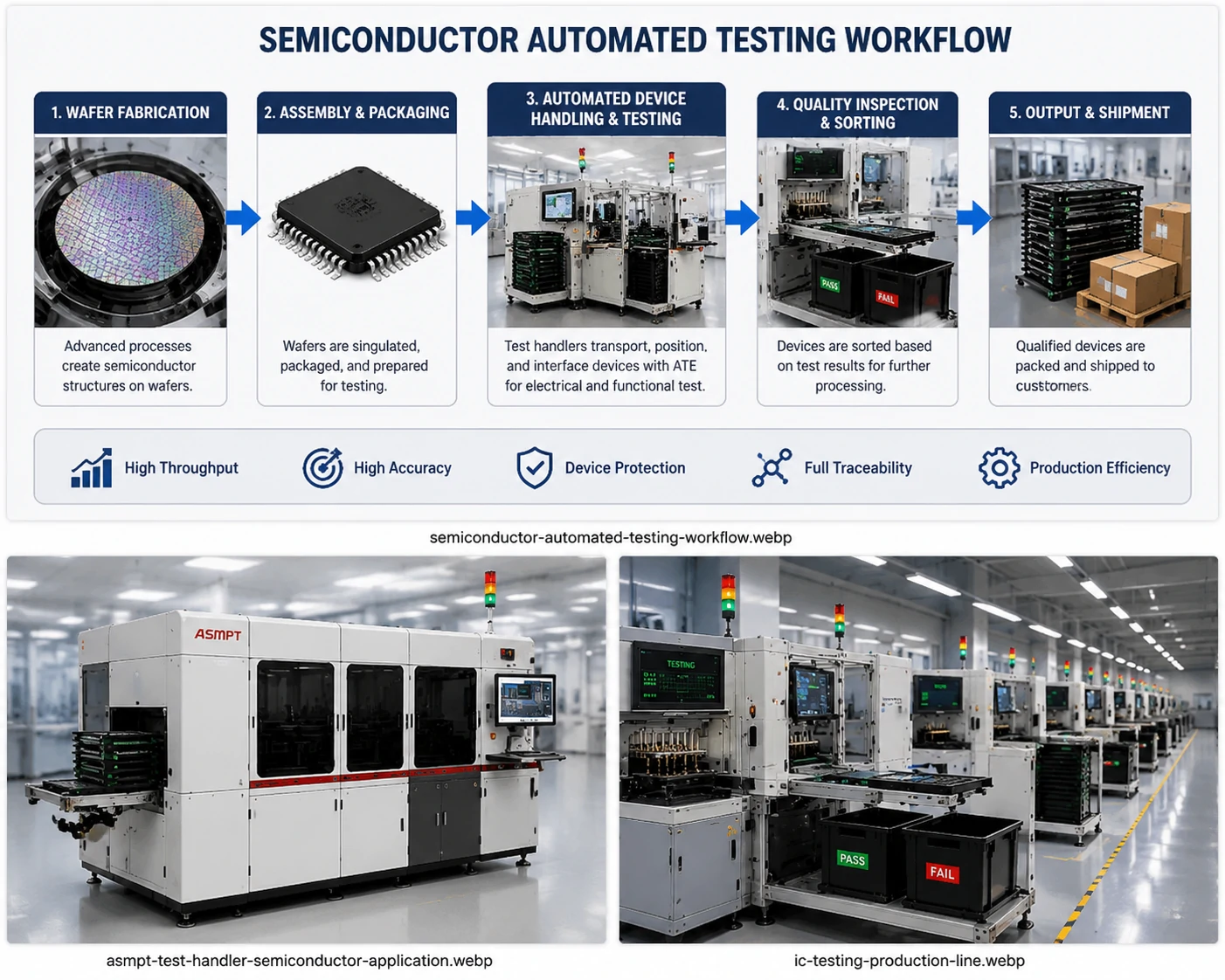
A simplified semiconductor production workflow includes:
Wafer fabrication:Semiconductor structures are created through advanced manufacturing processes.
Assembly and packaging:Individual semiconductor devices are separated, packaged, and prepared for testing.
Automated device handling and testing:Test handlers move devices into testing positions and support automated evaluation.
Quality inspection and production release:Devices are classified according to testing results before shipment.
During the testing stage, automated handling equipment ensures that semiconductor devices can move through production workflows with consistent positioning and controlled movement. This is especially important when manufacturers process large quantities of devices with strict quality requirements.
Why Automated Handling Is Required
Modern semiconductor production requires high levels of automation because manual handling becomes increasingly difficult when manufacturers need to process millions of devices while maintaining strict quality standards.
Automated semiconductor test handlers help address several manufacturing challenges:
High production volume:Large-scale semiconductor manufacturing requires continuous testing workflows with stable output capability.
Device protection:Automated movement reduces unnecessary human interaction with sensitive semiconductor packages.
Testing consistency:Repeatable handling processes help maintain stable testing conditions across production cycles.
Manufacturing efficiency:Automation reduces workflow interruptions and improves production organization.
Process traceability:Integration with factory systems helps manufacturers monitor and manage production data.
For semiconductor manufacturers, the value of automated handling is not only measured by speed. Production stability, repeatability, equipment availability, and integration capability are equally important when evaluating semiconductor test handling solutions.
How Semiconductor Test Handlers Work
Although different semiconductor test handler designs may use different mechanical structures and control technologies, most systems follow a similar automated testing workflow.
Device Loading
The testing process begins when semiconductor devices enter the handler system through automated input mechanisms such as trays, tubes, or other material handling methods.
The loading stage ensures that devices are introduced into the testing workflow in an organized and controlled manner.
Device Positioning and Transfer
After loading, the handler accurately transfers semiconductor devices into the required testing position. Precise positioning is important because incorrect alignment may affect testing accuracy and production reliability.
Key requirements include:
Accurate device placement
Repeatable movement performance
Stable mechanical operation
Compatibility with device package characteristics
Connection With Automated Test Equipment
The handler works together with automated test equipment (ATE) to perform electrical or functional testing. During this stage, semiconductor devices are evaluated according to predefined testing requirements.
The interaction between the handler and testing equipment influences overall production efficiency because both systems must operate together with accurate timing and stable communication.
Sorting and Output Management
After testing is completed, devices are classified according to test results. The handler transfers devices into appropriate output locations based on production requirements.
This automated sorting capability helps manufacturers maintain organized workflows and reduce manual intervention during high-volume production.
Importance of Test Handler Technology in Semiconductor Manufacturing
As semiconductor products become smaller, more complex, and more diverse, manufacturers require handling solutions that can support different device characteristics and production environments.
The performance of an ASMPT Test Handler application depends on several factors, including:
Device package requirements
Production volume
Testing complexity
Required automation level
Factory integration requirements
A suitable semiconductor test handler helps manufacturers create reliable testing workflows while supporting future production expansion and technology development.
Common Applications of ASMPT Test Handler
The applications of ASMPT Test Handler systems are closely connected with semiconductor device requirements, production volume, and testing complexity. Different semiconductor products may require different handling approaches depending on package structure, reliability requirements, and manufacturing goals.
In semiconductor manufacturing, automated test handlers are commonly used in environments where manufacturers need stable testing workflows, high production efficiency, and consistent device management. The following applications represent common areas where semiconductor handling automation plays an important role.
Memory Semiconductor Testing
Memory semiconductor production is one of the major application areas for automated test handling systems. Memory devices are typically produced in large quantities, creating strong requirements for efficient, repeatable, and stable testing processes.
During memory testing, manufacturers need automated handling solutions that can support continuous device movement while maintaining consistent testing conditions.
Important requirements in memory semiconductor testing include:
High throughput capability:Large memory production volumes require efficient device processing to meet manufacturing targets.
Stable automated operation:Continuous production requires reliable handling performance over extended operating periods.
Testing consistency:Repeatable device positioning helps maintain stable electrical testing conditions.
Integration with testing systems:The handler must work effectively with semiconductor test equipment and factory automation systems.
For memory manufacturers, the value of automated test handlers comes from maintaining production efficiency while reducing process variation during high-volume testing operations.
Logic IC Testing
Logic IC testing introduces different handling requirements because semiconductor devices may vary significantly in package type, design complexity, and functional requirements.
Compared with high-volume memory production, logic IC manufacturing may require greater flexibility because manufacturers often produce different device configurations and product variations.
For logic semiconductor applications, manufacturers typically evaluate:
Package compatibility:Whether the handler can support different device structures and package formats.
Handling precision:The ability to accurately position devices during testing operations.
Production flexibility:The ability to adapt to changing product requirements.
Workflow integration:Compatibility with existing testing and manufacturing systems.
Automated IC testing solutions help manufacturers improve consistency while maintaining flexibility for changing semiconductor product requirements.
Automotive Semiconductor Testing
Automotive semiconductor manufacturing has become an increasingly important application area due to growing demand for advanced electronic systems in vehicles, including driver assistance systems, power management, and vehicle control technologies.
Automotive semiconductor testing often requires strict quality control because devices may need to operate reliably under demanding conditions.
In automotive semiconductor applications, manufacturers commonly focus on:
Long-term process stability:Production systems must maintain reliable performance over extended manufacturing periods.
Testing consistency:Accurate and repeatable handling supports quality-focused testing processes.
Traceability requirements:Manufacturers may require strong production monitoring and data management capabilities.
Device protection:Sensitive semiconductor packages require controlled handling methods.
For automotive semiconductor production, the selection of a test handler is often influenced by reliability requirements, production stability, and integration with quality management systems.
Consumer Electronics Semiconductor Production
Consumer electronics products such as smartphones, wearable devices, and computing systems require large quantities of semiconductor components. This creates demand for efficient automated testing workflows that can support high production volumes.
In consumer electronics semiconductor manufacturing, automated test handlers help manufacturers improve:
Production throughput
Testing workflow efficiency
Device handling consistency
Manufacturing scalability
Because consumer electronics markets often involve rapid product cycles, manufacturers may also consider flexibility and changeover efficiency when selecting semiconductor handling equipment.
Advanced Semiconductor Package Testing
The development of advanced semiconductor packaging technologies has increased the complexity of device testing requirements. New packaging approaches may require more precise handling, improved process control, and stronger integration between handling systems and testing equipment.
Advanced semiconductor package applications may include devices using structures such as:
QFN packages
BGA packages
CSP packages
LGA packages
Advanced multi-chip packaging solutions
For advanced packages, manufacturers should evaluate:
Handling precision requirements
Package compatibility
Mechanical protection requirements
Testing complexity
Future production scalability
As semiconductor packaging technologies continue to evolve, test handlers must provide sufficient flexibility and precision to support new device requirements.
Package Compatibility Considerations for ASMPT Test Handler Applications
Device package characteristics are an important factor when evaluating semiconductor test handling solutions. Different packages may introduce different mechanical, thermal, and testing requirements.
Manufacturers should consider several package-related factors:
Device size and structure:Larger or more complex packages may require specialized handling mechanisms.
Contact requirements:Different testing interfaces may require precise device positioning.
Thermal conditions:Some semiconductor testing applications require controlled temperature environments.
Mechanical sensitivity:Advanced packages may require careful handling to prevent physical damage.
A suitable ASMPT Test Handler application depends not only on semiconductor device category but also on the specific requirements of the package and testing environment.
How Manufacturers Integrate Automated Testing Systems
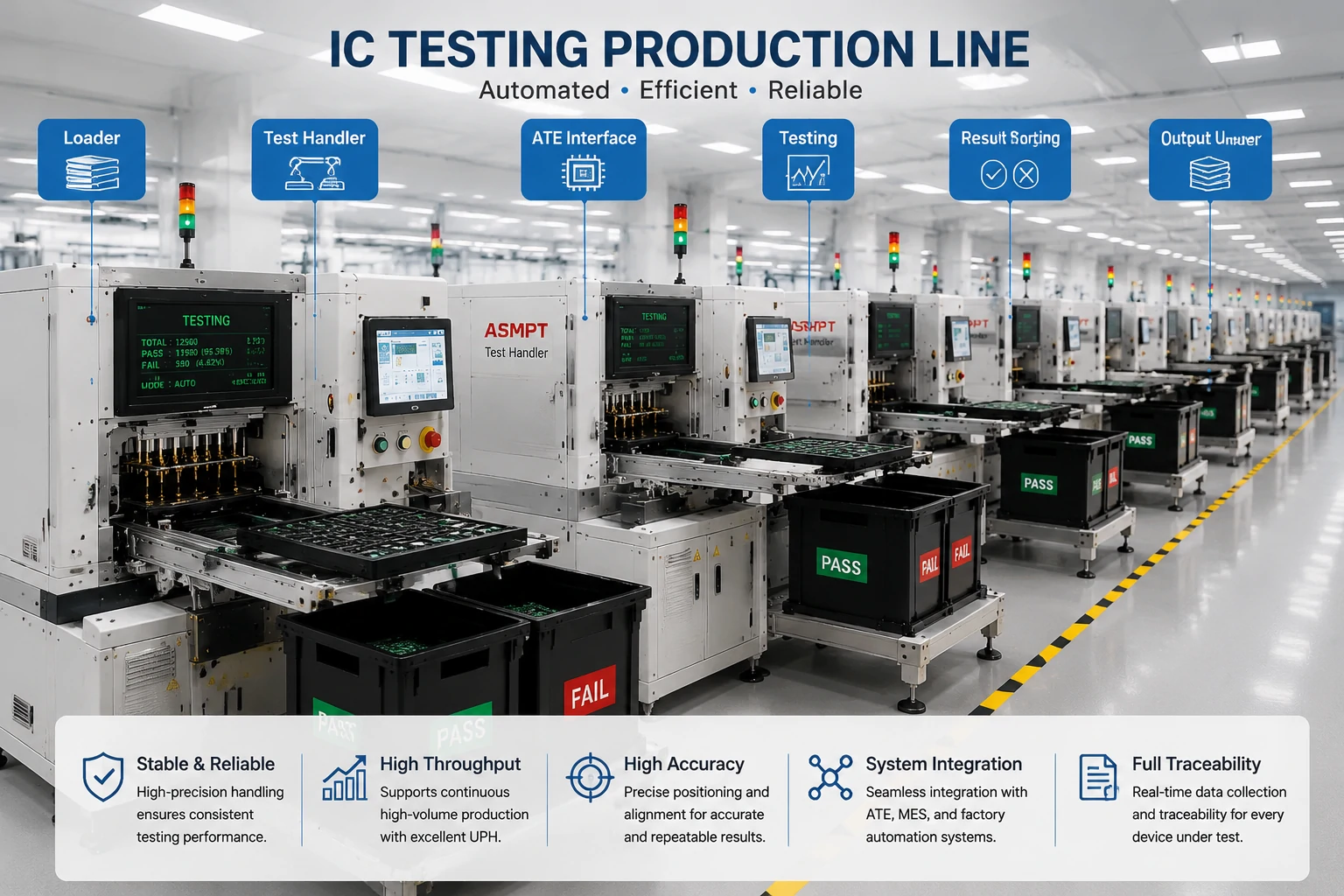
ASMPT Test Handler systems are typically integrated into broader semiconductor manufacturing automation environments. The handler works together with automated test equipment, factory automation platforms, and production management systems to create a coordinated manufacturing workflow.
Production Line Automation
In semiconductor manufacturing automation, test handlers support automated material movement between different production stages while maintaining consistent device flow.
Factory-level integration may include:
Automated device loading and unloading
Connection with semiconductor testing equipment
Production data coordination
Manufacturing execution system (MES) integration
Reduced manual operation requirements
This type of automation helps manufacturers create more organized, traceable, and repeatable production processes.
Testing Efficiency Improvement
Automated semiconductor testing systems improve production efficiency by creating smoother coordination between device handling and testing operations. The handler helps maintain continuous device flow while reducing interruptions caused by manual transfer processes.
Manufacturers can benefit from:
Improved testing workflow continuity:Automated movement reduces unnecessary delays between handling and testing stages.
Better equipment utilization:Stable device transfer helps maximize the use of testing equipment.
Production planning improvement:More predictable workflows support better manufacturing scheduling.
Reduced operator dependency:Automation minimizes repetitive manual handling tasks.
The actual efficiency improvement depends on production conditions, equipment configuration, device requirements, and factory automation level.
Quality Control and Process Stability
Consistency is one of the most important reasons semiconductor manufacturers use automated handling systems. Repeatable device movement and controlled workflows help reduce process variation during testing operations.
Automated test handlers contribute to:
Stable testing conditions
Repeatable device positioning
Reduced handling-related variation
Improved production monitoring
More predictable manufacturing performance
For semiconductor manufacturers producing high-value or reliability-critical devices, process stability is an important factor when evaluating automated test handling solutions.
Key Performance Factors for Evaluating ASMPT Test Handler Applications
When selecting a semiconductor test handler for a specific manufacturing application, engineers usually evaluate several measurable performance factors. These factors help determine whether the equipment can meet production requirements.
Throughput (UPH)
Throughput, commonly measured as Units Per Hour (UPH), indicates how many semiconductor devices a handler can process within a specific period.
High-volume semiconductor manufacturers often prioritize throughput because production capacity directly affects manufacturing efficiency.
Equipment Availability
Equipment availability measures how consistently a handler can operate during production. Higher availability helps reduce unexpected interruptions and supports stable manufacturing schedules.
Important considerations include:
System reliability
Maintenance requirements
Downtime management
Technical support capability
Repeatability and Handling Accuracy
Repeatability refers to the ability of a handler to perform the same movement and positioning operations consistently over multiple production cycles.
High repeatability is important because semiconductor testing requires accurate device positioning and stable testing conditions.
Changeover Time and Production Flexibility
Manufacturers producing multiple semiconductor products may need equipment that can adapt efficiently between different device types.
Shorter changeover time can help improve production flexibility by reducing preparation time when switching between products.
Test Parallelism
Test parallelism refers to the ability of a semiconductor testing system to evaluate multiple devices simultaneously.
Higher test parallelism may help manufacturers increase production efficiency, especially in high-volume testing environments.
How to Evaluate ASMPT Test Handler Applications
Choosing the right test handler requires understanding the relationship between equipment capability and manufacturing requirements. The best solution depends on application conditions rather than a single technical specification.
Production Volume Requirements
Manufacturers should first evaluate production scale and expected output requirements.
High-volume production environments usually prioritize:
High throughput capability
Stable continuous operation
Automation integration
Low production interruption risk
Device and Package Requirements
Device characteristics directly influence handler selection. Manufacturers should evaluate whether the equipment can support current products and future device development plans.
Important factors include:
Package type compatibility
Device size and structure
Testing conditions
Mechanical handling requirements
Testing Complexity
Different semiconductor products may require different testing environments. Advanced devices often require higher handling precision, stronger process control, and closer integration with testing equipment.
Factory Automation Requirements
Manufacturers should consider how the handler integrates with existing production systems, including:
Automated test equipment (ATE)
Manufacturing execution systems (MES)
Factory automation platforms
Production data management systems
Frequently Asked Questions
What industries use ASMPT Test Handler?
ASMPT Test Handler systems are used in semiconductor manufacturing environments where automated testing and device handling are required. Applications may include memory semiconductor production, logic IC manufacturing, automotive semiconductor testing, consumer electronics semiconductor production, and advanced package testing.
Why are test handlers important in semiconductor manufacturing?
Test handlers are important because they automate device movement, improve testing consistency, reduce manual handling requirements, and help manufacturers maintain stable production workflows during semiconductor testing.
What semiconductor products require automated testing?
Many semiconductor products require automated testing, including memory devices, logic ICs, automotive semiconductor components, consumer electronics chips, and advanced packaged semiconductor devices. The specific handling requirements depend on device structure, testing complexity, and production volume.
How does automation improve semiconductor testing?
Automation improves semiconductor testing by providing consistent device handling, reducing process variation, supporting continuous production workflows, and improving coordination between handlers and automated test equipment.
How do manufacturers choose a semiconductor test handler?
Manufacturers should evaluate production volume, device compatibility, package requirements, testing complexity, automation needs, throughput requirements, equipment availability, and long-term operational goals before selecting a semiconductor test handler.
What factors affect ASMPT Test Handler application suitability?
Application suitability depends on factors such as semiconductor device type, package structure, testing requirements, production scale, factory automation environment, and integration requirements.
Conclusion
The ASMPT Test Handler plays an important role in semiconductor manufacturing by supporting automated device handling during critical testing operations. From memory semiconductor testing and logic IC production to automotive semiconductor applications, consumer electronics manufacturing, and advanced package testing, automated handlers help manufacturers improve efficiency, consistency, and production stability.
The most suitable semiconductor handling solution depends on specific manufacturing requirements, including device characteristics, testing complexity, production volume, and automation goals. Engineers and procurement teams should evaluate application requirements together with performance factors such as throughput, repeatability, equipment availability, and integration capability.
By understanding different ASMPT Test Handler applications and selection considerations, semiconductor manufacturers can make more informed decisions when building reliable and scalable automated testing workflows.