Selecting the right semiconductor test handling system requires more than comparing equipment specifications. Semiconductor manufacturers need to evaluate how a handler fits their production requirements, semiconductor device characteristics, testing processes, factory automation environment, and long-term operational goals.
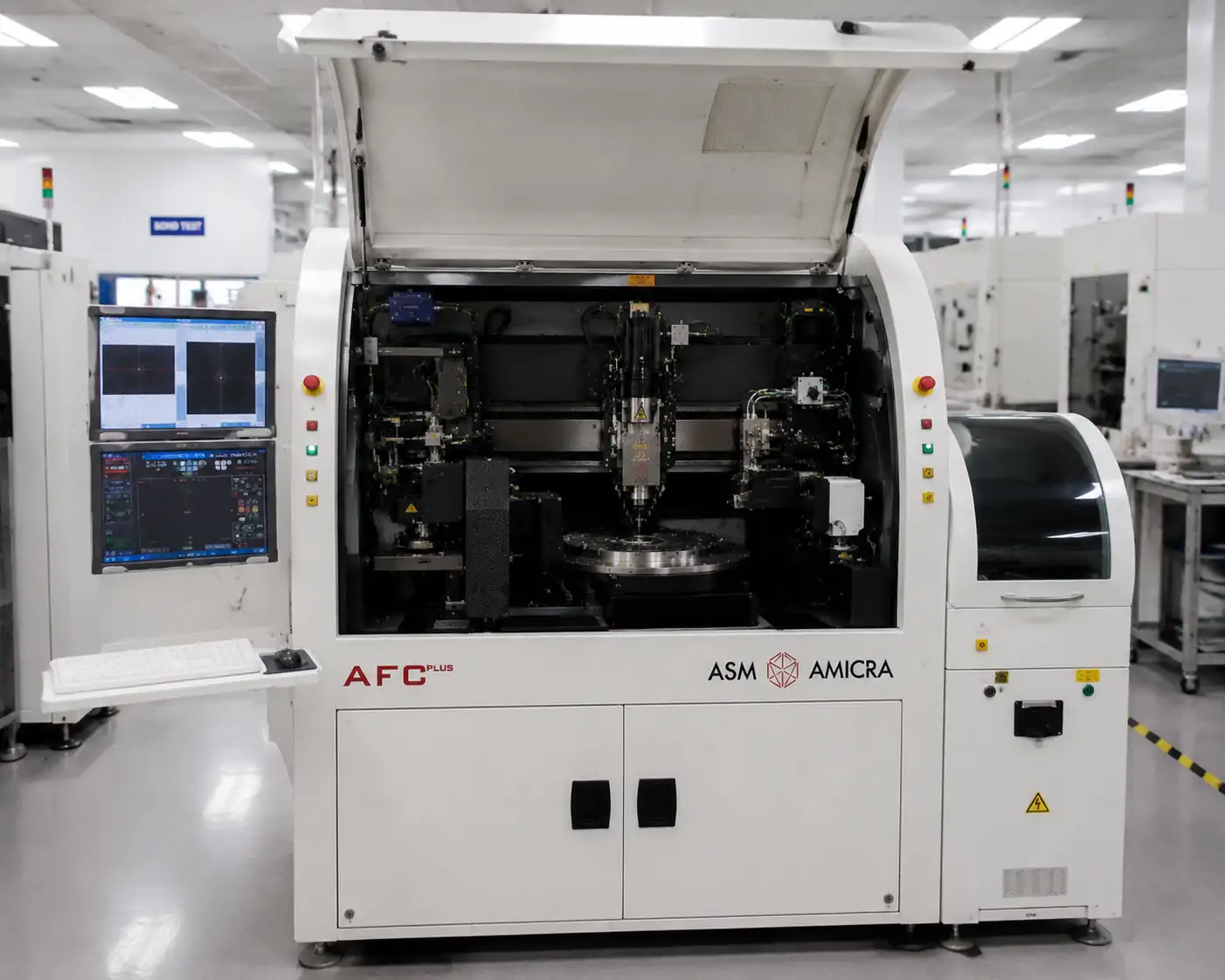
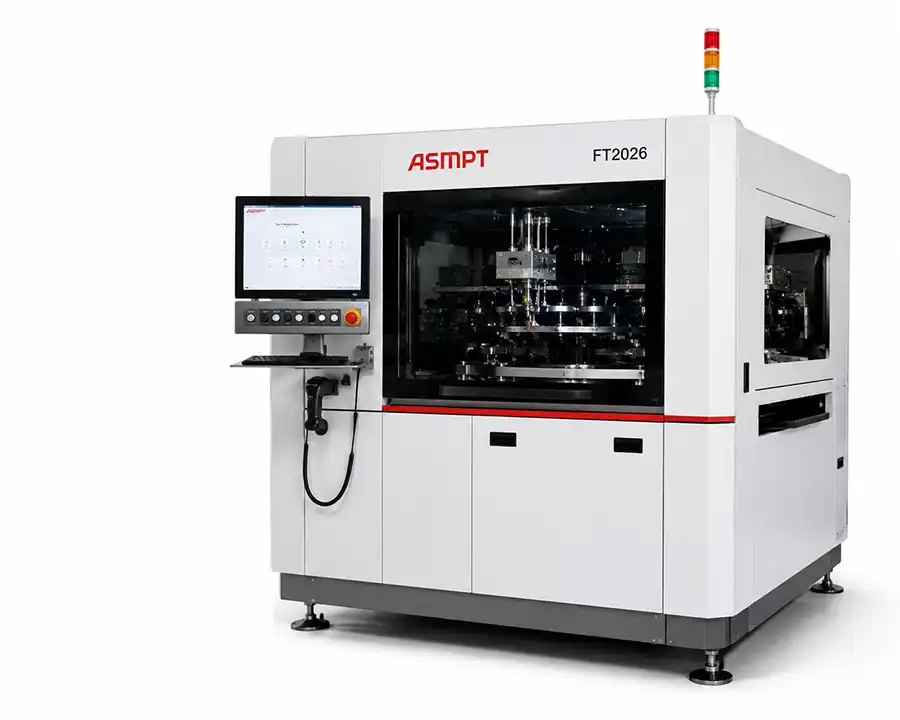
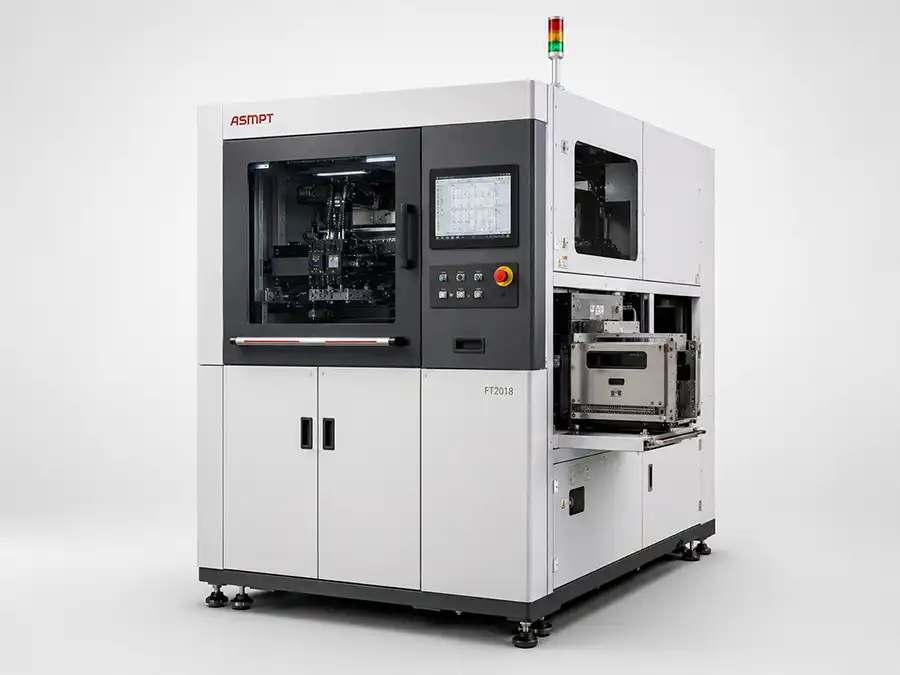
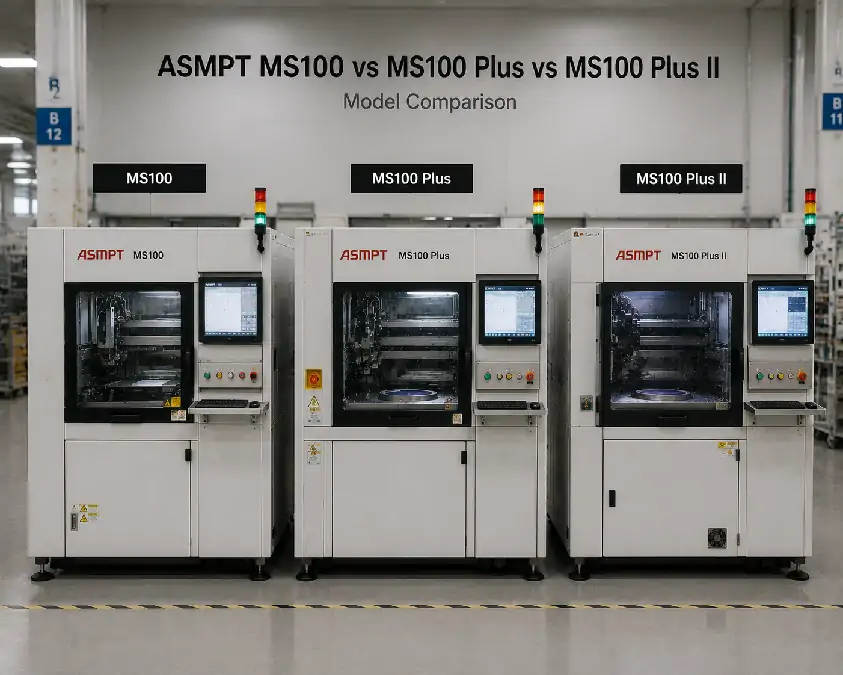
The ASMPT Test Handler is designed for automated semiconductor testing environments where manufacturers require consistent device handling, efficient workflows, stable production performance, and reliable integration with semiconductor testing systems.
However, the most suitable semiconductor test handler depends on specific manufacturing conditions. Factors such as production volume, device package type, testing complexity, automation requirements, maintenance strategy, and future product expansion plans all influence equipment selection decisions.
This guide explains how engineers and procurement teams can evaluate ASMPT Test Handler solutions by examining selection factors, technical capabilities, application suitability, performance requirements, and long-term operation considerations.
What to Consider Before Choosing a Test Handler
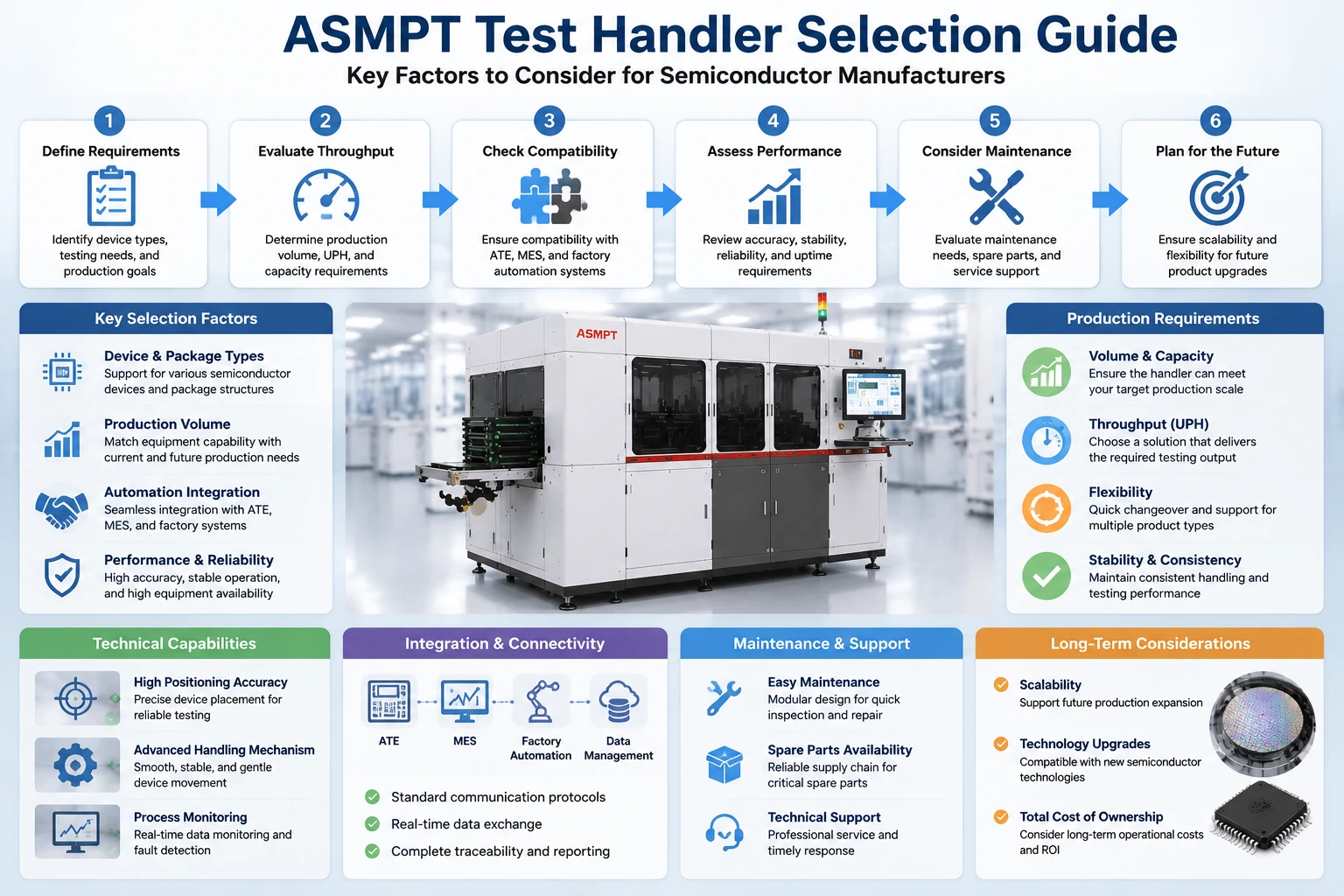
Before selecting semiconductor handling equipment, manufacturers should first define their production requirements. Different factories may have different priorities depending on device types, production scale, testing processes, and automation objectives.
A successful semiconductor test handler selection process should answer several important questions:
What semiconductor devices and package types will be tested?
What production volume and throughput requirements must be achieved?
What level of automation and factory integration is required?
How will the equipment be maintained throughout its operational lifecycle?
Can the selected solution support future semiconductor product development?
A structured evaluation approach helps manufacturers avoid selecting equipment based only on initial specifications and instead focus on how the handler supports actual production objectives.
Semiconductor Test Handler Selection Process
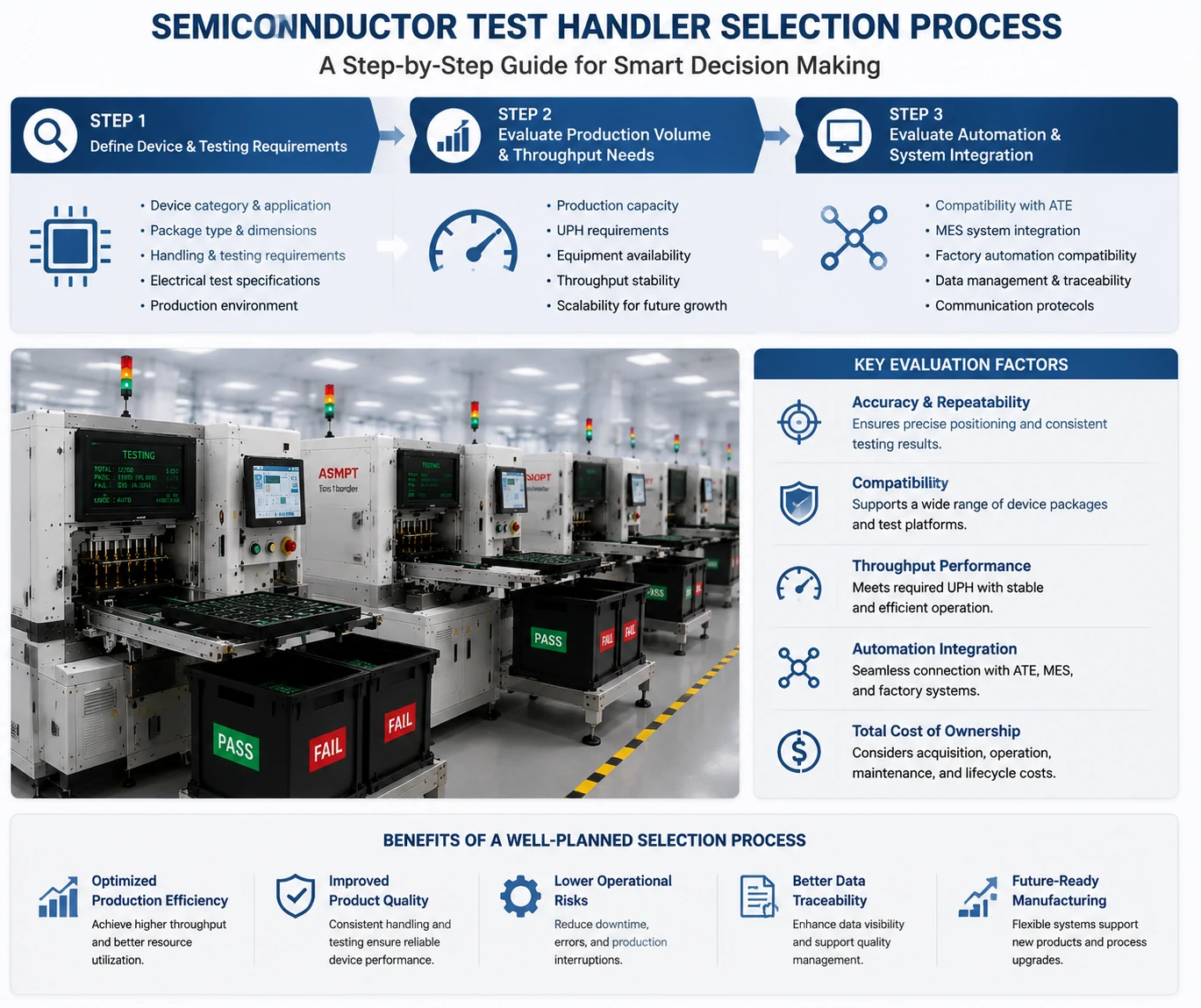
Selecting an automated test handling solution usually involves several evaluation stages. Engineers and procurement teams should review technical requirements together with manufacturing goals before making an equipment decision.
Step 1: Define Device and Testing Requirements
The first step is understanding the semiconductor products that will be processed. Different devices may require different handling methods, testing conditions, and equipment capabilities.
Manufacturers should evaluate:
Device category and application
Package structure
Mechanical handling requirements
Electrical testing requirements
Production environment conditions
Step 2: Evaluate Production Volume and Throughput Needs
Production scale directly influences semiconductor test handler requirements. High-volume manufacturing environments usually require equipment capable of supporting continuous operation, stable throughput, and efficient material flow.
Important considerations include:
Required production capacity
Units Per Hour (UPH) expectations
Equipment availability requirements
Production scalability
A handler selected for large-scale semiconductor manufacturing may prioritize automation stability and throughput, while flexible production environments may place greater importance on adaptability and quick changeover capability.
Step 3: Evaluate Automation and System Integration
Modern semiconductor factories rely on connected production systems. A semiconductor test handler should be evaluated not only as an individual machine but also as part of a larger automated manufacturing environment.
Integration considerations include:
Compatibility with Automated Test Equipment (ATE)
Connection with Manufacturing Execution Systems (MES)
Factory automation compatibility
Production data management requirements
Effective integration helps manufacturers improve production visibility, reduce manual intervention, and create more consistent testing workflows.
Production Requirements
Production requirements are among the most important factors when selecting semiconductor test handling equipment. The selected solution should match both current manufacturing needs and future production plans.
Production Volume
Manufacturers operating high-volume semiconductor production lines typically require handlers that can support continuous testing operations with stable performance.
Key evaluation factors include:
High production capacity
Stable automated operation
Reduced production interruptions
Long-term reliability
For lower-volume or multi-product manufacturing environments, flexibility and adaptability may become equally important selection criteria.
Throughput Requirements
Throughput represents the number of semiconductor devices that can be processed within a specific time period. It is commonly evaluated through production metrics such as Units Per Hour (UPH).
Manufacturers should consider:
Required output capacity
Testing cycle time
Production target requirements
Future capacity expansion plans
A suitable semiconductor test handler should provide sufficient throughput while maintaining stable handling accuracy and process consistency.
Manufacturing Environment
The factory environment also affects handler selection. Manufacturers should evaluate how the equipment fits into existing production workflows.
Important considerations include:
Available production space
Existing automation infrastructure
Operator requirements
Maintenance accessibility
Future manufacturing expansion
Device Compatibility
Semiconductor devices have different physical structures, package formats, and testing requirements. Device compatibility is therefore a critical factor when evaluating an ASMPT Test Handler.
Manufacturers should consider whether the handler can support:
Current semiconductor products
Future device generations
Different package configurations
Specific testing environments
Package Compatibility Considerations
Different semiconductor packages may introduce different handling challenges. Package design can influence device positioning, contact requirements, thermal conditions, and mechanical protection requirements.
Common semiconductor package types include:
QFN packages:Compact packages requiring accurate handling and stable positioning.
BGA packages:Packages where precise alignment and controlled handling are important.
CSP packages:Small form-factor packages requiring careful device management.
LGA packages:Packages with specific contact and handling requirements.
Manufacturers should evaluate package compatibility together with testing conditions to ensure reliable production performance.
Device Characteristics
Beyond package type, semiconductor device characteristics can also influence handler selection.
Important factors include:
Device size and structure
Mechanical sensitivity
Thermal testing requirements
Testing complexity
Production handling conditions
Matching the handler with actual semiconductor products helps reduce operational challenges and supports more stable testing workflows.
Key Features of ASMPT Test Handler
When evaluating ASMPT Test Handler solutions, manufacturers should focus on capabilities that directly influence production performance, testing efficiency, and long-term operational value.
A semiconductor test handler should not only provide automated device movement but also support stable testing workflows, accurate handling, system integration, and reliable operation in demanding manufacturing environments.
Automation Capability
Automation capability is one of the most important considerations in modern semiconductor manufacturing. Automated handling systems reduce manual intervention and help manufacturers establish more consistent production workflows.
Important automation evaluation factors include:
Automated device movement:The ability to transfer semiconductor devices efficiently between loading, testing, and sorting stages.
ATE integration:Compatibility with Automated Test Equipment to create a coordinated testing workflow.
Factory automation support:Ability to operate within broader semiconductor manufacturing systems.
Reduced manual dependency:Lower reliance on repetitive manual operations during production.
For high-volume semiconductor manufacturing, automation capability directly affects production scalability, workflow consistency, and operational efficiency.
Handling Accuracy
Semiconductor testing requires accurate device positioning because even small variations can influence testing reliability and production consistency.
Handling accuracy affects:
Testing reliability
Device protection
Production consistency
Quality management processes
Long-term manufacturing stability
A suitable IC test handler should provide stable handling performance that matches the requirements of the semiconductor devices being tested.
Production Reliability
Reliability is not only a technical specification but also a critical manufacturing consideration. Semiconductor manufacturers require equipment that can maintain stable performance during long production cycles.
Reliability evaluation should include:
Operational stability
Equipment availability
Maintenance requirements
Potential production interruption risks
Equipment lifecycle expectations
Considering reliability during selection helps manufacturers evaluate the long-term value of semiconductor test equipment rather than focusing only on initial equipment capability.
Performance Evaluation Metrics for Semiconductor Test Handlers
Technical evaluation of a semiconductor test handler should be based on measurable production factors. These metrics help engineers determine whether equipment performance matches manufacturing requirements.
Throughput (UPH)
Throughput, commonly measured as Units Per Hour (UPH), indicates how many semiconductor devices a handler can process within a specific production period.
Manufacturers should evaluate throughput based on:
Current production targets
Future capacity requirements
Testing cycle time
Overall factory output goals
High throughput capability is especially important for large-scale semiconductor production where testing capacity directly affects manufacturing efficiency.
Equipment Availability
Equipment availability represents how consistently a handler can operate during production. High availability helps manufacturers reduce unexpected downtime and maintain stable manufacturing schedules.
Important factors include:
System reliability
Preventive maintenance strategy
Technical support capability
Spare parts availability
Repeatability
Repeatability refers to the ability of a handler to perform the same movement and positioning operations consistently over repeated production cycles.
High repeatability supports:
Stable testing conditions
Consistent device positioning
Reduced process variation
Improved quality control
Test Parallelism
Test parallelism refers to the ability of a semiconductor testing system to evaluate multiple devices simultaneously.
Manufacturers should consider whether the handler can support the required testing capacity while maintaining stable operation.
Higher test parallelism may improve production efficiency in applications where large quantities of semiconductor devices require testing within short production cycles.
Changeover Time and Flexibility
Manufacturers producing multiple semiconductor products may require equipment that can adapt efficiently between different device types.
Changeover efficiency influences:
Production flexibility
Equipment utilization
Product transition speed
Manufacturing responsiveness
Flexible production environments often evaluate changeover capability together with throughput and automation performance.
ASMPT Test Handler Compared With Other Semiconductor Handler Solutions
Selecting a semiconductor test handler requires understanding how different handling solutions perform under different manufacturing conditions. The best choice depends on production requirements rather than a single equipment specification.
ASMPT Test Handler solutions should be evaluated together with alternative semiconductor handling approaches based on technology capability, performance requirements, application suitability, and long-term operation.
Technology Comparison Factors
| Comparison Factor | Evaluation Consideration | Manufacturing Impact |
|---|---|---|
| Automation Capability | Level of automated device movement, workflow control, and factory integration. | Influences production efficiency and labor requirements. |
| Handling Architecture | How semiconductor devices are transported and positioned during testing. | Affects accuracy, repeatability, and device protection. |
| Device Compatibility | Support for different package types and semiconductor products. | Determines application flexibility. |
| Production Scalability | Ability to support current and future manufacturing requirements. | Influences long-term equipment value. |
| Maintenance Requirements | Service needs, spare parts, and lifecycle support. | Affects operational cost and downtime risk. |
Application Differences
Different semiconductor manufacturing environments may prioritize different handler capabilities.
High-volume production:Usually prioritizes throughput, automation stability, and equipment availability.
Advanced semiconductor devices:May require higher handling precision, package compatibility, and stronger process control.
Flexible manufacturing:May prioritize changeover efficiency and support for multiple device configurations.
Specialized testing applications:May require specific handling capabilities based on device characteristics.
Matching ASMPT Test Handler With Different Applications
The suitability of a semiconductor test handler depends on the relationship between equipment capability and manufacturing requirements.
High Volume Manufacturing
High-volume semiconductor production environments usually require equipment that can support continuous testing operations with stable output.
Important considerations include:
High throughput capability
Reliable automated workflows
Production scalability
Long-term operational consistency
Advanced Semiconductor Devices
Advanced semiconductor packages and increasingly complex device structures create higher requirements for handling precision and process control.
Manufacturers should evaluate:
Package complexity
Testing challenges
Handling accuracy requirements
Future product development needs
Flexible Production Environments
Some manufacturing environments produce multiple semiconductor device types and require greater adaptability.
Selection factors include:
Support for different device configurations
Efficient production changeover
Workflow flexibility
Balance between efficiency and versatility
Maintenance Considerations for Long-Term Operation
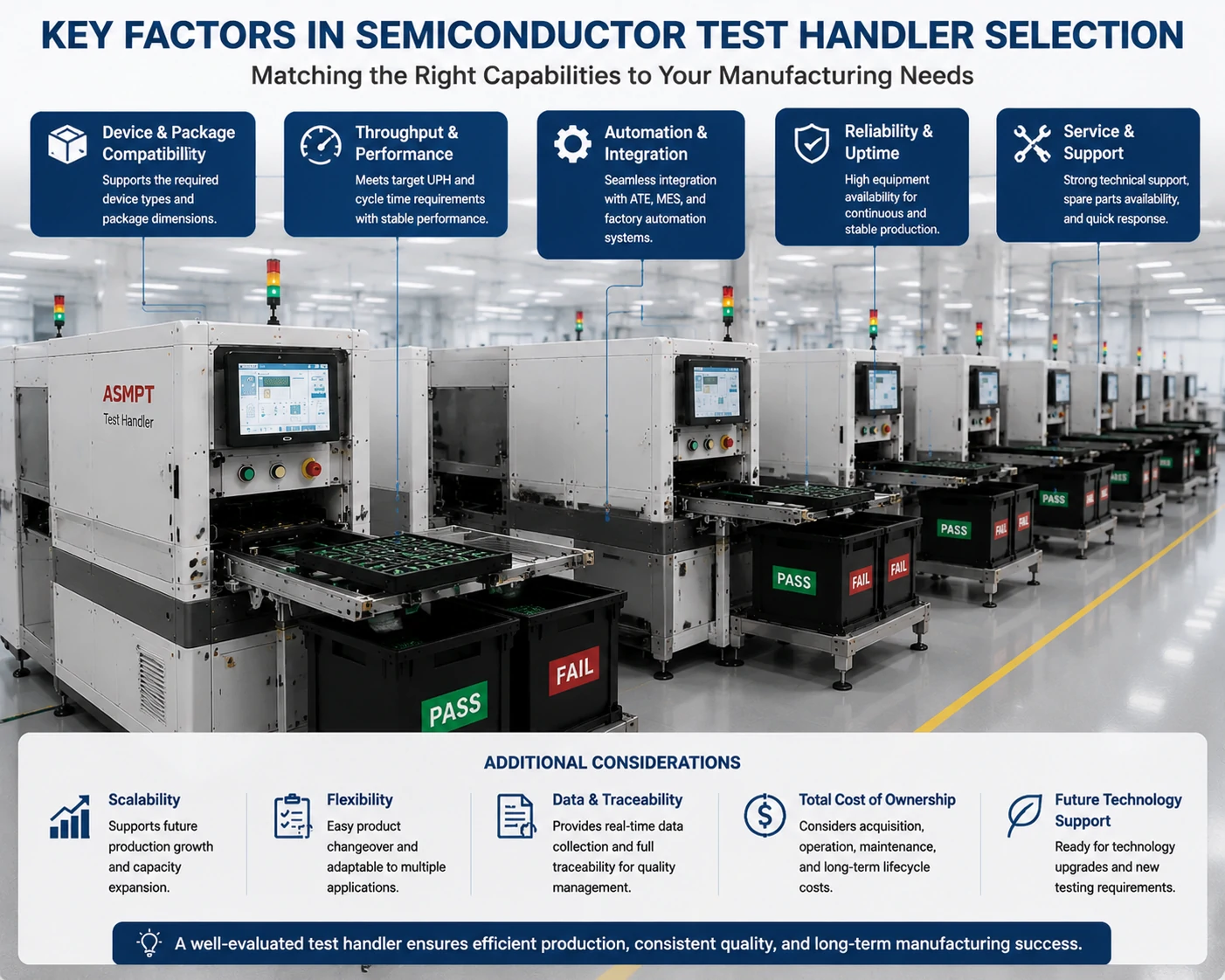
Maintenance planning is an important part of semiconductor equipment selection because long-term operation directly affects production stability, equipment availability, and overall manufacturing efficiency.
When evaluating an ASMPT Test Handler, manufacturers should consider not only initial equipment performance but also how the system can be maintained throughout its operational lifecycle.
Preventive Maintenance Requirements
Preventive maintenance helps manufacturers maintain stable equipment performance and identify potential issues before they affect production.
Important maintenance considerations include:
Inspection schedules:Regular equipment checks to identify wear, performance changes, or potential failures.
Cleaning procedures:Maintaining appropriate operating conditions for stable device handling.
Calibration requirements:Ensuring handling accuracy and system performance remain within expected conditions.
Performance monitoring:Tracking operational conditions to support proactive maintenance decisions.
A structured preventive maintenance strategy helps manufacturers reduce unexpected downtime and maintain consistent testing workflows.
Spare Parts Management
Spare parts availability is an important consideration for semiconductor manufacturing equipment because unexpected component issues can interrupt production schedules.
Manufacturers should evaluate:
Critical equipment components
Replacement availability
Supplier support capability
Maintenance response planning
Inventory management strategy
Effective spare parts planning supports faster recovery when maintenance activities are required and helps protect production continuity.
Reducing Production Downtime
Downtime management is a major factor in semiconductor manufacturing efficiency. Even short production interruptions can affect output targets in high-volume environments.
Manufacturers can improve equipment availability through:
Preventive maintenance programs
Equipment condition monitoring
Operator training
Production risk planning
Technical support coordination
Considering downtime risks during equipment selection helps manufacturers evaluate the long-term operational value of semiconductor test handling solutions.
Total Cost of Ownership Considerations
The value of a semiconductor test handler depends on more than the initial equipment investment. Long-term operating costs can significantly influence the overall return on investment.
A complete Total Cost of Ownership (TCO) evaluation should consider:
Initial equipment investment
Maintenance requirements
Spare parts costs
Operator requirements
Production downtime impact
Technical support needs
Equipment lifecycle expectations
A semiconductor test handler with strong reliability, efficient maintenance processes, and good lifecycle support may provide greater long-term value compared with solutions evaluated only by initial purchase cost.
Balancing Initial Cost and Long-Term Value
Equipment selection decisions should balance short-term investment considerations with long-term manufacturing objectives.
For example, a solution with higher automation capability may provide advantages through:
Reduced manual operation requirements
Improved production consistency
Lower process variation
Better scalability for future production needs
Manufacturers should evaluate the complete operational impact instead of focusing only on equipment acquisition cost.
Semiconductor Test Handler Selection Checklist
Before finalizing equipment selection, engineers and procurement teams can review the following checklist:
Device Compatibility:Does the handler support current and future semiconductor products?
Package Requirements:Can it handle required package types and testing conditions?
Production Capacity:Does throughput meet manufacturing targets?
Automation Integration:Can it connect with ATE, MES, and factory automation systems?
Performance Stability:Does it provide sufficient accuracy, repeatability, and availability?
Maintenance Strategy:Are service requirements and spare parts planning manageable?
Lifecycle Value:Does the solution support long-term production goals?
Frequently Asked Questions
What factors should be considered when selecting ASMPT Test Handler?
Manufacturers should consider production requirements, device compatibility, package types, testing performance, automation needs, reliability expectations, maintenance requirements, and long-term operational goals when selecting an ASMPT Test Handler.
How do manufacturers compare semiconductor test handlers?
Semiconductor test handlers should be compared based on factors such as throughput, handling accuracy, automation capability, device compatibility, system integration, maintenance requirements, and application suitability.
What performance metrics are important for semiconductor test handlers?
Important evaluation metrics include throughput (UPH), equipment availability, repeatability, test parallelism, changeover time, handling accuracy, and production stability.
How does production volume affect semiconductor test handler selection?
High-volume semiconductor manufacturing usually requires higher throughput, stable automation, and reliable continuous operation. Flexible production environments may place more importance on adaptability and changeover efficiency.
What applications are suitable for ASMPT Test Handler?
ASMPT Test Handler solutions can be evaluated for applications including high-volume semiconductor production, advanced semiconductor device testing, and manufacturing environments requiring automated device handling and testing workflow integration.
How can manufacturers reduce semiconductor test handler downtime?
Manufacturers can reduce downtime through preventive maintenance, spare parts planning, equipment monitoring, operator training, and proactive lifecycle management strategies.
Conclusion
Selecting an ASMPT Test Handler requires a comprehensive evaluation of production requirements, device compatibility, automation capability, performance expectations, maintenance planning, and long-term operational value.
A suitable semiconductor test handling solution should not only support current manufacturing needs but also provide flexibility for future semiconductor technology development. Engineers and procurement teams should evaluate factors such as throughput, repeatability, equipment availability, package compatibility, system integration, and total cost of ownership before making a final decision.
By following a structured selection approach, semiconductor manufacturers can identify the test handling solution that best matches their production environment and supports reliable, scalable, and efficient semiconductor testing workflows.