In semiconductor manufacturing, individual equipment components play an important role in maintaining stable production operations. When engineers or maintenance teams search for a specific spare part number such as ASMPT Sunbird CP Motor 03111913, they are usually looking for component identification information, equipment compatibility guidance, and replacement considerations.
The ASMPT Sunbird CP Motor 03111913 can be understood as a specific motor-related spare component reference associated with ASMPT Sunbird semiconductor handling equipment. For semiconductor equipment maintenance, correctly identifying the component and confirming compatibility are essential steps before replacement.
This guide explains the role of ASMPT Sunbird CP Motor 03111913, how motor components support semiconductor handling systems, the difference between CP Motor and CP Driver, and practical considerations for spare part verification, replacement planning, and equipment maintenance.
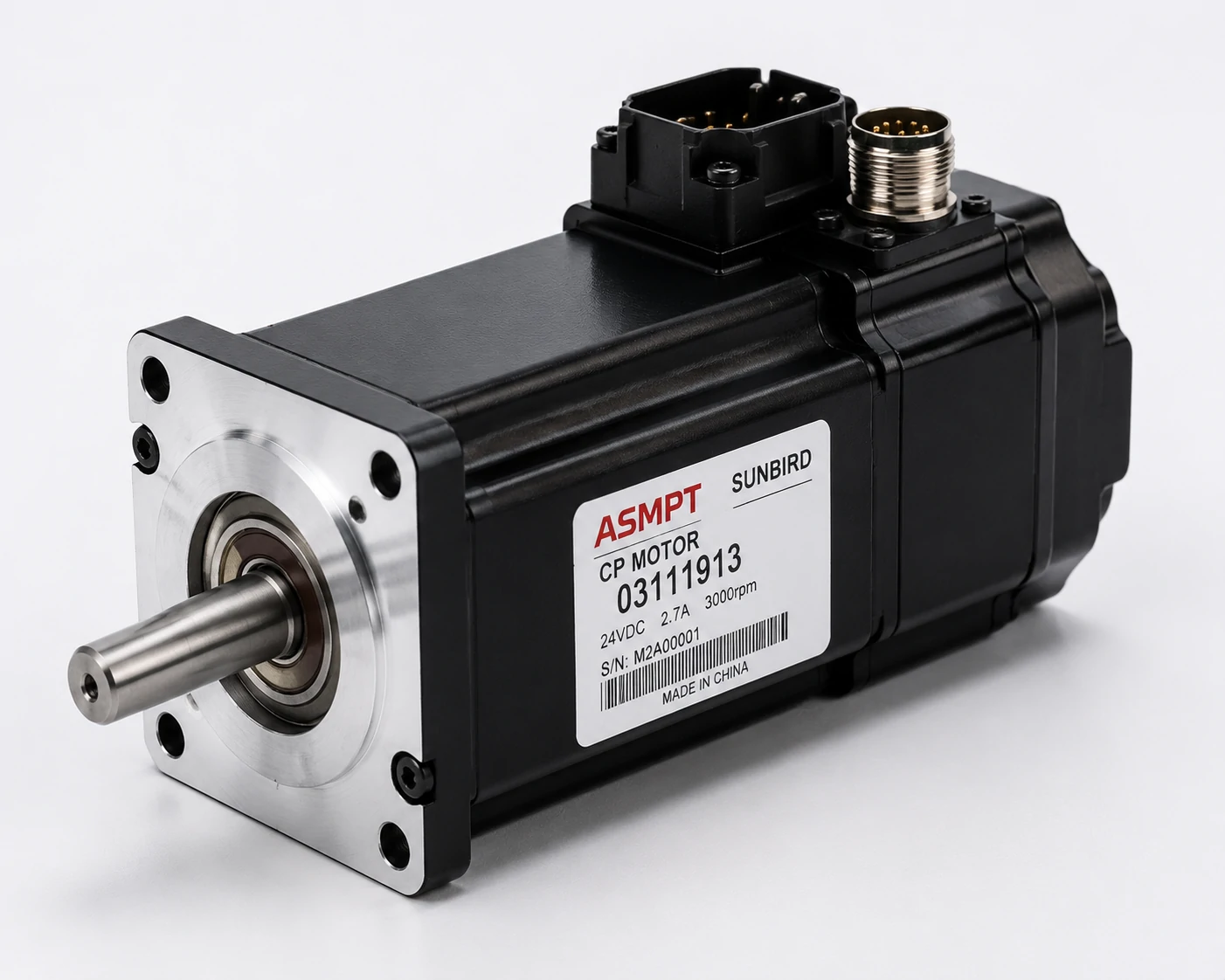
What Is ASMPT Sunbird CP Motor 03111913?
ASMPT Sunbird CP Motor 03111913 refers to a specific component reference used for semiconductor equipment spare part identification. The part number provides an important reference for engineers, maintenance personnel, and procurement teams when searching for replacement components.
In semiconductor automation equipment, multiple mechanical and electronic components work together to support device movement, positioning, and production workflows. A motor component such as CP Motor generally belongs to the motion-related component category that supports automated equipment operation.
Because semiconductor equipment often contains many similar-looking components, the part number plays an important role in preventing incorrect replacement decisions.
Understanding the Part Number 03111913
Part numbers are essential in semiconductor equipment maintenance because different components may have different applications, configurations, or compatibility requirements even when their appearance is similar.
The part number 03111913 helps engineers with:
Spare part identification
Maintenance record management
Replacement verification
Supplier communication
Equipment service planning
Before replacing a semiconductor equipment component, engineers should confirm the exact part reference through equipment documentation, maintenance records, component labels, or approved supplier information.
How to Identify ASMPT Sunbird CP Motor 03111913
Correct identification is one of the most important steps in semiconductor equipment spare part management. A wrong component selection may result in installation delays, compatibility problems, or unnecessary equipment downtime.
Engineers should verify ASMPT Sunbird CP Motor 03111913 through several sources:
Part number label:Check the component identification label or marking information when available.
Equipment documentation:Review approved equipment manuals, maintenance documents, or spare part references.
Maintenance records:Confirm previous replacement history and installed component information.
Supplier verification:Confirm component information with qualified equipment or spare part suppliers.
Machine configuration:Verify that the component matches the specific equipment setup.
Using multiple verification sources helps reduce the risk of selecting an incorrect semiconductor equipment spare part.
ASMPT Sunbird Handler Component Overview
ASMPT Sunbird handler systems operate through the coordination of multiple mechanical, electrical, and automation components. Each component contributes to reliable device handling and production workflow management.
A semiconductor handling system may include:
Motion-related components
Motor and drive systems
Mechanical assemblies
Control modules
Communication and automation systems
A component such as ASMPT Sunbird CP Motor 03111913 is part of this larger equipment ecosystem, where accurate movement and coordinated operation are important for stable semiconductor manufacturing processes.
The Role of CP Motor in Semiconductor Handling Equipment
Motor components are essential parts of automated semiconductor handling equipment because they provide the physical movement required for different machine operations.
While the exact internal configuration of a specific ASMPT Sunbird system should be verified through official equipment documentation, motor components generally support motion-related functions within automation systems.
General functions of motor components include:
Converting control signals into mechanical movement
Supporting equipment positioning operations
Enabling automated machine movement
Maintaining repeatable motion processes
CP Motor in Motion Control Systems
In semiconductor automation equipment, motor components typically work together with drivers, controllers, and mechanical transmission systems to create complete motion control functions.
The relationship can generally be understood as:
Controller:Provides operation commands and workflow instructions.
Driver:Controls motor operation according to received signals.
Motor:Converts controlled electrical input into physical movement.
Mechanical system:Transfers movement to the required equipment mechanism.
Understanding this relationship helps engineers identify whether a problem is related to the motor component itself or another part of the motion control system.
Supporting Motion-Related Operations in Sunbird Handler Systems
A CP Motor component may support machine movement processes where controlled mechanical motion is required. In automated semiconductor equipment, stable motion performance is important because production processes depend on accurate and repeatable movement.
Engineering considerations include:
Movement consistency
Positioning stability
Mechanical operating condition
Integration with related motion components
Long-term equipment reliability
Proper management of motor-related components helps reduce unexpected interruptions and supports stable semiconductor equipment operation.
Why Correct Motor Identification Matters
Incorrect identification of a motor component may create several maintenance challenges, including:
Installation delays
Equipment compatibility issues
Additional troubleshooting requirements
Extended production downtime
For semiconductor manufacturing environments, accurate spare part identification is an important part of effective equipment maintenance management.
ASMPT Sunbird CP Motor and CP Driver: Understanding the Difference
When searching for ASMPT Sunbird spare parts, engineers may encounter both CP Motor and CP Driver terminology. Although these components are related to automated motion systems, they represent different parts of the equipment control structure.
Understanding the difference between these components is important because selecting the wrong replacement part can lead to compatibility issues, installation delays, and unnecessary maintenance time.
Why CP Motor and CP Driver Are Often Confused
The confusion between CP Motor and CP Driver usually occurs because both components are involved in equipment motion control.
In general:
Motor:Provides the physical mechanical movement required by the equipment.
Driver:Controls and manages motor operation based on signals from the equipment control system.
Although they work together in a motion system, they perform different functions and should be identified separately during spare part verification.
General Difference Between Motor and Driver Components
| Component | General Function | Maintenance Consideration |
|---|---|---|
| CP Motor | Provides mechanical movement within an equipment motion system. | Requires verification of mechanical compatibility and installation requirements. |
| CP Driver | Controls motor operation and manages electrical signals for movement. | Requires verification of control compatibility and system communication. |
The exact relationship between CP Motor and CP Driver depends on equipment design and configuration. Engineers should always confirm the correct component reference through approved technical documentation before replacement.
How the Motion System Works Together
In semiconductor automation equipment, motion control usually involves multiple connected components working together.
A simplified motion workflow includes:
Control command:The equipment controller sends movement instructions.
Driver operation:The driver processes control signals and manages motor operation.
Motor movement:The motor converts controlled electrical input into mechanical motion.
Mechanical transmission:The movement is transferred to the required equipment mechanism.
Understanding this relationship helps maintenance teams determine whether a movement issue is related to the motor, driver, controller, or another mechanical component.
ASMPT Sunbird CP Motor 03111913 Replacement Verification
Replacing a semiconductor equipment motor requires more than matching a component name. Engineers should confirm that the replacement part matches the equipment requirements, machine configuration, and maintenance records.
Checking Part Number Compatibility
Part number verification is one of the most important steps in semiconductor spare part management.
Before replacement, engineers should confirm:
Exact part number reference
Equipment documentation
Existing component information
Approved spare part records
Supplier component information
Confirming the ASMPT Sunbird CP Motor 03111913 reference helps reduce the risk of selecting an incompatible replacement component.
Confirming Equipment Model Information
Semiconductor equipment configurations may vary depending on machine versions, production requirements, and system setup.
Before ordering or installing a replacement motor, engineers should verify:
Applicable equipment model
Machine configuration
Component installation location
Related motion system information
Maintenance documentation
Compatibility verification should be completed before replacement activities begin.
Reviewing Maintenance Records
Maintenance history provides valuable information when identifying and replacing semiconductor equipment components.
Useful records may include:
Previous replacement history
Equipment alarm records
Maintenance reports
Component inspection information
Reviewing maintenance records helps engineers understand whether a component replacement is the appropriate solution or whether additional troubleshooting is required.
ASMPT Sunbird CP Motor 03111913 Replacement Process
A structured replacement process helps reduce maintenance risks and improve equipment recovery efficiency.
Step 1: Confirm Component Identification
Before replacement, verify:
Part number
Equipment model
Component description
Maintenance records
Correct identification prevents unnecessary replacement errors.
Step 2: Verify Compatibility
After identifying the component, confirm that the replacement motor matches the required equipment configuration.
Compatibility checks may include:
Mechanical installation requirements
Electrical connection information
Motion system compatibility
Equipment documentation references
Step 3: Review Installation Requirements
Before installation, engineers should review applicable maintenance procedures and safety requirements.
Important considerations include:
Correct installation position
Connection verification
Mechanical alignment
Post-installation inspection
Step 4: Perform Functional Verification
After installation, the equipment should be checked to confirm that the motion system operates correctly.
Verification may include:
Movement testing
Positioning checks
Alarm monitoring
Production workflow confirmation
A complete verification process helps ensure that the replacement component supports stable equipment operation.
Avoiding Incorrect Spare Part Selection
Incorrect spare part selection can create unnecessary maintenance challenges, including installation delays, compatibility problems, and extended equipment downtime.
Good spare part management practices include:
Maintaining accurate equipment records
Confirming part numbers before purchase
Reviewing technical documentation
Using reliable component sources
Tracking replacement history
Accurate spare part identification improves maintenance efficiency and supports semiconductor equipment reliability.
Maintenance Considerations for ASMPT Sunbird CP Motor
Proper maintenance of semiconductor equipment motion components helps maintain production stability and reduce unexpected equipment interruptions. Because motor components are responsible for mechanical movement, their operating condition can influence overall equipment performance.
For ASMPT Sunbird CP Motor 03111913 maintenance, engineers should consider preventive inspection, equipment condition monitoring, replacement planning, and accurate spare part management.
Common Signs of Motor-Related Issues
Motor-related problems may require inspection when semiconductor equipment shows abnormal operating conditions.
Possible indicators include:
Unexpected equipment movement behavior
Motion-related alarms
Positioning instability
Reduced movement repeatability
Abnormal operating noise or conditions
Unexpected production interruptions
These symptoms do not automatically indicate motor failure. Engineers should follow equipment troubleshooting procedures and verify the actual cause before replacing components.
Motion System Troubleshooting Considerations
When a semiconductor handler experiences motion-related problems, the issue may involve multiple components within the motion system.
A basic troubleshooting approach may include checking:
Motor condition
Driver communication
Electrical connections
Mechanical movement condition
Controller signals
Equipment alarm history
A systematic troubleshooting process helps maintenance teams avoid unnecessary component replacement and identify the actual source of equipment problems.
Preventive Maintenance Practices
Preventive maintenance helps semiconductor manufacturers maintain stable equipment operation and reduce unexpected downtime.
Recommended maintenance considerations include:
Regular equipment inspection
Monitoring motion performance
Reviewing alarm history
Checking component operating conditions
Maintaining accurate maintenance records
Consistent maintenance practices support longer equipment service life and more predictable production performance.
Spare Part Management for Semiconductor Equipment Maintenance
Effective spare part management is an important part of semiconductor equipment lifecycle management. Accurate component information helps maintenance teams respond faster when replacement is required.
Spare Inventory Planning
Maintaining appropriate spare inventory can help reduce production delays caused by unexpected component issues.
Manufacturers should consider:
Critical component identification
Replacement frequency
Equipment operating conditions
Production impact of downtime
Supplier availability
Replacement History Tracking
Tracking replacement history provides useful information for future maintenance planning.
Important records may include:
Replacement dates
Component part numbers
Equipment location
Maintenance reasons
Operating conditions before replacement
Accurate maintenance records help engineers make better decisions when managing semiconductor equipment components.
Supplier and Component Verification
When sourcing semiconductor equipment spare parts, component verification is essential.
Before purchasing or installing a replacement component, engineers should confirm:
Correct part number
Component description
Equipment compatibility
Supplier information
Technical documentation
Reliable verification processes help reduce risks associated with incorrect spare part selection.
ASMPT Sunbird CP Motor 03111913 Selection Checklist
Before replacing or purchasing ASMPT Sunbird CP Motor 03111913, engineers can review the following checklist:
Part Number Verification:Confirm the exact reference number and component information.
Equipment Compatibility:Verify the motor matches the specific Sunbird equipment configuration.
Motion System Requirements:Confirm compatibility with related driver, controller, and mechanical components.
Maintenance Records:Review previous replacement and troubleshooting information.
Supplier Verification:Confirm component information through reliable sources.
Installation Requirements:Review applicable maintenance procedures before replacement.
Frequently Asked Questions
What is ASMPT Sunbird CP Motor 03111913?
ASMPT Sunbird CP Motor 03111913 is a specific motor-related spare component reference associated with ASMPT Sunbird semiconductor handling equipment. Engineers typically search this part number for identification, maintenance, and replacement verification purposes.
Is ASMPT Sunbird CP Motor 03111913 the same as CP Driver?
No. CP Motor and CP Driver are generally different component categories. The motor provides physical movement, while the driver typically controls motor operation. The exact relationship should be confirmed through equipment documentation.
How can engineers confirm ASMPT Sunbird CP Motor 03111913 compatibility?
Engineers should verify compatibility by checking the exact part number, equipment model, machine configuration, maintenance records, supplier information, and approved component references.
What should be checked before replacing a semiconductor handler motor?
Before replacement, engineers should confirm the component reference, equipment compatibility, installation requirements, related motion system components, and maintenance history.
What problems may indicate a motor-related issue?
Possible indicators include abnormal movement, motion alarms, positioning instability, reduced repeatability, or unexpected equipment behavior. Proper troubleshooting should be completed before component replacement.
Why is spare part identification important in semiconductor equipment maintenance?
Accurate spare part identification helps prevent incorrect replacement, reduces maintenance delays, improves equipment reliability, and supports more efficient semiconductor production management.
Conclusion
ASMPT Sunbird CP Motor 03111913 is a specific semiconductor equipment spare part reference that requires careful identification and compatibility verification before replacement.
Understanding the role of CP Motor components, the difference between CP Motor and CP Driver, and proper maintenance practices helps engineers manage semiconductor handling equipment more effectively.
For semiconductor equipment maintenance teams, accurate part number verification, structured troubleshooting, and effective spare part management are essential steps for maintaining reliable production operations.