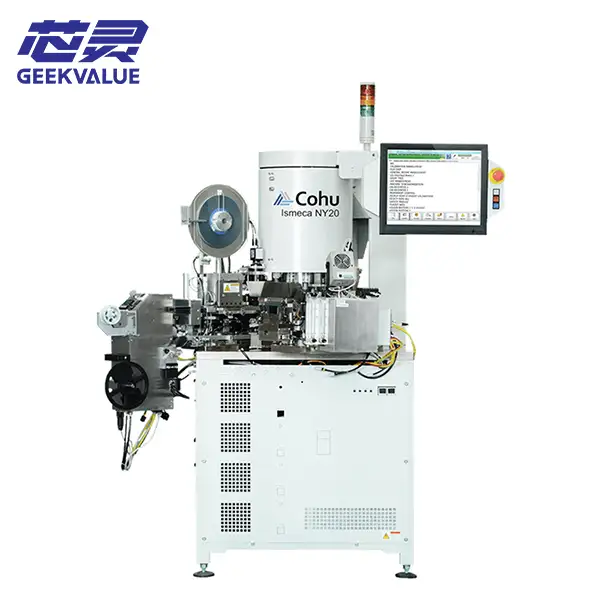
ISMECA test handler NY20
The ISMECA NY20 (now owned by Cohu) is a 20-station rotary ultra-high-speed semiconductor testing and sorting machine
ave up to 70% on SMT Parts – In Stock & Ready to Ship
Get Quote →A semiconductor gravity handler moves packaged devices through inclined tubes or guided tracks, but gravity only supplies the motion. Tracks, escapements, stoppers, sensors and output modules control spacing, orientation, position and destination so each device reaches the next station in a repeatable condition.
The architecture is useful only when the machine can keep each package oriented, release it individually and send it to a known station or output. These three controls separate a gravity handler from passive material flow.
Tubes, rails or machined tracks support the package while the incline creates movement. Track profile, surface condition and package geometry determine whether travel remains stable.
Escapements, gates and stoppers separate a column of devices into timed releases. Reliable separation prevents overlapping parts, bridging and double feeding.
Sensors, station stops and output gates keep the device associated with the required process result, grade or destination instead of allowing it to leave the route arbitrarily.
Open the listed machine page, then confirm the actual input module, track set, package tooling, installed stations and output arrangement. Machines from the same family may have very different usable routes.
The ISMECA NY20 (now owned by Cohu) is a 20-station rotary ultra-high-speed semiconductor testing and sorting machine
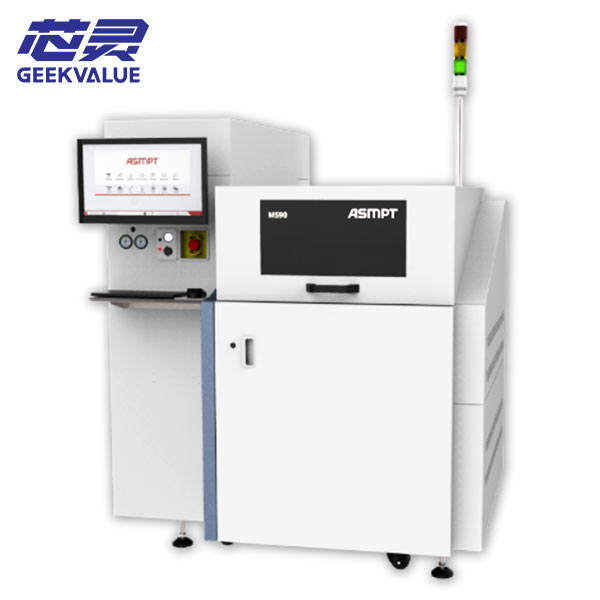
ASM sorting machine MS90 is a device designed for lamp bead sorting, with efficient and accurate sorting functions. This...
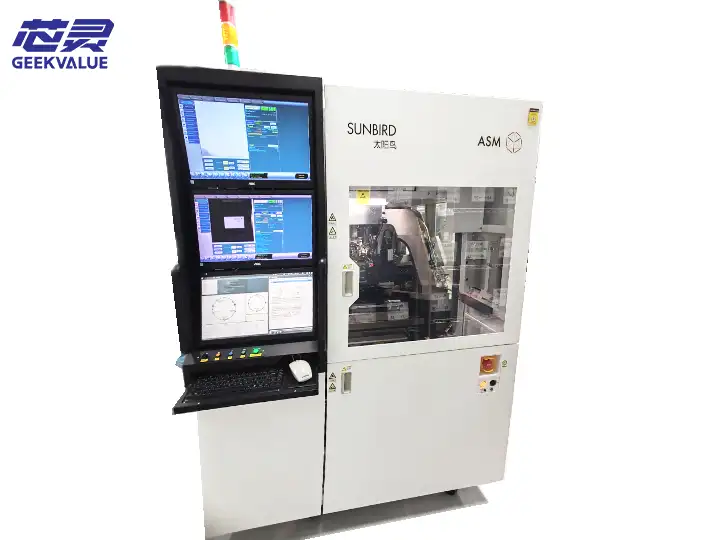
SUNBIRD provides an efficient, reliable and flexible wafer testing solution for the semiconductor industry through innov...
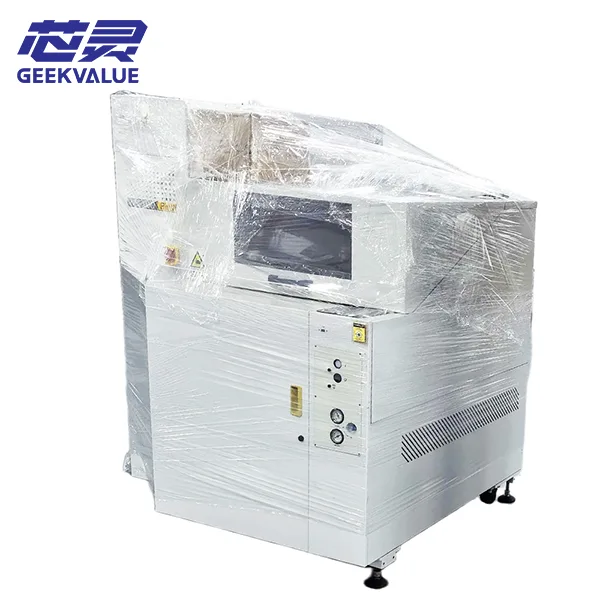
As an upgraded version of the MS100, the ASM MS100 Plus is also a device for chip sorting and arrangement based on wafer...
The exact route depends on the installed machine. The sequence below shows how gravity transport becomes controlled handling; test, inspection, marking or thermal processing appears only when the actual unit includes that station.
Devices enter from tubes, magazines, a bowl or another supported feeder. The input module must preserve the required orientation and maintain a stable column of parts.
Guides, sensors and escapements confirm device presence and release one package into the controlled track position without allowing a second device to follow prematurely.
The package slides or rolls along a constrained route. Track angle, friction, center of mass, lead geometry and contamination influence whether movement stays consistent.
A stopper or indexing mechanism positions the device for orientation, inspection, marking, testing, transfer or another installed operation.
After the operation, the control system releases the package according to the grade, pass/fail state or routing instruction received from the installed process.
Devices move to tubes, bins, trays or bulk collection. The output module must keep result categories separate and preserve orientation where the next process requires it.
A gravity-fed device handler is suitable only when the package can pass through the track without unstable rotation, bridging, excessive friction or damage. The package drawing and the installed track kit should be reviewed together.
Length, width, thickness, center of mass, chamfers, mold flash and the surfaces that contact the track.
The package rotates, tips, accelerates unevenly or reaches the stopper in an unstable position.Lead span, pitch, coplanarity, exposed pads and possible contact with rails, guides and separators.
Leads bend, surfaces scratch, movement slows or the package bridges during release.Tube profile, magazine, bowl or bulk feeder, device orientation, stack pressure and the transition into the machine track.
Presentation becomes inconsistent, devices double-feed or gaps and jams appear at the transfer point.Installed rails, guides, inserts, escapements, stoppers, sensors and the package-specific adjustment range.
A machine from the correct family still cannot run the device without another track set or change parts.Temperature, contamination, ESD control, device fragility and whether orientation must remain fixed throughout the route.
Friction changes, sticking, cosmetic damage, ESD exposure or unreliable downstream positioning.The decision starts with the package route, not the handler label. Each architecture solves a different movement problem and carries a different conversion burden.
This route suits repeatable tube or guided-track flow when devices can be separated, positioned and released without unstable sliding or rotation.
Main limitation: the package and track must behave consistently together.A motion head moves each device between trays, carriers, sockets, nests or inspection positions when passive guided transfer is unsuitable.
Main limitation: nozzles, grippers, vision and placement force add conversion work.A turret coordinates a repeating circular route through test, inspection, marking, sorting or packaging positions.
Main limitation: usable capability depends on the installed station sequence and tooling.The platform name describes the general architecture. The actual media modules, track kit, station hardware, jam-recovery logic and output arrangement determine whether a specific machine can support the required application.
Tube loader, magazine, bowl, bulk feeder or manual input; orientation method; sensors; capacity and the included change parts.
Rails, guides, inserts, escapements, stoppers, separators, sensors and the exact package drawing for which the route was built.
Orientation, inspection, marking, test, thermal, sorting or transfer positions, together with the interface hardware and software required to operate them.
Tube, tray, bin or bulk output; number of destinations; orientation requirement; grade mapping and reject protection.
Escapement timing, double-feed protection, empty-track detection, jam alarms, safe release after a stop and restart behaviour.
The package used for the run, sample quantity, observed rotation or bridging, output separation and any missing tracks, inserts or conversion parts.
These answers cover device compatibility, track behaviour and the information needed before equipment matching.
It is a semiconductor device handling machine that uses an inclined, constrained track as the main transport route. Guides, escapements, stoppers, sensors and output modules control spacing, orientation, position and destination.
No. The package remains supported by tubes, rails or tracks and is released through controlled positions. Stable operation depends on package geometry, media, surface condition and the installed device kit.
Sometimes, but a second package may require different rails, guides, escapements, stoppers, sensors or recipes. A shared platform name does not mean the installed route supports every package in the same family.
Common causes include unsuitable track geometry, excessive friction, contamination, lead interference, incorrect angle, unstable package orientation, double feeding and worn or misadjusted escapements.
No. Gravity describes the transport architecture. A gravity test handler also needs test sites, contact hardware, interface boards, tester communication and result routing tied to the electrical test.
Provide the package drawing, input and output media, required process steps, target capacity, temperature condition, existing tooling, preferred machine condition and destination country.
Send the package, input media, output format, required station, target capacity and preferred condition so the available gravity handler can be checked against the application.
Why do so many people choose to work with GeekValue?
Our brand is spreading from city to city, and countless people have asked me, "What is GeekValue?" It stems from a simple vision: to empower Chinese innovation with cutting-edge technology. This is a brand spirit of continuous improvement, hidden in our relentless pursuit of detail and the delight of exceeding expectations with every delivery. This almost obsessive craftsmanship and dedication is not only the persistence of our founders, but also the essence and warmth of our brand. We hope you will start here and give us an opportunity to create perfection. Let us work together to create the next "zero defect" miracle.
DetailsContact a sales expert
Reach out to our sales team to explore customized solutions that perfectly meet your business needs and address any questions you may have.

© All Rights Reserved. Technical Support:TiaoQingCMS