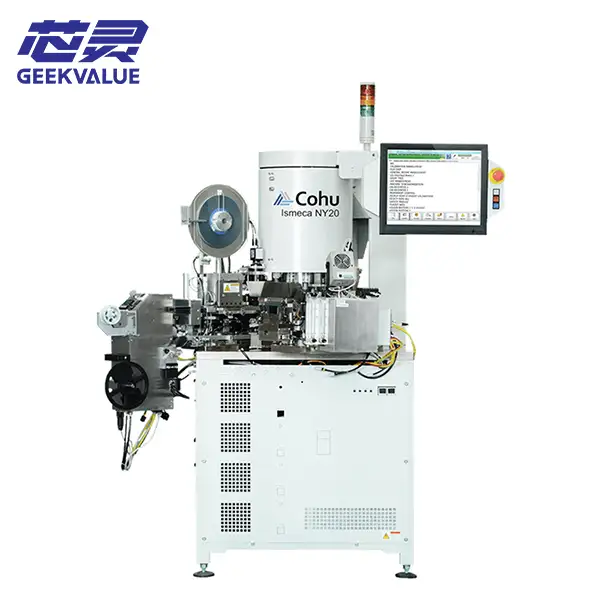
ISMECA test handler NY20
The ISMECA NY20 (now owned by Cohu) is a 20-station rotary ultra-high-speed semiconductor testing and sorting machine
ave up to 70% on SMT Parts – In Stock & Ready to Ship
Get Quote →A gravity test handler feeds packaged devices through guided tracks, releases each DUT into a controlled contact position, exchanges start and result signals with the ATE and routes the device according to the test outcome. Reliable output depends on the complete path from package movement and plunger mechanics to the contactor, interface, tester resources and thermal system.
Review the listed models, then confirm the actual track kit, test-site count, plunger and contact hardware, tester interface, thermal modules and output configuration on the specific machine.
The ISMECA NY20 (now owned by Cohu) is a 20-station rotary ultra-high-speed semiconductor testing and sorting machine
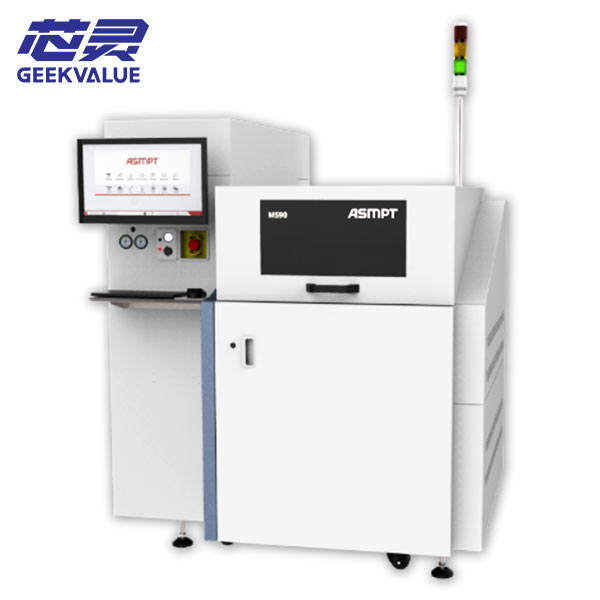
ASM sorting machine MS90 is a device designed for lamp bead sorting, with efficient and accurate sorting functions. This...
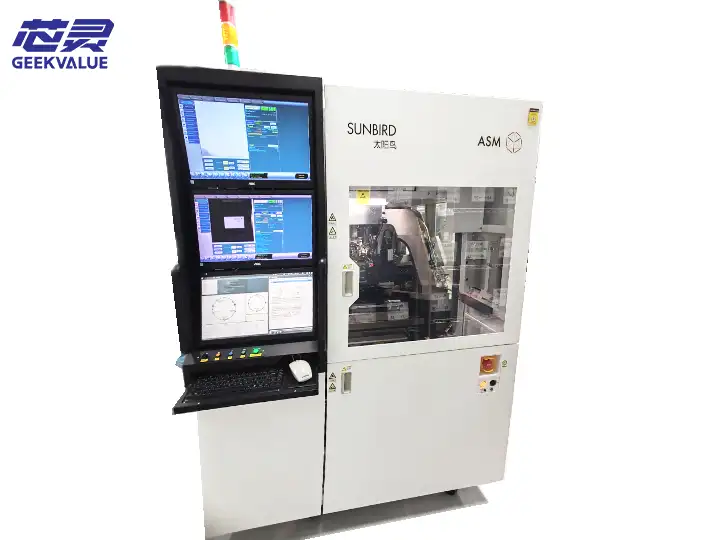
SUNBIRD provides an efficient, reliable and flexible wafer testing solution for the semiconductor industry through innov...
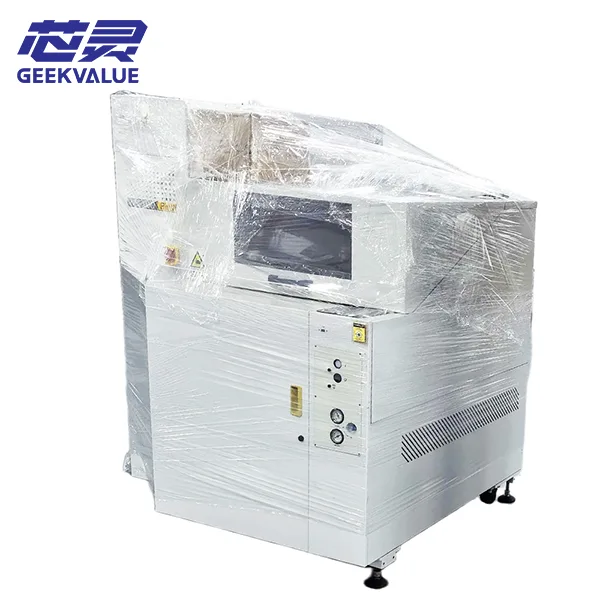
As an upgraded version of the MS100, the ASM MS100 Plus is also a device for chip sorting and arrangement based on wafer...
The tester measures the DUT, but the handler controls how the device reaches the contact site, how repeatably it is inserted, whether the correct temperature is reached and where the device goes after the result. Each function can change effective output and apparent first-pass test results.
The package must travel through the installed tube, rail or track without rotating, bridging, dragging or damaging leads. The escapement must release one device at the required time.
Failure effect: jams, double feeds and inconsistent arrival prevent stable test-site loading.The plunger or site mechanism moves the DUT into the socket or contactor with controlled alignment, stroke and force, then releases it without damage.
Failure effect: intermittent contact, bent leads, contact wear and false retest can reduce usable yield.The contactor, DUT board, cables, power and signal path must support the tester resources and the active site count. Handler handshake and bin data must agree with the test program.
Failure effect: a mechanically compatible handler may still be unusable with the selected ATE.When hot or cold testing is required, soak and recovery must support the test condition. After test, pass, fail, retest or grade data must route the same DUT to the correct output.
Failure effect: thermal error or result mixing can invalidate otherwise correct electrical data.This sequence shows the common relationship between feeding, thermal preparation, contact and result sorting. The actual machine may omit thermal soak, use a different input module or provide several test sites.
Devices enter from tubes, magazines, a bowl or another installed input module.
Guides and escapements preserve orientation and release one DUT into the controlled route.
For hot or cold test, the device remains in the conditioned track long enough to approach the required state.
A stopper places the DUT at the test-site entry while the next devices remain queued.
The plunger inserts the DUT into the contactor and the ATE executes the test program.
The handler receives pass, fail, retest or grade information and associates it with the tested DUT.
Gates route the device to the correct tube, bin or other destination without mixing results.
Contact problems can begin before the DUT reaches the socket and can continue beyond it into the interface or tester communication. The location of the symptom helps identify which layer should be checked.
Deliver one correctly oriented device to a repeatable pre-contact position.
Jams, inconsistent arrival, double feeds, rotation or a DUT that does not align with the plunger.Move the DUT into contact with controlled stroke, geometry and force.
Uneven insertion, package damage, excessive contact wear or site-to-site variation.Create the temporary electrical connection between the device terminals and the test interface.
Intermittent continuity, false failure, retest increase, high contact resistance or limited life.Carry power and signals between the contactor and the tester while preserving the required electrical performance.
Channel errors, unstable measurements, wrong site mapping, signal-integrity limitations or unavailable tester adaptation.Coordinate start-of-test, end-of-test, site status, bin result, retest and error handling.
Devices waiting at the site, wrong bin routing, lost results or the handler and tester entering different states.Catalog speed is only one reference point. Production output also depends on actual test duration, mechanical index time, usable parallel sites, thermal recovery, contact stability, jams, retest and product changeover. The limiting step changes with the application.
When the electrical test is brief, device separation, positioning, plunger motion, result transfer and output routing occupy most of the cycle.
Additional active sites can improve tester utilisation when the DUT remains under test for longer. The benefit disappears if tester channels, site mapping, contact hardware or thermal capacity cannot sustain parallel operation.
Compare usable sites and stable good output, not the platform's maximum advertised site count.
Hot or cold testing needs enough conditioned track capacity and recovery time to keep the test sites supplied with DUTs at the required state.
Ambient, hot and cold testing require different installed hardware and different evidence. A platform family may support a broad temperature range, while a specific machine may contain only one of the available configurations.
Maintain stable device handling and contact under the factory environment while monitoring temperature when the DUT or test power can create local heating.
Standard track and test site, sensors where required, airflow conditions and contact hardware. DUT self-heating, drift during long tests, contact change with temperature and uncontrolled room conditions.Heat and soak the device before contact, then maintain the required condition through the test period and recover before the next DUT arrives.
Heaters, conditioned track or chamber, sensors, insulation, controller, purge or airflow system and calibration. Insufficient soak, overshoot, slow recovery, package limits and temperature drop during contact.Cool the DUT, keep the route dry, maintain stable contact at low temperature and transition between cold, ambient and hot recipes when required.
Refrigeration or LN2-related hardware where applicable, dry air, insulated chamber or track, sensors, controller and utility connections. Condensation, frost, unstable recovery, moisture contamination, utility demand and a chamber setpoint that does not represent actual DUT temperature.The same gravity handler family can be prepared for different packages, site counts, contact directions and thermal conditions. A useful recommendation starts with the application rather than the model name alone.
Provide the package drawing, dimensions, terminals, orientation, tube or feeder type, input condition and required output media.
State the ATE model, load board or DUT board, contactor requirement, signal type, site mapping and handler communication method.
Provide actual test duration, target good output, expected retest rate, preferred parallelism and whether a single-site or multi-site setup is already qualified.
Define ambient, hot, cold or tri-temperature conditions, DUT power dissipation, soak requirement, facility limits and available cooling or dry-air utilities.
State the number of grades or bins, retest route, barcode or data requirement, product-change frequency and any existing track, kit or contact hardware.
These answers clarify the gravity-specific feeding, contact, capacity and thermal questions that affect equipment selection.
It is a semiconductor final-test handler that uses guided gravity transport to feed packaged devices, positions each DUT at a contact site, communicates with the tester and sorts the device according to the test result.
A common route is loading, orientation and separation, optional thermal soak, controlled positioning, plunger contact, electrical test, result transfer and output sorting.
No. The package must move reliably through the installed track without rotation, bridging, excessive friction or lead damage. Review the package drawing, media and device kit together.
No. The tester and interface must support parallel execution, every site must remain stable and the feeding, thermal and output sections must sustain the same rate. Unusable sites or contact retest can remove the expected benefit.
Some platforms can be configured for ambient, hot, cold or tri-temperature operation. Confirm the actual chamber or conditioned track, heating and cooling hardware, dry-air requirement, sensors, controller, utilities and calibration on the offered machine.
Provide the package drawing, input media, tester, contact method, test time, required sites, target good output, temperature condition, DUT power, output grades and any existing package tooling.
We will check the offered machine against the installed track, contact system, tester interface and thermal configuration.
Why do so many people choose to work with GeekValue?
Our brand is spreading from city to city, and countless people have asked me, "What is GeekValue?" It stems from a simple vision: to empower Chinese innovation with cutting-edge technology. This is a brand spirit of continuous improvement, hidden in our relentless pursuit of detail and the delight of exceeding expectations with every delivery. This almost obsessive craftsmanship and dedication is not only the persistence of our founders, but also the essence and warmth of our brand. We hope you will start here and give us an opportunity to create perfection. Let us work together to create the next "zero defect" miracle.
DetailsContact a sales expert
Reach out to our sales team to explore customized solutions that perfectly meet your business needs and address any questions you may have.

© All Rights Reserved. Technical Support:TiaoQingCMS