Receive the Packaged Device
Load devices from trays, tubes, strips, film frames or another supported production medium.
ave up to 70% on SMT Parts – In Stock & Ready to Ship
Get Quote →A pick-and-place test handler moves packaged semiconductor devices between input media, orientation, thermal conditioning, electrical test sites and sorted outputs. The useful configuration is determined by the package, test duration, semiconductor tester, contact method, site count and DUT temperature—not by the handler model alone.
Load devices from trays, tubes, strips, film frames or another supported production medium.
Vision, pickup heads and robotic motion align the package before it reaches the electrical contact site.
The handler controls position, insertion motion and contact force while the semiconductor tester performs the measurement.
Route devices to the correct tray, tube, reel, reject location or downstream finishing process.
Package handling, tester resources, contact geometry and DUT temperature establish the first boundaries of a workable pick-and-place test cell. These inputs are more useful than comparing model names or rated UPH in isolation.
Package outline, terminals, weight, pickup surface and fragility influence the nozzle or gripper, nest, vision settings and test-site tooling.
Confirm: package drawing, dimensions, weight, orientation marks and required input and output media.
Short tests expose the time spent on pickup, alignment, contact and sorting. Longer tests can make parallel sites valuable when the tester supports simultaneous execution.
Confirm: test time by temperature, target good units per hour, expected retest rate and product-change frequency.
The handler positions the DUT, but the electrical path still depends on the socket or contactor, interface hardware, load board and semiconductor tester.
Confirm: tester model, test head, docking arrangement, contact hardware, communication protocol and intended active sites.
Ambient, hot and cold tests use different heating, cooling, sensing, soak and moisture-control hardware. Device self-heating may also shift the real DUT temperature.
Confirm: required temperature range, tolerance, device power, soak time and available dry-air or cooling utilities.
Review current listings, then confirm the installed package kits, test sites, sockets or contactors, tester interface, thermal options, software and accessories on the individual machine.
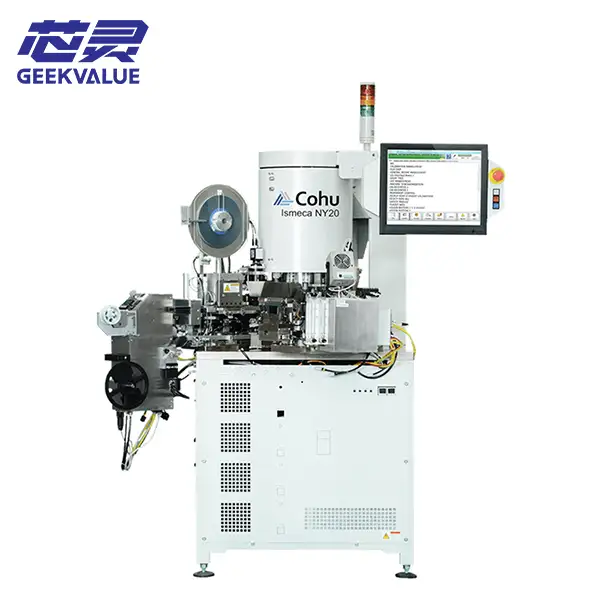
The ISMECA NY20 (now owned by Cohu) is a 20-station rotary ultra-high-speed semiconductor testing and sorting machine
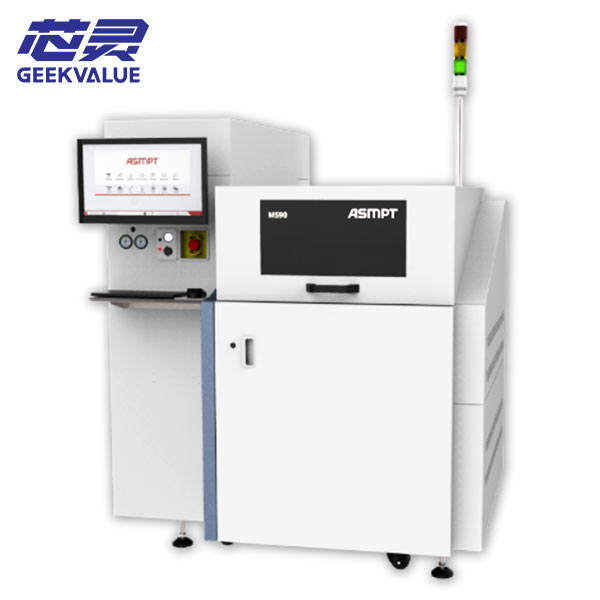
ASM sorting machine MS90 is a device designed for lamp bead sorting, with efficient and accurate sorting functions. This...
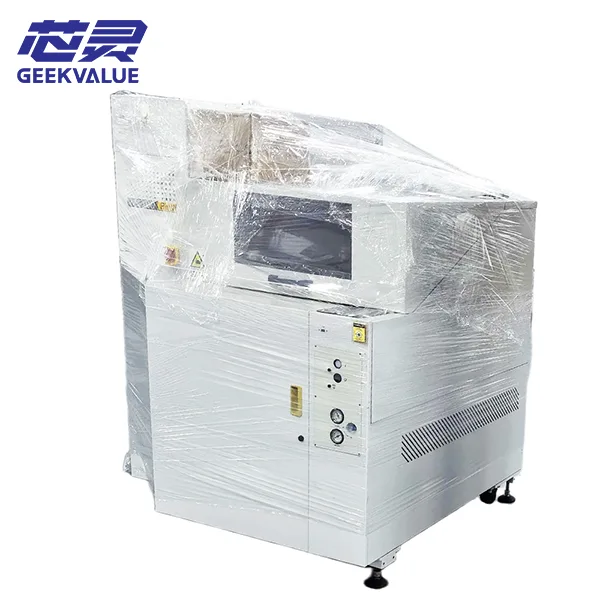
As an upgraded version of the MS100, the ASM MS100 Plus is also a device for chip sorting and arrangement based on wafer...
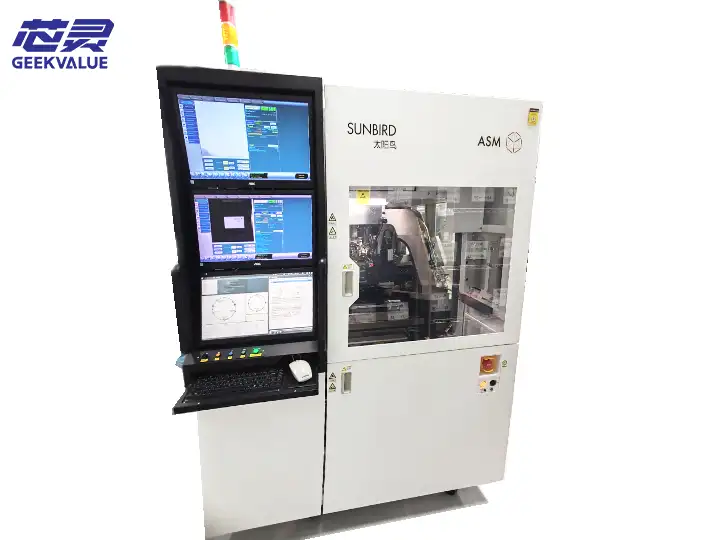
SUNBIRD provides an efficient, reliable and flexible wafer testing solution for the semiconductor industry through innov...
Mechanical speed describes the fastest handling sequence under defined conditions. Production output also includes electrical test time, enabled sites, contact yield, retest, temperature recovery, changeover and downtime.
The DUT occupies a site while the tester executes the program and transfers the result. When test time is long, tester occupancy rather than robot motion becomes the main cycle constraint.
Pickup, alignment, travel, insertion, removal and output placement remain part of every cycle. These movements can dominate applications with very short test programs.
Installed site count and usable site count are not always the same. Each active site needs tester channels, interface paths, contact hardware, software mapping and thermal support.
Recontact, retest, contactor cleaning, tray exchange, alarm recovery and maintenance consume production time without increasing the number of completed good devices.
Additional sites create value only when the tester, contact interface and thermal system can operate them concurrently. For lower volume, frequent changeovers or sensitive contact applications, fewer sites may be easier to stabilize and maintain.
Engineering work, lower volume, frequent product changes or applications where alignment and temperature are easier to control with fewer simultaneous contacts.
Stable high-volume production and longer tests where several DUTs can occupy supported tester resources at the same time.
Requires fewer channels, simpler interface hardware and less complex site mapping.
Every active site requires tester channels, interface paths, contact hardware and software control.
Alignment, contact force and DUT temperature are generally easier to characterize with fewer active sites.
Site-to-site differences in contact resistance, force and temperature recovery must remain within the process limits.
Fewer sockets, nests and interface paths can reduce changeover cost, calibration work and spare-parts demand.
More tooling raises setup and maintenance effort, and an unstable site can reduce the value of the parallel configuration.
The handler provides controlled movement and insertion. The semiconductor tester performs the electrical measurement. A working test cell depends on the package, contactor, interface hardware, handler motion and tester program remaining compatible from end to end.
The package defines body size, terminal layout, orientation, sensitive surfaces and the electrical nodes that must be reached during test.
The contactor creates the repeatable connection to the DUT. Package fit, current, frequency, contact resistance, wear and replacement availability all affect first-pass yield.
Interface boards, load boards, cables and docking hardware carry signals and power between the contactor and tester. Their electrical and mechanical design must match the intended platform.
The pickup head, nest and motion system align the DUT, insert it into the contactor and apply controlled force without damaging the package or contact hardware.
The tester supplies channels, timing and measurement resources. Start-of-test, end-of-test, site mapping and bin data must agree with the handler recipe.
The selected method must bring the DUT to the required test condition, keep the contact site within its validated operating range and recover fast enough for production. Chamber setpoint, DUT temperature and site-to-site variation should not be treated as the same measurement.
Ambient testing may still require temperature monitoring when long test times or device power raise the DUT above the surrounding air temperature.
Airflow, enclosure conditions, sensors, software limits and any contact-site insulation used by the installed configuration.
Does the DUT remain within the specified range during repeated insertions and continuous production?
Hot testing normally requires the package to reach the target condition before contact and remain within tolerance while the electrical test is running.
Heated chamber, thermal head or hot-air path, soak location, controller, sensors, insulation and required utilities.
Can the system recover after device exchange and compensate for DUT power without excessive overshoot or lost throughput?
Cold and tri-temperature applications add cooling capacity, moisture control and transition time to the production cycle.
Cooling method, dry-air supply, insulated chamber, heaters, sensors, condensation control and calibration status.
Can the handler reach the required DUT condition, prevent condensation and maintain consistent recovery across all active sites?
The following information is usually enough to remove unsuitable platforms before a detailed equipment review begins. Missing machine-specific details can then be checked against the available listings.
Send Your Test RequirementsShows the package body, terminals, orientation, pickup restrictions and conversion tooling required for safe handling and contact.
Indicates whether handler motion or tester occupancy is likely to control the cycle and whether parallel sites could create useful capacity.
Identifies the test head, interface hardware, load board, channels, communication and site mapping that the handler must support.
Confirms the intended active sites, contact force, socket or contactor type and the repeatability needed for acceptable first-pass yield.
Sets the required DUT temperature, tolerance, power dissipation, soak or recovery expectation and available thermal utilities.
Clarifies the tray, tube, strip or carrier route, sorting requirements, product mix and frequency of tooling or recipe changes.
These questions focus on package compatibility, test-site configuration, tester integration, temperature control and realistic production output.
A pick-and-place handler describes the robotic device-moving architecture. A pick-and-place test handler adds one or more controlled electrical test sites, contact hardware, tester communication and result-based sorting.
No. The semiconductor tester must provide enough parallel resources, and every active site needs compatible interface hardware, contactors, thermal control and software mapping. Retest and unstable contact can also reduce useful output.
Many platforms can support more than one package through conversion kits. The required trays, nests, nozzles, precisors, sockets, contactors and software recipes must be available for each device.
Not automatically. Mechanical docking, interface boards, load boards, cable paths, tester protocol, software handshake and site control must all match. Semiconductor testers are also commonly referred to as automatic test equipment, or ATE.
Confirm the installed heating and cooling hardware, chamber or thermal module, utility requirements, sensors, control software, condensation protection and recent temperature calibration or demonstration evidence.
Provide the device package, input and output media, electrical test time, target good units per hour, intended site count, semiconductor tester, contactor requirement, DUT temperature and preferred equipment condition.
Send the package drawing, semiconductor tester, contact method, site count, electrical test time, temperature range and production target so the available equipment can be checked against the intended test cell.
Why do so many people choose to work with GeekValue?
Our brand is spreading from city to city, and countless people have asked me, "What is GeekValue?" It stems from a simple vision: to empower Chinese innovation with cutting-edge technology. This is a brand spirit of continuous improvement, hidden in our relentless pursuit of detail and the delight of exceeding expectations with every delivery. This almost obsessive craftsmanship and dedication is not only the persistence of our founders, but also the essence and warmth of our brand. We hope you will start here and give us an opportunity to create perfection. Let us work together to create the next "zero defect" miracle.
DetailsContact a sales expert
Reach out to our sales team to explore customized solutions that perfectly meet your business needs and address any questions you may have.

© All Rights Reserved. Technical Support:TiaoQingCMS