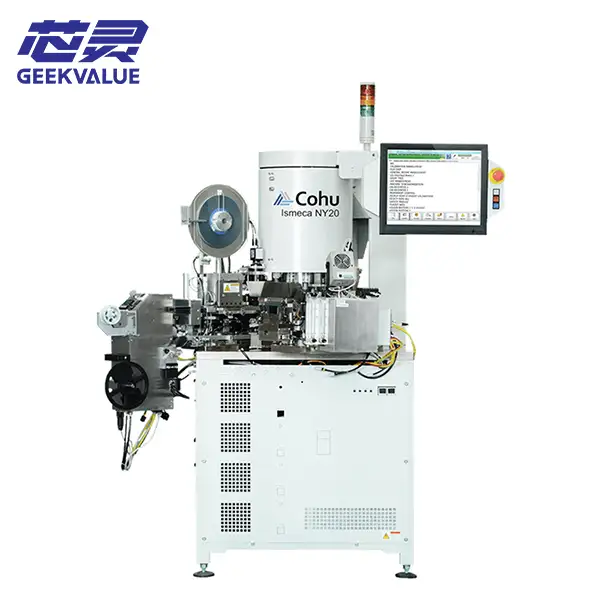
Used Pick-and-Place Test Handler
ISMECA test handler NY20
The ISMECA NY20 (now owned by Cohu) is a 20-station rotary ultra-high-speed semiconductor testing and sorting machine
ave up to 70% on SMT Parts – In Stock & Ready to Ship
Get Quote →A used pick-and-place test handler should be evaluated as an installed test cell, not simply as a machine model. Package tooling, test sites, contact hardware, semiconductor tester interfaces, thermal modules, software and proven operating condition determine how much work remains before the equipment can support another device.
Open the individual machine page, then request the configuration record for that unit. Machines from the same series may carry different package tooling, test heads, thermal options, software, interfaces and supplied accessories.
The ISMECA NY20 (now owned by Cohu) is a 20-station rotary ultra-high-speed semiconductor testing and sorting machine
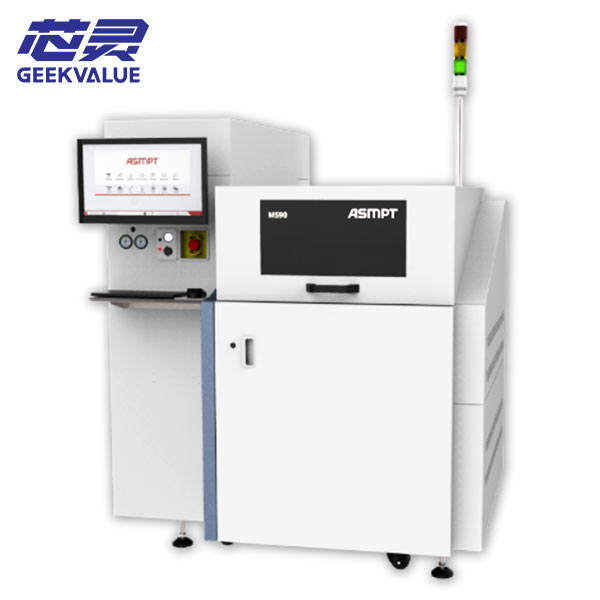
ASM sorting machine MS90 is a device designed for lamp bead sorting, with efficient and accurate sorting functions. This...
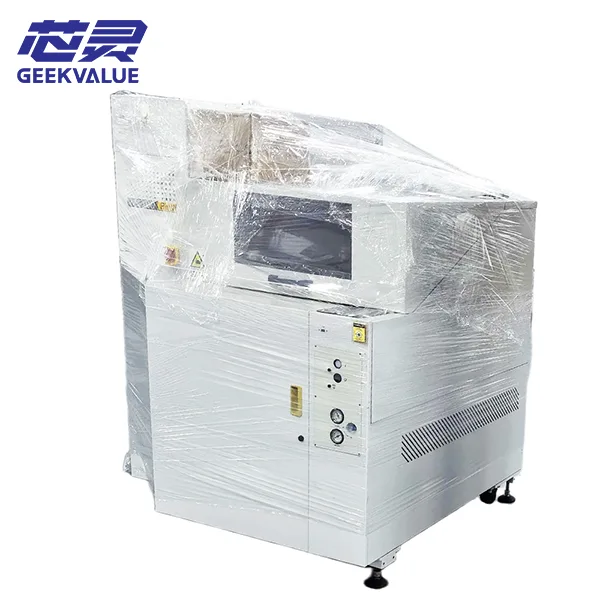
As an upgraded version of the MS100, the ASM MS100 Plus is also a device for chip sorting and arrangement based on wafer...
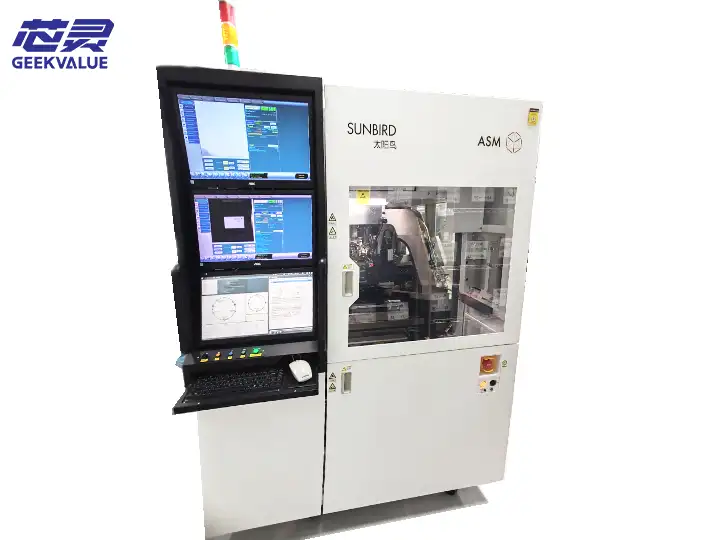
SUNBIRD provides an efficient, reliable and flexible wafer testing solution for the semiconductor industry through innov...
A model name identifies the platform family. It does not confirm which product the machine last handled, which tester it connected to or what the seller has prepared for delivery. A practical comparison separates the machine base, the installed application and the commercial supply scope.
Confirm the platform revision, controller generation, electrical standard, loaders, output modules, motion hardware, vision system and thermal architecture.
These elements affect software support, spare-part access and the realistic boundaries of a future conversion.Record the package kit, trays or carriers, nozzles, nests, sockets or contactors, interface boards, cable sets, site layout and tester communication method.
A machine can power up and run a dry cycle while still requiring substantial engineering for another package.Ask what was inspected, repaired, calibrated and demonstrated, which alarms remain, what documentation is available and which accessories are included.
Used, serviced and refurbished describe different levels of preparation only when their scope is documented.A clean enclosure says little about conversion effort. Start with the device route, test-site geometry, semiconductor tester connection, temperature hardware and production target. Cosmetic condition can be reviewed after the technical path is understood.
Package drawing, dimensions, weight, terminals, tray or carrier standard, input orientation, output format and installed handling heads.
New tooling may be straightforward, or the device may fall outside the machine's practical mechanical range.Active site count, nest geometry, socket or contactor, contact force, insertion direction, site pitch, alignment method and replacement-part availability.
A different site layout may require mechanical redesign, interface work, calibration and package qualification.Semiconductor tester model, test head, interface board, cable set, signal path, power, grounding, handler handshake, site mapping and bin communication.
The handler may move devices correctly but remain unusable until tester-specific hardware and software are completed.Ambient, hot, cold or tri-temperature target, DUT power, installed chamber or active control hardware, cooling source, dry air, sensors and calibration.
The platform family may support a thermal option that is not installed on the individual machine.Electrical test time, expected output, parallel sites, changeover frequency, contact sensitivity, traceability and remaining program life.
A compatible machine can still be a poor purchase when conversion time, maintenance demand or sustainable output is unsuitable.The useful question is not which label appears in the listing. It is what work was completed, which functions were demonstrated and which risks remain with the buyer. The answer should be written into the quotation and acceptance scope.
Begin with machine identity and supply scope, then move from basic operation to device handling, contact, temperature and tester communication. Each stage should record the setup, result and any limitation.
List the machine, serial number, modules, package kits, sockets or contactors, interface boards, cables, thermal equipment, software, licenses, manuals, backups, spares and services included.
Review controller startup, alarms, interlocks, sensors, motors, pneumatics, vacuum, loaders and output movement. Record bypasses, disconnected modules and unsupported modifications.
Use the installed kit or a representative part to check pickup, orientation, placement, retrieval, output routing, jam behavior and repeatability. Identify a dry cycle as a mechanical demonstration rather than a production acceptance test.
When the correct interface is available, check site mapping, insertion motion, contact force, handler handshake, start-of-test, end-of-test, bin data and repeated contact behavior.
Review the installed heating or cooling hardware, utilities, sensors, soak behavior, recovery time and calibration status under stated conditions. A chamber setpoint alone does not establish DUT temperature.
State which faults will be corrected, which application items remain excluded, what will be demonstrated before shipment and what support applies during installation and startup.
A used handler can be commercially attractive when the platform remains supportable and its installed configuration is close to the target application. Missing tooling, obsolete interfaces or incomplete thermal hardware can quickly change the result.
Include package kits, trays, nozzles, nests, sockets or contactors, interface boards, cables, software changes, tester integration and qualification time.
Account for diagnosed faults, worn parts, obsolete components, preventive maintenance, safety restoration, thermal calibration and unavailable accessories.
Include freight, rigging, power conversion, compressed air or vacuum, cooling or dry air, setup, acceptance testing, operator training and startup support.
Review conversion time, consumables, socket life, spare-part access, software support, maintenance skills and realistic output from the complete test cell.
These questions separate platform capability, installed application hardware and verified machine condition before a commercial decision is made.
Used describes previous ownership or operation. Serviced normally means selected maintenance or repairs were completed. Refurbished should refer to a documented restoration and acceptance scope. Ask for the work list and supporting evidence rather than relying on the label.
Often, but feasibility depends on package dimensions, terminals, weight, input media, handling heads, test-site geometry, contact method, temperature requirements and available conversion parts. Review the engineering path, cost and lead time before purchase.
Not automatically. Sockets, contactors, interface boards, cable sets and tester-specific communication hardware may be separate, obsolete or removed from the machine. The quotation should identify every included item.
Check the installed chamber or active thermal hardware, cooling and dry-air equipment, sensors, controls, utilities and calibration status. Request a demonstration under defined conditions when temperature performance is critical.
Provide the package drawing, semiconductor tester, required site count, electrical test time, temperature range, input and output media, target output, preferred condition, delivery location and any required conversion, installation or training.
Available used pick-and-place test handlers can be compared against the package, test interface, site count, temperature requirement and expected delivery condition.
Why do so many people choose to work with GeekValue?
Our brand is spreading from city to city, and countless people have asked me, "What is GeekValue?" It stems from a simple vision: to empower Chinese innovation with cutting-edge technology. This is a brand spirit of continuous improvement, hidden in our relentless pursuit of detail and the delight of exceeding expectations with every delivery. This almost obsessive craftsmanship and dedication is not only the persistence of our founders, but also the essence and warmth of our brand. We hope you will start here and give us an opportunity to create perfection. Let us work together to create the next "zero defect" miracle.
DetailsContact a sales expert
Reach out to our sales team to explore customized solutions that perfectly meet your business needs and address any questions you may have.

© All Rights Reserved. Technical Support:TiaoQingCMS