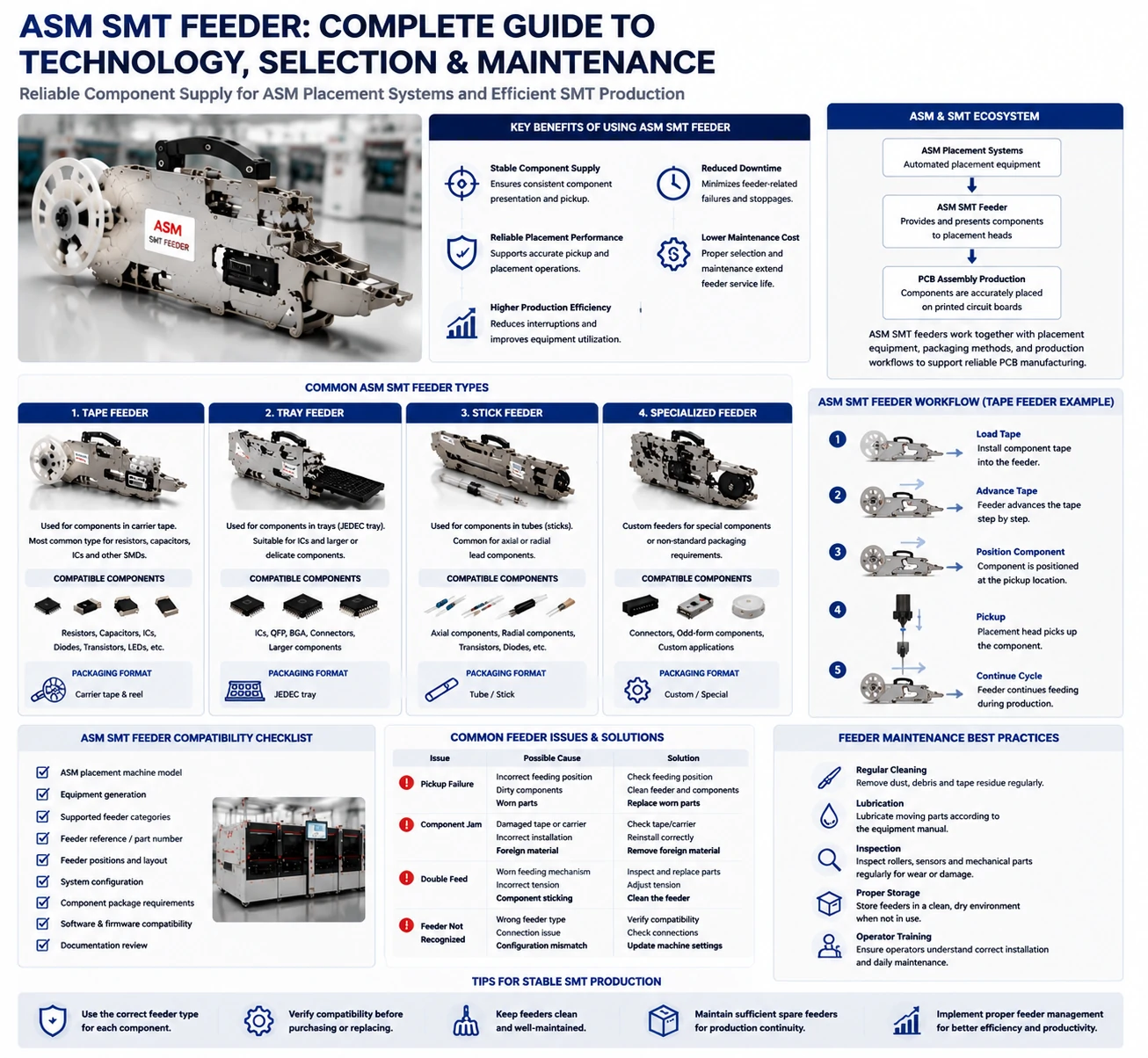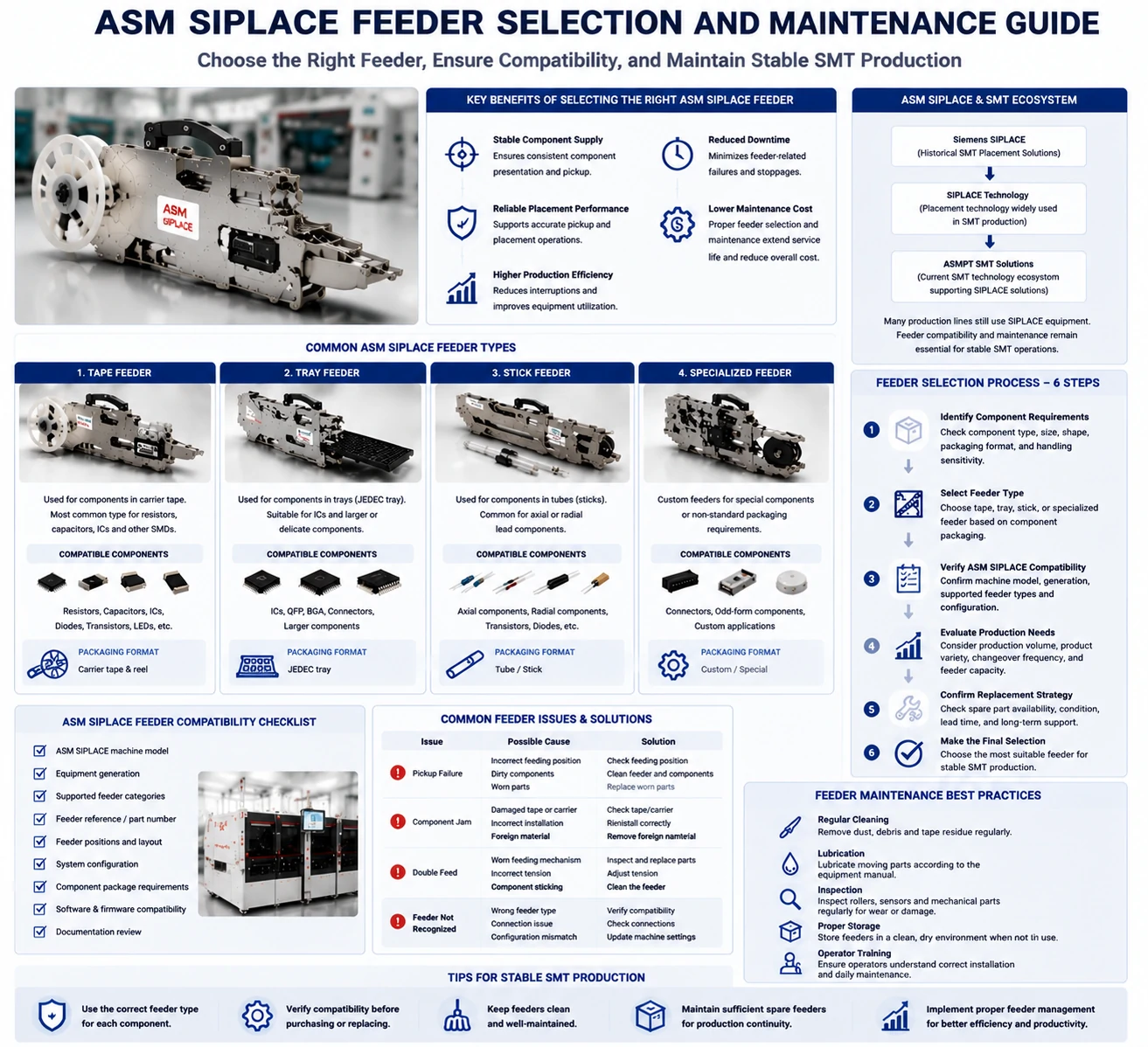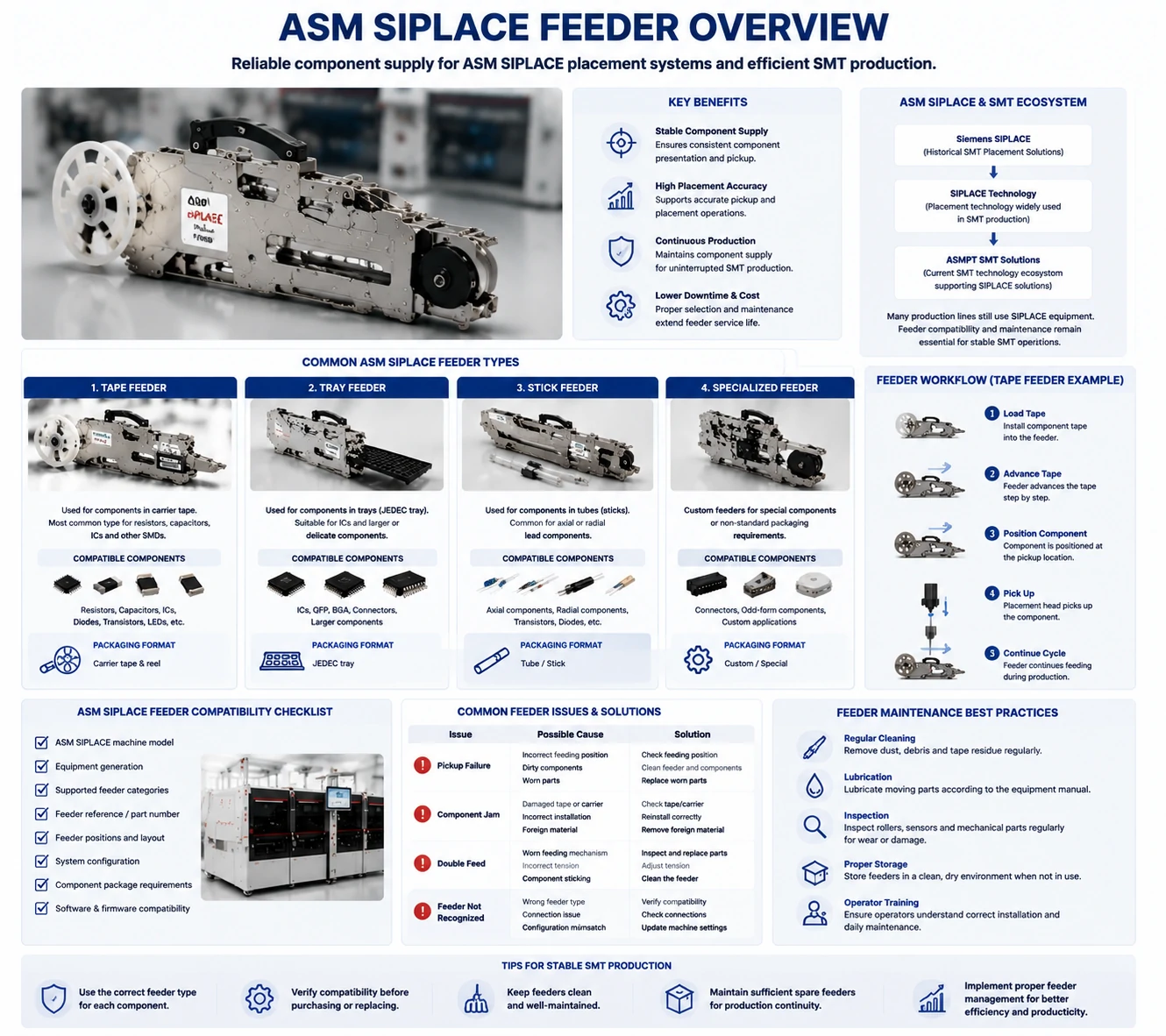

An SMT machine (Surface-Mount Technology machine) is automated equipment used to mount electronic components directly onto printed circuit boards (PCBs). These machines form the core of every SMT production line, including solder paste printers, pick-and-place machines, reflow ovens, and inspection systems. Together, they enable high-speed, high-accuracy, and fully automated electronic assembly for products such as smartphones, automotive modules, and industrial control units.
What Does SMT Mean?
SMT stands for Surface-Mount Technology, a production method in which electronic components—known as SMDs (Surface-Mount Devices)—are mounted directly onto the surface of a PCB instead of being inserted into holes like traditional through-hole components.
This approach eliminates the need for drilling, reduces board size and weight, and allows for much higher circuit density and faster automated production.
What Is an SMT Machine?
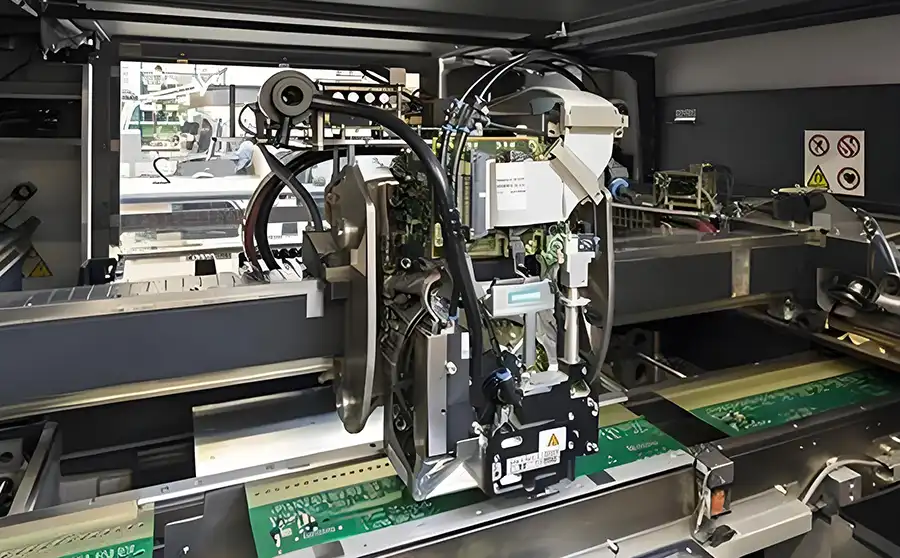
An SMT machine refers to any piece of equipment used in the surface-mount assembly process. In a complete SMT production line, this typically includes:
Solder Paste Printer – applies solder paste onto PCB pads.
Pick and Place Machine – places SMD components onto the pasted PCB.
Reflow Oven – melts the solder paste to permanently attach components.
AOI / SPI Inspection Systems – check placement accuracy and solder quality.
Therefore, when people mention “SMT machine,” they might mean a single piece of equipment, or the entire SMT production line depending on the context.
SMT Machine vs Pick and Place Machine
These two terms are often used interchangeably, but they are not exactly the same.
| Term | Meaning | Function |
|---|---|---|
| SMT Machine | A general term for all machines used in surface-mount production, including printers, pick-and-place machines, reflow ovens, and inspection systems. | Covers the entire SMT assembly process. |
| Pick and Place Machine | A specific machine within the SMT line that automatically picks up components and places them on the PCB. | Handles the placement step only. |
In short:
👉 Every pick and place machine is part of an SMT line, but not every SMT machine is a pick and place machine.
Types of SMT Machines
In an SMT assembly line, different SMT machines perform specific roles depending on the production stage and product type:
Solder Paste Printer: Applies solder paste precisely to PCB pads.
Pick and Place Machine: Positions SMD components using high-speed robotic arms.
Reflow Oven: Heats the solder paste to create permanent electrical connections.
AOI / SPI Inspection Machines: Check for alignment, missing parts, and solder quality.
Conveyors and Loaders: Transfer PCBs smoothly between stages.
Optional Equipment: Includes cleaning systems, coating machines, and laser marking systems.
Each type of SMT machine plays a vital role in ensuring quality, accuracy, and production efficiency.
How an SMT Machine Works
A typical SMT process follows these main steps:
Solder Paste Printing – A stencil printer deposits solder paste on PCB pads.
Component Mounting – The pick and place machine accurately positions components.
Reflow Soldering – The assembly is heated in a reflow oven to melt and solidify solder joints.
Inspection and Testing – AOI (Automatic Optical Inspection) ensures that all components are correctly mounted.
Each stage relies on precise machinery and coordination. Any misalignment or incorrect solder volume can lead to circuit failure, so the entire SMT system must be precisely calibrated and maintained.
Key Features of Modern SMT Machines
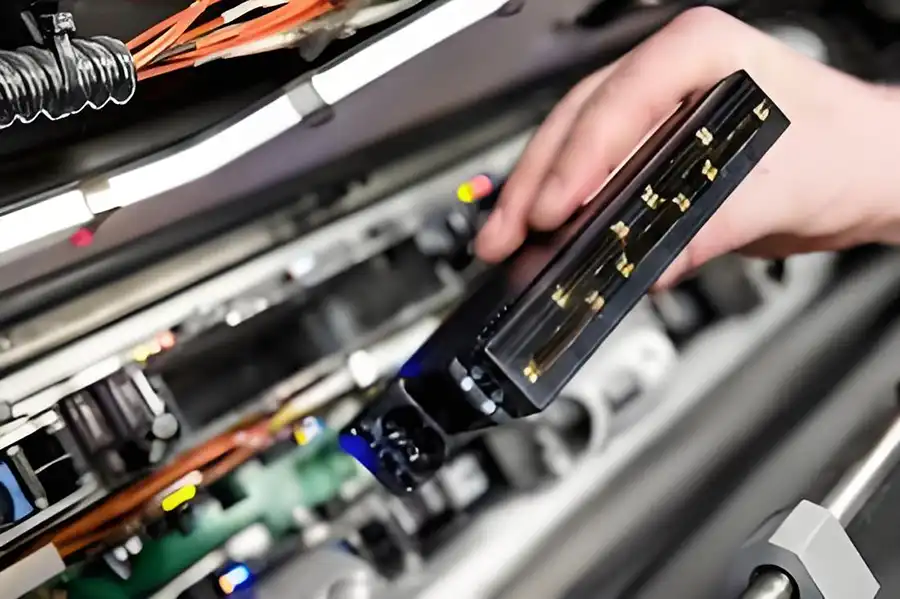
Modern SMT machines integrate advanced motion systems, vision alignment, and data-driven software for performance optimization. Common features include:
High-speed placement heads that can handle tens of thousands of components per hour.
Vision systems to verify component orientation and placement accuracy.
Intelligent feeders that minimize downtime during reel changes.
Flexible production modes supporting both high-volume and high-mix manufacturing.
Traceability systems that log component data for quality control.
SMT Machine Price and Cost Factors
The cost of an SMT machine varies widely depending on speed, precision, and configuration:
Entry-level SMT machines: $30,000–$80,000 (ideal for prototypes or small-batch runs).
Mid-range SMT machines: $100,000–$250,000 (suitable for flexible production).
High-end SMT machines: $300,000–$800,000+ (used in 24/7 mass production).
Additional costs may include feeders, nozzles, software licenses, and maintenance. When budgeting for a full SMT line, the total investment can range from $200,000 to over $2 million depending on throughput and automation level.
Choosing the Right SMT Machine
Selecting the right SMT machine is not just about buying the fastest or most expensive model. The ideal choice depends on your production goals, product mix, and long-term planning.
Here’s how an experienced SMT engineer would evaluate the options step by step:
1. Production Volume and Speed Requirements
Start by assessing your daily or monthly output targets.
If you are running mass production for a single or a few stable products, a high-speed SMT machine is essential. These models can place tens of thousands of components per hour and are optimized for continuous operation with minimal downtime.
If your production includes many different PCB types in smaller batches, you may prefer a mid-speed or modular machine. These offer quicker setup changes, flexible feeder configurations, and lower idle time when switching jobs.
For startups or manufacturers with limited budgets, a cost-effective model—one that balances moderate speed with solid accuracy—often provides the best return on investment.
In short: match your placement speed to your actual production demand rather than chasing theoretical numbers on a datasheet.
2. Component Range and Compatibility
Look carefully at the types of components your products use.
Modern SMT machines should handle ultra-small sizes such as 0201 and 01005 chips, as well as larger packages like BGA, QFN, or connectors.
If you expect future designs to include more fine-pitch ICs or micro-BGAs, choose a machine with high-resolution vision systems and multi-nozzle placement heads to ensure long-term compatibility.
3. Feeder Capacity and Changeover Efficiency
A machine’s feeder system determines both its flexibility and productivity.
High-volume lines often require large feeder capacity and multi-lane setups to minimize stoppages.
If you frequently switch between products, quick-change feeder carts and intelligent feeder recognition can drastically reduce setup time.
Some advanced systems even remember previous feeder layouts, helping operators resume production in minutes.
4. Placement Accuracy and Stability
Precision is everything in SMT.
For high-density boards or fine-pitch components, even a ±0.03 mm placement error can lead to solder bridging or tombstoning.
Check the mechanical rigidity, vision alignment accuracy, and servo control quality of the machine.
Stable operation over long hours is more valuable than peak theoretical accuracy that drifts over time.
5. Software and Control System
Modern SMT machines come with intelligent software that handles:
Job programming and optimization
Automatic component recognition
Real-time production monitoring
Error alerts and maintenance tracking
If your factory uses an MES or ERP system, make sure the SMT machine can integrate data directly for better traceability and process control.
For high-mix production, user-friendly interfaces and automatic feeder setup guidance will significantly reduce human error and downtime.
6. Maintenance, Service, and Spare Parts
Even the best SMT machine will need periodic maintenance.
Before purchasing, verify that your supplier provides:
Local technical support with quick response times
Training for operators and maintenance staff
Availability of critical spare parts such as nozzles, belts, and sensors
A machine that’s easy to maintain and backed by reliable service can save far more in lost production time than the small price difference between models.
SMT Machine Maintenance and Calibration
Regular maintenance ensures long-term stability and placement accuracy. A well-maintained SMT machine reduces downtime and improves yield.
Key maintenance tasks include:
Cleaning placement nozzles and vision lenses
Checking conveyor alignment and feeder calibration
Updating firmware and software databases
Replacing worn belts, sensors, and suction filters
Calibration should be performed after major part replacements or software updates to maintain ±0.03 mm placement precision.
7. Think Long-Term
Finally, don’t just buy for today—plan for the next three to five years.
If your company expects product diversity or higher throughput, consider a machine that supports future expansion such as modular head upgrades, additional feeders, or integration into a smart production line.
The Future of SMT Machines
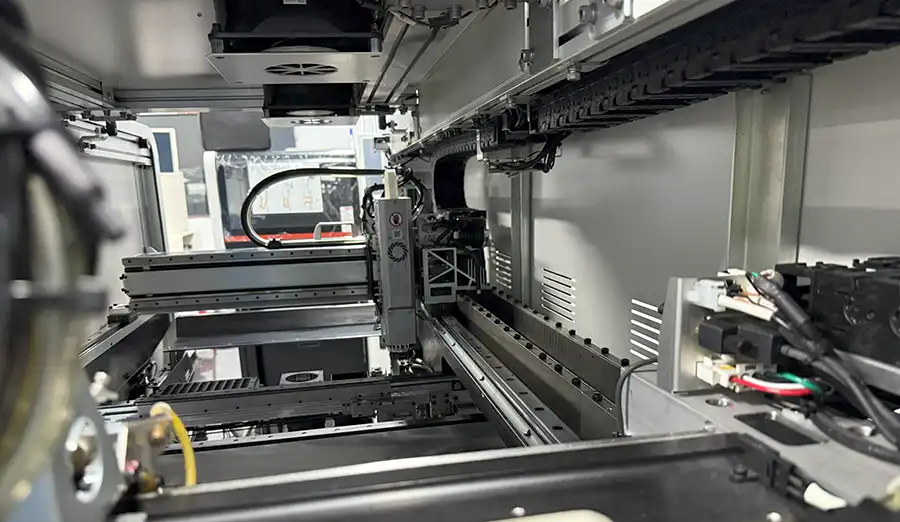
The next generation of SMT equipment is becoming smarter and more connected. Key trends include:
AI-assisted placement optimization for improved accuracy.
Smart feeders that automatically recognize components.
Real-time data integration with MES systems for full traceability.
Energy-efficient reflow ovens that reduce power consumption.
Miniaturization support, handling ultra-small chips and fine-pitch packages.
As electronics continue to evolve toward higher functionality and smaller form factors, SMT machines will remain at the heart of innovation and manufacturing efficiency.
Frequently Asked Questions About SMT Machines
1. What does an SMT machine do?
An SMT machine automatically places and solders surface-mount components onto PCBs in electronic manufacturing.
2. Is an SMT machine the same as a pick and place machine?
No. A pick and place machine is one part of the SMT process. The term SMT machine can refer to all equipment in an SMT assembly line.
3. How much does an SMT machine cost?
Depending on speed and precision, prices range from about $30,000 for entry-level models to over $800,000 for high-speed production systems.
4. What brands make SMT machines?
Popular manufacturers include Fuji, Panasonic, Yamaha, JUKI, ASM, and Hanwha, each offering machines tailored for different production volumes.
5. Can one SMT machine handle multiple product types?
Yes. Many modern SMT machines support high-mix, low-volume production with fast feeder changeover and intelligent software optimization.
An SMT machine represents more than just a single piece of equipment—it is the foundation of modern electronic assembly.
While the pick and place machine performs the most visible and precise step, the full SMT system—from solder printing to inspection—ensures that every electronic device meets today’s high standards for speed, quality, and reliability.