
If you’ve ever opened an electronic device—your phone, your TV remote, or even a LED strip—you’ve probably seen hundreds of tiny parts carefully soldered onto a green board. Those little rectangular bits are what we call SMD components.
So, what does SMD mean?
In short, SMD stands for Surface-Mount Device. These are electronic components that are mounted directly onto the surface of a printed circuit board (PCB), rather than being inserted into holes like older components. The process that makes this possible is called SMT, or Surface Mount Technology.
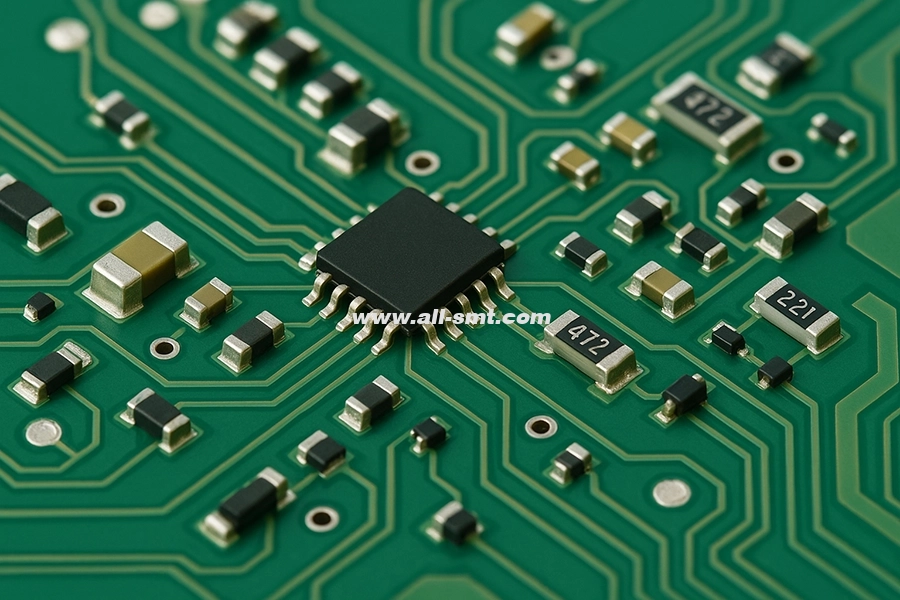
What Is SMD in Electronics?
SMD refers to the components, while SMT refers to the technology or method used to place and solder those parts.
In the past, electronic components had long metal wires (called leads) that passed through holes in the circuit board and were soldered on the other side. This is known as through-hole technology.
But with SMDs, manufacturers mount components directly on the surface of the board. No holes. No long wires. Just tiny, precise parts placed by high-speed robotic machines.
This shift allowed electronics to become smaller, faster, and more reliable—and it’s one of the biggest reasons why your smartphone today is thinner than your wallet.
How SMD and SMT Work Together
Imagine a factory line building circuit boards:
A solder paste printer applies a thin layer of solder paste on the PCB.
Pick-and-place machines (like Yamaha, Fuji, or Siemens SIPLACE) pick up SMD components from reels and place them precisely onto the solder paste.
The board then goes into a reflow oven, where the paste melts, and each component bonds firmly to the board.
Finally, inspection machines like AOI (Automated Optical Inspection) or X-ray testers check that every SMD is correctly placed and soldered.
This entire process happens in seconds—and it’s incredibly accurate.
That’s Surface Mount Technology (SMT) in action, and SMDs are the tiny stars that make it possible.
SMD vs Through-Hole: What’s the Difference?
| Feature | SMD (Surface Mount Device) | Through-Hole Component |
|---|---|---|
| Mounting Method | Mounted directly on PCB surface | Inserted into drilled holes |
| Assembly | Automated (pick & place) | Manual or semi-automatic |
| Size | Much smaller | Larger |
| Circuit Density | High | Low |
| Cost | Lower for mass production | Higher labor cost |
| Repair | More difficult manually | Easier to rework |
| Common Use | Smartphones, LED panels, automotive boards | Power circuits, prototypes, connectors |
In short, SMDs made miniaturization possible. Without them, we wouldn’t have laptops as slim as notebooks or wearable tech as light as a coin.
Common Types of SMD Components
When we say “SMD,” it doesn’t mean just one thing. It refers to a whole family of components, including resistors, capacitors, diodes, and integrated circuits.
Here’s a breakdown of the most common ones:
1. SMD Resistors
These are the most common passive components on a board.
They control the flow of current.
You can identify them by the small rectangular shape and printed code, like “103”, which means 10 × 10³ Ω = 10 kΩ.
2. SMD Capacitors
Capacitors store and release electrical energy.
In SMD form, they look like small tan or gray blocks without visible markings.
They stabilize voltage, filter noise, and smooth out power signals.
3. SMD Diodes
Used to direct current flow in one direction and protect circuits.
SMD diodes include rectifiers, Zener diodes, and Schottky diodes—all essential in power regulation and signal control.
4. SMD LEDs
Tiny light-emitting diodes that produce bright, energy-efficient light.
Common types include SMD2835, SMD5050, and SMD5630, where the numbers indicate the LED chip size (e.g., 5.0 × 5.0 mm for SMD5050).
5. SMD Transistors & ICs
These handle amplification, switching, and logic control.
SMD ICs (integrated circuits) are found in microcontrollers, memory chips, and processors—basically, the brains of any modern device.
Understanding SMD Package Codes
SMD components are standardized by size codes.
Here are a few you’ll often see:
| Code | Size (mm) | Common Use |
|---|---|---|
| 0201 | 0.6 × 0.3 | Ultra-compact devices |
| 0402 | 1.0 × 0.5 | Smartphones |
| 0603 | 1.6 × 0.8 | General-purpose circuits |
| 0805 | 2.0 × 1.25 | Automotive electronics |
| 1206 | 3.2 × 1.6 | Power modules |
Understanding these codes helps engineers design compact boards and source compatible replacements easily.
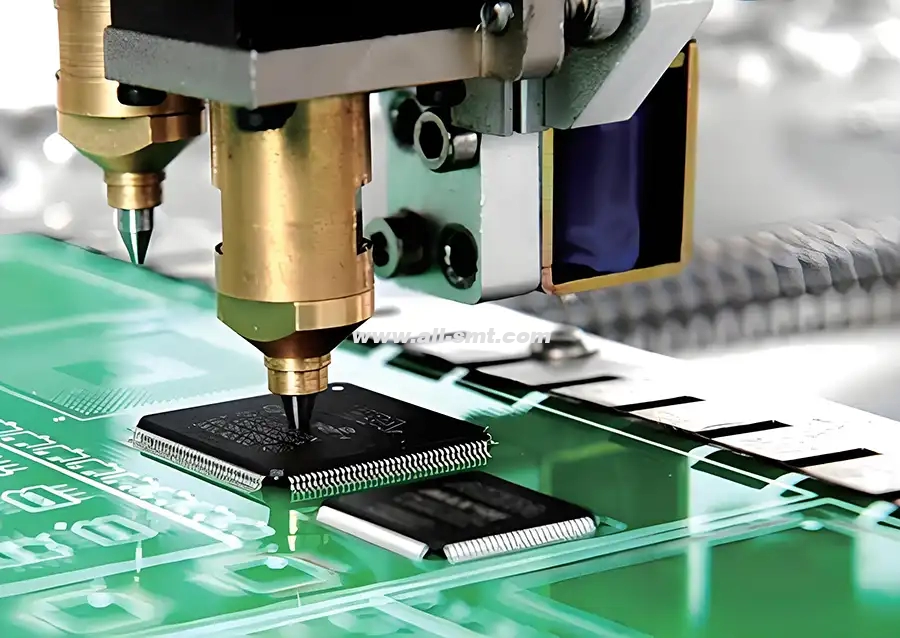
The Process of SMD Assembly
Let’s walk through the SMT production line step by step.
1. Solder Paste Printing
A stainless steel stencil applies solder paste on specific pads of the PCB.
2. Component Placement
Pick-and-place machines mount SMDs with incredible precision—some models can place 80,000 parts per hour.
3. Reflow Soldering
The board passes through a multi-zone oven, where solder paste melts and then solidifies, permanently fixing each component.
4. Inspection and Testing
AOI and X-ray inspection ensure all joints are correctly soldered.
If errors appear, engineers can rework them using hot-air reflow stations.
This automated process is what makes modern electronics fast to produce, highly consistent, and cost-efficient.
Why SMDs Are So Important
SMD technology changed the electronics industry forever. Here’s why:
Miniaturization – SMDs are tiny, enabling slim and compact devices.
Automation – SMT allows full robotic assembly, reducing human error.
Performance – Shorter connections reduce electrical noise and improve signal speed.
Durability – Strong solder joints resist vibration and temperature shifts.
Cost efficiency – Faster production lowers costs for manufacturers and consumers.
Essentially, SMD = smarter, smaller, and faster electronics.
Real-World Examples of SMD Applications
SMDs are everywhere—literally in every device you own.
Smartphones – Every chip and sensor uses SMDs.
LED lighting – SMD LEDs power indoor, outdoor, and display lighting systems.
Automobiles – Engine control units, infotainment systems, and sensors.
Medical equipment – Compact, high-precision diagnostic tools.
Consumer electronics – TVs, game consoles, and wearables.
Industrial control – Robots, sensors, and automated machines.
Even in SMT production lines, SMDs are both the components being placed and the reason the machines exist.
The Advantages of SMD Components
Here’s a quick summary of why manufacturers prefer SMDs:
✅ Compact and lightweight
✅ High-speed automated assembly
✅ Better electrical performance
✅ Lower manufacturing costs
✅ Improved reliability and vibration resistance
✅ Supports multi-layer PCB design
In short, SMDs make high-performance electronics possible at mass scale.
The Disadvantages or Challenges of SMDs
However, working with SMDs also brings challenges:
Difficult to repair manually – Components are so tiny that human rework is tricky.
Thermal sensitivity – Improper reflow profiles can damage parts.
Inspection complexity – Requires AOI or X-ray systems for quality assurance.
Limited power capacity – SMDs handle less current compared to larger through-hole parts.
That’s why high-quality SMT machines and professional operators are critical for mass production.
SMD vs SMT: What’s the Real Difference?
People often use SMD and SMT interchangeably, but they’re not the same:
SMD = the component (like a resistor or LED)
SMT = the method used to mount those components
👉 Think of it like this:
An SMD is a part. SMT is the process that places it.
Without SMT, SMDs couldn’t exist. And without SMDs, SMT wouldn’t be necessary. They’re two sides of the same coin.
What Are SMD LEDs and Why Are They Popular?
SMD LEDs deserve special mention.
They’re compact, bright, and widely used in both lighting and display industries.
Here’s how they differ from older DIP LEDs:
| Type | Mounting | Brightness | Viewing Angle | Common Use |
|---|---|---|---|---|
| DIP LED | Inserted through PCB holes | Medium | Narrow | Outdoor signs |
| SMD LED | Mounted on PCB surface | High | Wide | LED panels, indoor lights |
Popular models like SMD5050, SMD2835, and SMD3528 are named after their physical dimensions in millimeters.
For example, SMD5050 = 5.0 × 5.0 mm LED chip.
They offer high brightness, low power consumption, and are easy to integrate into strip lights or large LED displays.
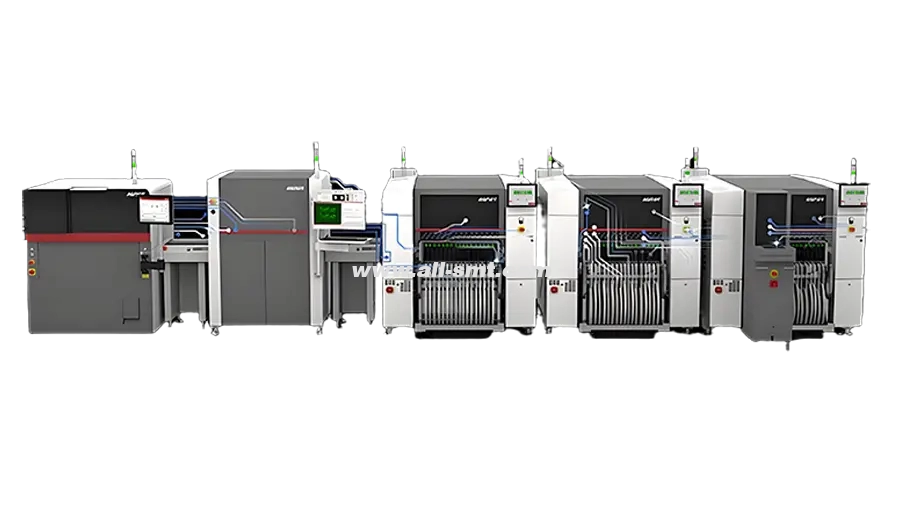
Where to Buy SMD Components and SMT Machines
If you’re sourcing SMD components, feeders, or pick-and-place machines, choosing the right supplier matters.
At GEEKVALUE – SMT Parts & Machines, we specialize in:
Brand-new and pre-owned SMT equipment
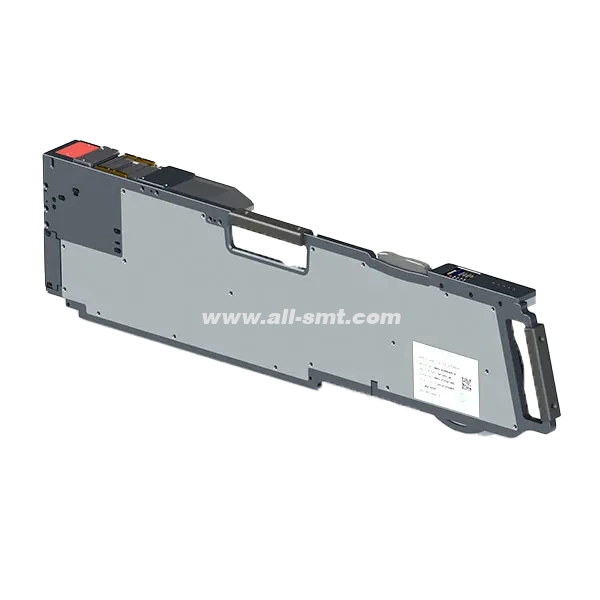
Original and compatible SMD feeders and nozzles
Full SMT production line solutions
Professional repair and exchange services
We support major brands like Yamaha, Fuji, Panasonic, JUKI, Samsung, and ASM SIPLACE, offering fast delivery, competitive pricing, and technical guidance.
Whether you’re expanding a factory or just repairing a feeder, our goal is simple:
Help you get production running fast and cost-effectively.
Summary Table
| Topic | Explanation |
|---|---|
| SMD Definition | Surface-Mount Device – small component mounted on PCB surface |
| SMT | Surface-Mount Technology – method used to assemble SMDs |
| Advantages | Compact, reliable, fast production |
| Applications | LED lights, phones, computers, automotive, industrial control |
| Common Sizes | 0201 to 1206 |
| Key Equipment | Pick and place, reflow oven, AOI inspection |
Final Thoughts: Why SMD Matters Today
Modern electronics wouldn’t exist without SMD technology.
From your phone to your smartwatch, everything depends on these miniature components.
SMDs made electronic design smaller, faster, smarter, and far more efficient than ever before.
They’re the quiet heroes behind every innovation in the digital world.
So next time you read “SMD” on a component or LED strip, you’ll know exactly what it means—and why it’s so important.

About GEEKVALUE – Your Reliable SMT Partner
GEEKVALUE is a professional one-stop supplier for SMT machines, feeders, spare parts, and technical services.
We provide brand-new and pre-owned SMT solutions from leading brands including Fuji, Panasonic, Yamaha, JUKI, Samsung, and ASM SIPLACE.
With years of experience, large inventory, and quick global shipping, GEEKVALUE helps factories and service providers reduce downtime, lower costs, and improve production efficiency.