Test Handler Machine
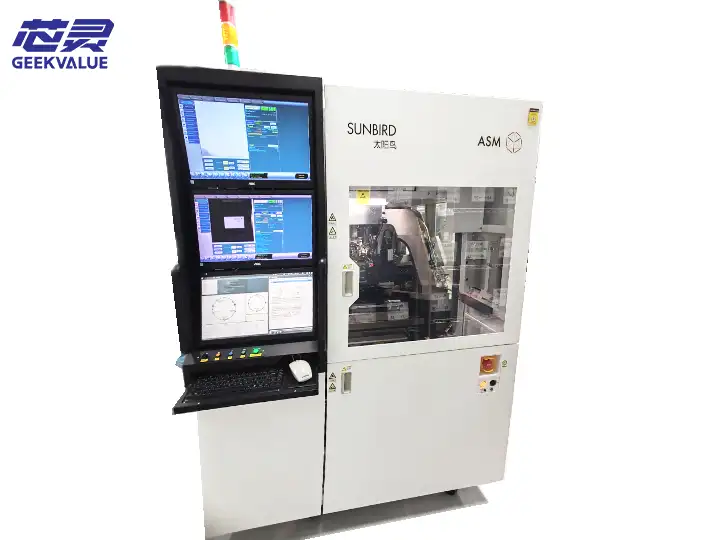
ASM Pacific Technology Turret Wafer Level Test System SUNBIRD
SUNBIRD provides an efficient, reliable and flexible wafer testing solution for the semiconductor industry through innov...
ave up to 70% on SMT Parts – In Stock & Ready to Ship
Get Quote →A test handler machine is a coordinated automation platform built around the physical path of the semiconductor device. Its infeed, motion, temperature-control, contact, inspection, sorting and output modules must work together with the IC package, semiconductor tester and production process. Review current machines and the installed hardware that determines whether a platform can be converted for another package or test line.
01 / INFEED
Load the Device
Tray, tube, bowl, strip, film frame or another input system.
02 / ORIENT
Identify and Align
Vision, rotation, marking and device-orientation stations.
03 / THERMAL
Condition the Device
Ambient, hot, cold or controlled-temperature handling hardware.
04 / TEST SITE
Present to Contact
Motion, force, socket, contactor and tester-interface modules.
05 / SORT
Route by Result
Bin mapping, reject handling and optional inspection or marking.
06 / OUTPUT
Return to Media
Tray, tube, reel, carrier or another downstream packaging format.
Browse the machines currently assigned to this category. A platform may support several package or temperature options, but the usable configuration depends on the installed infeed, conversion kit, thermal system, test-site hardware, software and output modules.
SUNBIRD provides an efficient, reliable and flexible wafer testing solution for the semiconductor industry through innov...
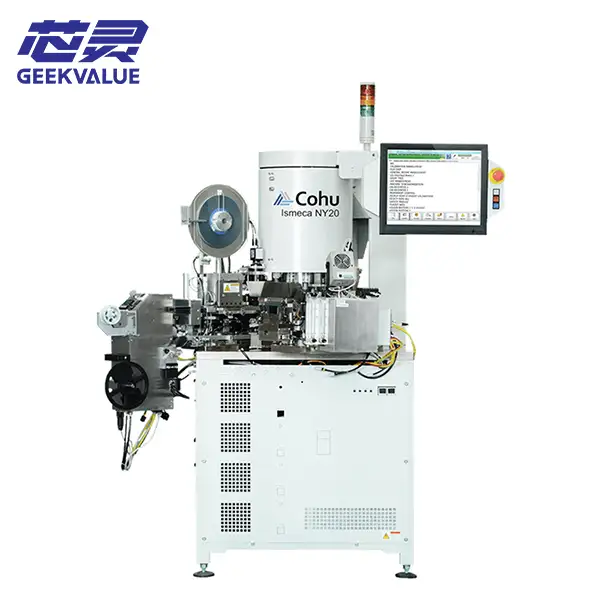
The ISMECA NY20 (now owned by Cohu) is a 20-station rotary ultra-high-speed semiconductor testing and sorting machine
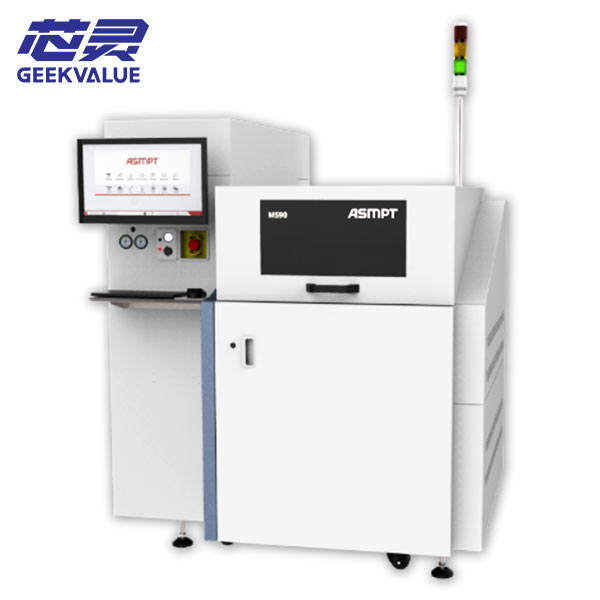
ASM sorting machine MS90 is a device designed for lamp bead sorting, with efficient and accurate sorting functions. This...
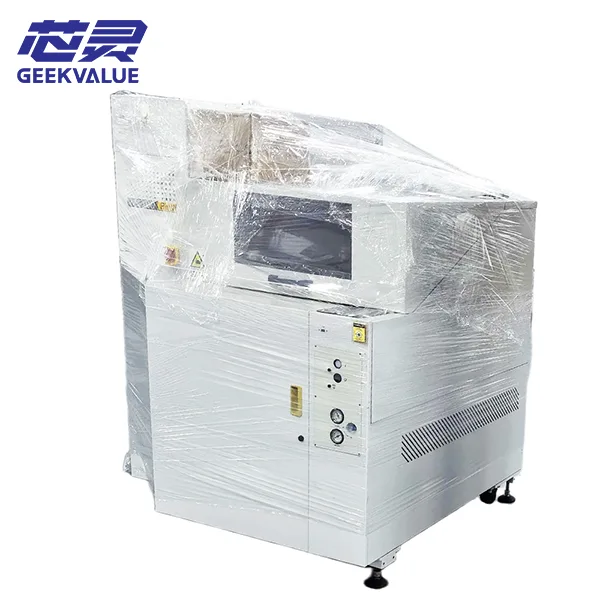
As an upgraded version of the MS100, the ASM MS100 Plus is also a device for chip sorting and arrangement based on wafer...
Two machines may both be described as semiconductor test handlers while using different motion systems, footprints and package-conversion hardware. The correct mechanical layout is the one that moves the target device reliably through the required contact, inspection and output sequence.
Controlled robotic transfer moves devices between defined stations. Buyers should inspect axes, nozzles, nests, tray elevators, contact force and test-site alignment.
Devices are indexed through several stations around a rotary platform. The condition of the turret, pick heads, indexing mechanism, vision and finishing modules is central to machine evaluation.
Track geometry and controlled device movement guide compatible packages to the contact site. Package dimensions, lead shape, friction, thermal expansion and jam-free transport become critical mechanical checks.
Devices remain in a strip, substrate or frame during testing. The machine must match the carrier dimensions, pitch, indexing method, contact interface and post-test mapping.
A brochure normally describes the platform family, but an operating test handler is defined by the modules installed on the individual machine. These are the areas to inspect before assuming that the equipment can run another IC package, tester interface or temperature program.
Tray elevators, tubes, bowls, tracks, strips and film frames determine how devices enter the machine and whether their orientation can be maintained.
Servo axes, bearings, belts, encoders, pick heads, vacuum paths and rotary mechanisms affect placement accuracy, cycle stability and mechanical wear.
Cameras, lighting, optics and software recipes may verify device orientation, package marks, edges, lead condition or position before and after test.
Thermal chambers, plates, airflow, chillers, heaters, dry-air and nitrogen systems influence temperature stability, recovery time and actual throughput.
The test head, HIFIX or docking interface, contactor, socket, site count and force mechanism must align mechanically with the semiconductor tester.
Electrical results must be mapped to trays, tubes, reels, bins or reject positions, while optional marking, inspection and traceability depend on the installed modules.
Running a new IC package on an existing test handler normally involves mechanical, electrical, thermal and software changes. The machine model alone does not confirm that the required conversion parts, test interface or software options are included.
Review the package dimensions, body thickness, leads or balls, weight, orientation marks and input or output media used by the production line.
Tracks, nests, trays, nozzles, precisors, guides, pockets, rails or carrier tooling may need to change with the semiconductor device.
Check the socket or contactor, HIFIX, docking direction, test-site count, contact force and connection to the existing semiconductor tester.
Orientation, inspection thresholds, temperature control, soak sequence, bin mapping and output handling must be configured for the new product.
Confirm pickup, movement, contact, temperature, tester communication, output position and package-damage risk before production release.
Used and refurbished test handler machines can differ substantially in wear, installed options, calibration status and included conversion hardware.
Check repeatability, vibration, abnormal noise, backlash, belt and bearing condition, collision history and available service records.
Inspect vacuum generators, valves, tubing, regulators, cylinders, leakage and the stability of device pickup and release.
Confirm the installed modules, operating range, refrigerant or gas requirements, alarms, sensors and calibration status.
Verify which interface components are included and whether they match the intended tester, test head, socket and site layout.
Confirm software versions, option licenses, recipe backups, industrial PC condition, communication protocols and available manuals.
List all included nozzles, tracks, trays, nests, sensors, cables, boards and product-specific conversion components.
Before shipment or line planning, confirm the practical installation conditions around the machine. Footprint and utility requirements can change with the thermal equipment, input and output modules, tester docking arrangement and service-access requirements.
Use these pages when you need the parent test-handler directory, semiconductor final-test context, electrical test equipment or replacement components.
Return to the main category to browse test handler types, current machines and related equipment pages.
Review how handler equipment supports packaged semiconductor final test, temperature conditioning and device sorting.
Explore equipment that generates electrical stimulus, measures device response and returns the result used for sorting.
Find selected boards, motors, sensors, nozzles and replacement components for supported handler platforms.
Continue to equipment and selection content focused on packaged IC handling and final-test applications.
Questions focused on physical machine structure, package conversion, installation and used-equipment evaluation.
A machine may include input-media handling, orientation, vision, robotic or track movement, thermal conditioning, one or more test sites, sorting and output modules. The exact arrangement depends on the machine architecture and installed options.
Often yes, but another package may require different tracks, trays, nests, nozzles, guides, vision settings, sockets, contactors and test-site parameters. Confirm both the supported package range and the conversion parts included with the machine.
A change kit is the set of product-specific mechanical and interface components used to convert a handler for another package or media format. Depending on the machine, it may include tracks, nests, nozzles, precisors, tray components, rails, pockets or carrier tooling.
Inspect motion and indexing condition, vacuum and pneumatic circuits, thermal modules, test-site force and alignment, tester interface, software and licenses, safety functions, maintenance history, conversion tooling and included spare parts.
The handler and semiconductor tester are normally separate systems. The handler moves and conditions the device, while the tester performs the electrical measurement. The quotation should state whether the tester, test head, HIFIX, contactor, socket and interface cables are included.
Confirm machine dimensions and weight, the access route, electrical supply, compressed air, vacuum, cooling or thermal utilities, exhaust, tester docking, network communication and the service clearance required around the machine.
Send the machine model, IC package, semiconductor tester, thermal requirement and production format. We can help identify the installed modules, conversion hardware and integration points that still need confirmation.
Why do so many people choose to work with GeekValue?
Our brand is spreading from city to city, and countless people have asked me, "What is GeekValue?" It stems from a simple vision: to empower Chinese innovation with cutting-edge technology. This is a brand spirit of continuous improvement, hidden in our relentless pursuit of detail and the delight of exceeding expectations with every delivery. This almost obsessive craftsmanship and dedication is not only the persistence of our founders, but also the essence and warmth of our brand. We hope you will start here and give us an opportunity to create perfection. Let us work together to create the next "zero defect" miracle.
DetailsContact a sales expert
Reach out to our sales team to explore customized solutions that perfectly meet your business needs and address any questions you may have.

© All Rights Reserved. Technical Support:TiaoQingCMS