Load and Identify
Receive devices from tray, tube, bulk, strip, film frame or another production media.
ave up to 70% on SMT Parts – In Stock & Ready to Ship
Get Quote →A semiconductor test handler moves packaged devices through loading, thermal conditioning, electrical contact and result-based sorting. Explore available equipment and match the handler, package conversion hardware, tester interface and production flow as one final-test cell.
Receive devices from tray, tube, bulk, strip, film frame or another production media.
Control orientation, temperature, site position and contact force before electrical measurement.
The tester applies the electrical program and returns pass/fail or detailed bin information.
Route accepted and rejected devices into the correct tray, tube, reel, bin or downstream process.
The same device may pass through wafer sort, packaged final test, system-level test and reliability screening. Each stage uses different mechanics, interfaces and production objectives.
A prober positions the wafer and probe card for electrical test. Review Probe Station equipment when the device is still on the wafer.
The test handler transports packaged parts, controls test temperature, presents them to the contactor and sorts the returned results.
SLT equipment evaluates complex devices under more realistic operating conditions and may require a different carrier, socket, thermal and board architecture.
Burn-in and reliability systems apply extended temperature, voltage or workload stress rather than normal high-throughput final-test handling.
Browse the equipment currently assigned to this category. Actual package support, thermal modules, test interfaces, conversion kits and included accessories should be confirmed for each machine.
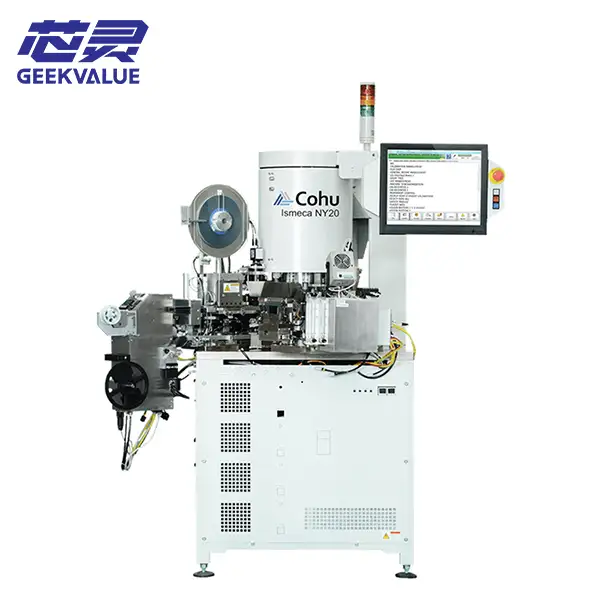
The ISMECA NY20 (now owned by Cohu) is a 20-station rotary ultra-high-speed semiconductor testing and sorting machine
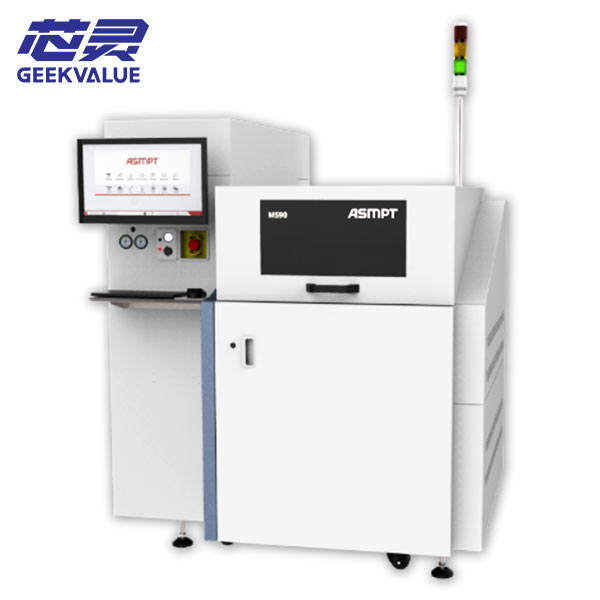
ASM sorting machine MS90 is a device designed for lamp bead sorting, with efficient and accurate sorting functions. This...
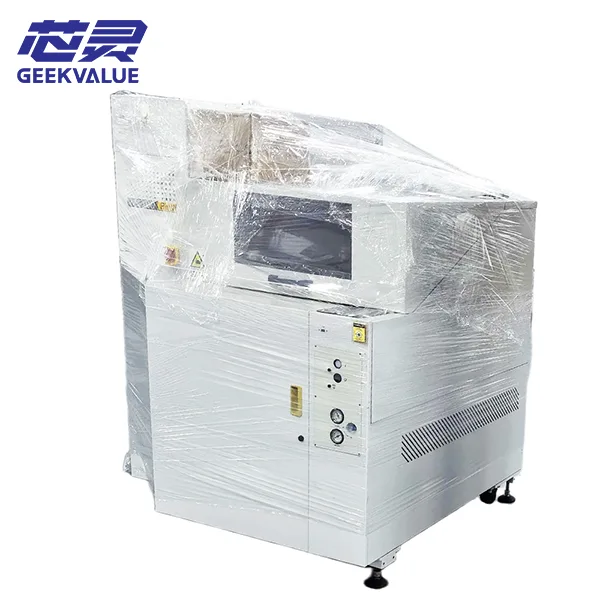
As an upgraded version of the MS100, the ASM MS100 Plus is also a device for chip sorting and arrangement based on wafer...
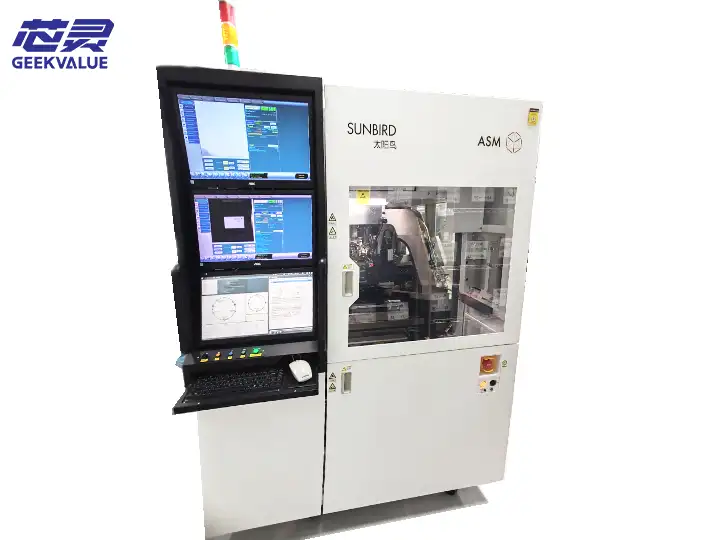
SUNBIRD provides an efficient, reliable and flexible wafer testing solution for the semiconductor industry through innov...
High-volume packaged-device final test.
Match package family, site count, index time and tester interface.
Balance parallelism, temperature, conversion time and jam recovery.
Devices with higher current, heat or contact-force sensitivity.
Check active temperature control, contactor performance and power dissipation.
Self-heating can change the handler and contact strategy.
Motion, pressure, microphone, inertial or optical components.
The cell may need additional actuation, calibration or vision functions.
Confirm whether a standard IC handler is sufficient.
Small BGA, QFN, DFN, WLCSP and post-saw devices.
Package fragility and presentation media can determine the platform.
Change-kit completeness becomes critical when sourcing used equipment.
Successful integration depends on the product entering the machine, the tester receiving stable electrical contact, the device staying at the required temperature and the final result being routed correctly.
Tracks, nests, trays, tubes, bowls, strips, film frames, nozzles and orientation systems must match the physical device.
Docking direction, HIFIX, socket or contactor, site count, force and software communication must align with the tester.
Soak time, chiller, heater, dry air, LN₂, device self-heating and recovery time influence real test-cell output.
Bin mapping, inspection, traceability, marking and final media handling must fit the wider semiconductor back-end flow.
These systems can appear next to one another in semiconductor back-end production, but they do not perform the same task.
Loads, thermally conditions, contacts and sorts devices while the ATE performs the electrical measurement.
Runs devices in a board- or application-like environment and may use carriers, sockets and workloads unlike normal final test.
AOI, 3D inspection, marking, taping or tray finishing may be integrated with a handler platform but should be specified separately.
Provide the package family, dimensions, lead or ball structure, orientation, weight and device power dissipation.
List the ATE system, test head, existing HIFIX or interface hardware, contactor and required parallel site count.
State ambient, hot, cold or tri-temperature requirements, soak expectations and whether the device self-heats during test.
Explain how parts enter the cell, how electrical bins should be separated and whether marking, inspection or taping is required.
For used or refurbished equipment, confirm the installed kits, software, thermal modules, tester interface, accessories and running condition.
Use these pages when the project also includes the core tester, wafer-level contact, replacement parts or the parent test-handler equipment category.
Browse the broader handler category and compare pick-and-place, turret, gravity and strip-based equipment routes.
View Test Handlers → ELECTRICAL TESTReview the semiconductor tester that generates stimulus, measures the device and returns the test result to the handler.
Explore ATE Systems → WAFER TESTCompare wafer-level contact and measurement equipment when the device has not yet entered packaged final test.
Explore Probe Equipment → PARTS & SUPPORTFind selected nozzles, boards, motors, sensors and replacement components for supported handler platforms.
Browse Handler Parts →These answers cover the integration questions that normally affect final-test equipment selection and quotation.
It transports packaged devices, controls orientation and temperature, presents each device to the test contactor, receives the ATE result and sorts the devices into the required output bins or media.
No. The handler performs mechanical handling, thermal conditioning, contact positioning and sorting. The ATE applies the electrical test program, measures the device and returns the result.
Use a final-test handler for conventional packaged-device electrical production test. Choose an SLT system when the device must run in a board- or application-like environment with a different socket, carrier or workload.
Provide the package drawing, dimensions, orientation, input/output media, test temperature, ATE platform, test head, site count, test time and required sorting or inspection operations.
Sometimes, but conversion depends on the machine architecture, available change kit, tracks, nests, nozzles, contactor interface, thermal configuration, software and mechanical range. These items must be verified before purchase.
The quotation should identify the exact machine, year and serial number, installed change kit, tester interface, thermal system, software, input/output modules, accessories, condition, inspection scope and delivery support.
Send the package, tester, temperature, site count and production-flow requirements to review current equipment and actual machine configurations.
Why do so many people choose to work with GeekValue?
Our brand is spreading from city to city, and countless people have asked me, "What is GeekValue?" It stems from a simple vision: to empower Chinese innovation with cutting-edge technology. This is a brand spirit of continuous improvement, hidden in our relentless pursuit of detail and the delight of exceeding expectations with every delivery. This almost obsessive craftsmanship and dedication is not only the persistence of our founders, but also the essence and warmth of our brand. We hope you will start here and give us an opportunity to create perfection. Let us work together to create the next "zero defect" miracle.
DetailsContact a sales expert
Reach out to our sales team to explore customized solutions that perfectly meet your business needs and address any questions you may have.

© All Rights Reserved. Technical Support:TiaoQingCMS