 EN
EN id
id sk
sk sr
sr sv
sv it
it pt
pt bn
bn ms
ms be
be nl
nl fr
fr th
th vi
vi ru
ru ja
ja ko
ko de
de hy
hy az
az bs
bs bg
bg my
my cs
cs da
da dv
dv el
el et
et fil
fil fi
fi ga
ga gl
gl gn
gn he
he hi
hi km
km hr
hr hu
hu is
is kn
kn rw
rw lo
lo lv
lv lt
lt lb
lb lg
lg mi
mi mt
mt ne
ne no
no ny
ny or
or om
om per
per pl
pl ro
ro sa
sa so
so es
es sw
sw ta
ta tr
tr uk
uk ur
ur cy
cy xh
xh
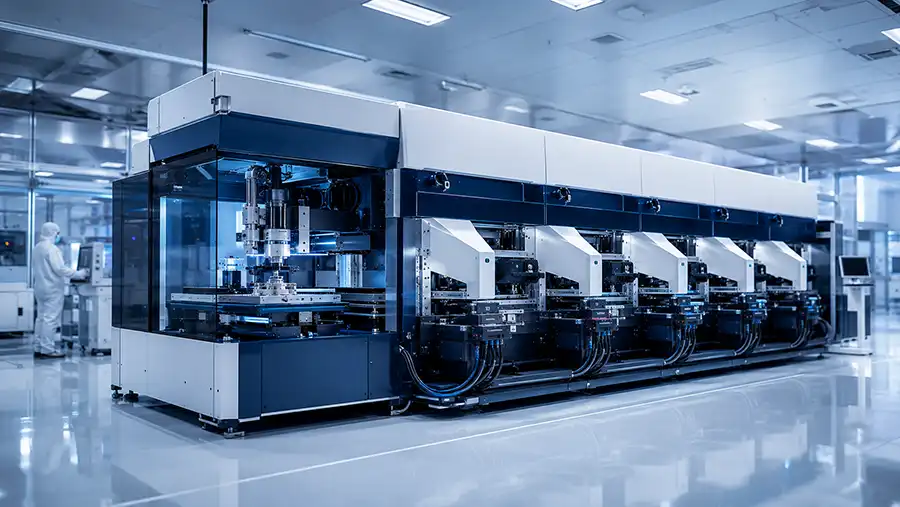
Two BESI DATACON 2200 evo machines can carry the same platform name while having very different practical capabilities. One machine may be configured for multi-chip die attach with integrated dispensing and wafer handling. Another may include a different bond head, higher-force process setup, specialized tooling, alternative material modules, upgraded vision or a completely different handling path.
This is why a machine quotation that simply states “BESI DATACON 2200 evo” is not enough for an engineering or procurement decision. Whether buyers search for BESI DATACON evo 2200, DATACON 2200 evo, BESI DATACON 2200, or a general DATACON machine, the real question is the same: what is installed on the offered machine, and can that configuration support the intended package route?
This guide explains why two DATACON 2200 evo systems can differ significantly, what should be compared before requesting a quotation, and how to avoid approving a machine based only on the platform name.
In Brief: Why Can Two DATACON 2200 evo Machines Be So Different?
A BESI DATACON 2200 evo is a configurable Multi Module Attach platform rather than one fixed machine specification. Actual capability can change depending on the machine version, installed bond heads, force range, thermal functions, vision package, wafer or tray handling, process modules, tooling, controller generation, software options and refurbishment condition.
The same DATACON 2200 evo platform can be supplied with different process hardware.
The quoted model name may not identify the installed bond head, tooling or material-handling setup.
Vision, camera, controller and software options can affect what the machine can practically support.
A used system may require additional tools, fixtures, software recovery or process engineering before qualification.
Why the DATACON 2200 evo Nameplate Is Not the Full Specification
In semiconductor equipment procurement, the platform name is only the first layer of information. It identifies the product family, but it does not define the complete process capability of a specific machine.
For example, a DATACON 2200 evo quotation may include a standard multi-chip die attach configuration, while another quotation may include additional process modules, different bond heads, upgraded optics, alternate wafer handling, special fixtures or a high-force setup. Both offers may be described as a DATACON 2200 evo, but they should not be compared as identical machines.
Engineering rule: Compare the installed configuration, not only the platform name.
The most useful quotation review starts with the intended process route. Once the die, substrate, material, handling flow and target output are defined, the buyer can confirm whether the offered DATACON 2200 evo machine has the right physical and software configuration.
Five DATACON 2200 evo Questions to Ask Before Comparing Quotes
1. Which Exact DATACON 2200 evo Version Is Being Offered?
The DATACON 2200 evo family includes multiple version directions. A quotation should clearly state whether the offered machine is a DATACON 2200 evo, evo plus, hF, hS, advanced, or another defined configuration.
The version label matters because it may indicate a different design emphasis. Some versions are associated with flexible Multi Module Attach, others with higher-force process capability, improved vision and thermal behavior, improved cleanroom performance, or higher placement accuracy.
Request the full model designation, serial number, machine nameplate photograph and written configuration list before making a comparison.
2. What Bond Head and Process Hardware Are Installed?
The bond head arrangement can change the entire practical use case of a DATACON machine. A process may require a specific force range, heating capability, rotation function, tool interface, pickup method, eject mechanism or placement sequence.
Do not assume that a suitable platform name means the correct bond head is installed. Ask the supplier to identify the physical bond heads, tool holders, nozzles, eject tools, thermal tools and any related process modules included with the machine.
Number of working heads installed
Bond head type and process role
Tool holder and nozzle interface
Force-related configuration where applicable
Heating, rotation or specialized process functions
Included pickup, placement and eject tools
3. What Material Handling Configuration Is Included?
A die bonder is only useful when it can move the required material through the full process sequence. The machine may need to handle wafers, wafer frames, trays, Gel-Pak®, carriers, substrates, strips, leadframes, boats or custom fixtures.
Two DATACON 2200 evo machines can differ substantially in this area. One may be equipped for a particular wafer format and tray sequence, while another may use a different carrier system or omit a required material-handling module altogether.
Before purchase, map the material flow from loading to pickup, placement, inspection, recovery and unloading. Then compare the required route against the modules physically installed on the offered machine.
4. What Vision and Alignment Package Is Installed?
Camera systems are another major source of difference between two machines with the same platform name. Vision capability depends on installed optics, illumination, camera generation, field of view, focus, alignment software, calibration condition and the physical characteristics of the die and substrate.
A camera visible in a machine photo does not prove that the machine can support the required alignment task. The actual die size, substrate reference marks, process tolerance, placement sequence and inspection route must be considered.
Request information about:
Installed camera and optical system
Illumination configuration
Alignment reference method
Available calibration tools or calibration records
Image quality and repeatability evidence
Vision operation with representative materials where possible
5. What Software, Controller and Process Data Are Available?
Controller and software status can determine whether a used DATACON machine is ready for installation or becomes a longer recovery project. A system may power on normally but still lack usable software backups, enabled options, machine parameters, recovery media, documentation or controller support.
Before approving a quotation, confirm the industrial PC condition, controller generation, motion cards, I/O configuration, software version, option status, machine backups, alarm records and available technical documentation.
For a replacement project, software compatibility can be especially important. Existing recipes, operator experience, process data and current tooling may not transfer directly to a different machine generation or controller environment.
DATACON 2200 evo Family: Why Version Labels Matter
The DATACON 2200 evo family is not one fixed configuration. The table below provides a practical way to understand the version labels before comparing used-equipment quotations.
| Platform Direction | General Evaluation Focus | What to Confirm in a Quotation |
|---|---|---|
| DATACON 2200 evo | Flexible Multi Module Attach, multi-chip die attach and selected flip chip process capability. | Installed working heads, dispensing or material modules, wafer handling, automatic tool-changing capability, vision package and included tooling. |
| DATACON 2200 evo plus | Platform direction associated with improved accuracy, long-term stability, camera development and thermal compensation features. | Camera generation, vision package, image-processing configuration, thermal compensation status, handling modules and software availability. |
| DATACON 2200 evo hF | High-force multi-chip die bonding applications and process routes requiring a more force-oriented configuration. | Installed high-force bond head, force-related process tools, heating or thermal requirements, material route, fixtures and application-specific accessories. |
| DATACON 2200 evo hS | Multi Module Attach direction with emphasis on accuracy, stability, camera and cleanroom-related improvements. | Vision system, thermal compensation functions, controller generation, calibration status, cleanroom configuration and production tooling. |
| DATACON 2200 evo advanced | Higher-accuracy Multi Module Attach direction with updated gantry, controller and vision-related platform architecture. | Actual gantry and controller configuration, camera generation, placement requirement, tooling, process materials and available qualification evidence. |
The table should not be used as a substitute for machine-level verification. A used system may have been upgraded, modified, partially rebuilt, reconfigured or supplied with a tooling package that differs from the original application.
Six Configuration Areas That Can Change Machine Capability
1. Number and Type of Working Heads
A DATACON 2200 evo configuration may use one or multiple working heads depending on the intended production sequence. The number of heads matters, but the type and installed function of each head matter more.
Ask whether the machine is configured for one repeated placement task, multiple die types, different tools, dispensing, special material steps or a combined assembly sequence. A multi-head machine is not automatically suitable for every multi-chip route.
2. Die Attach Material Route
Machine suitability changes with the bonding material and preparation method. The process may involve epoxy, stamping, dispensing, flux dipping, solder-related methods, sinter material, adhesive or another application-specific route.
The relevant questions are not only “Can the machine place the die?” but also “Can it prepare the material, maintain the required process conditions and support the intended sequence?”
3. Wafer, Carrier and Substrate Flow
Handling hardware should be reviewed from the first loading point through final unloading. The offered machine may have a wafer handler, tray handler, carrier module, substrate tooling or custom fixtures that do not match the required production format.
Request clear images and written confirmation of all included handling modules. Missing handling hardware can become a major cost and schedule issue after delivery.
4. Tooling and Fixture Package
Nozzles, eject tools, fixtures, carrier plates, calibration references and special process tools can be more important than the machine cabinet itself. They are often specific to a die size, package design, substrate format or process route.
Ask for an itemized tooling inventory, including condition and known compatibility. Do not rely on a general statement that “tooling is included.”
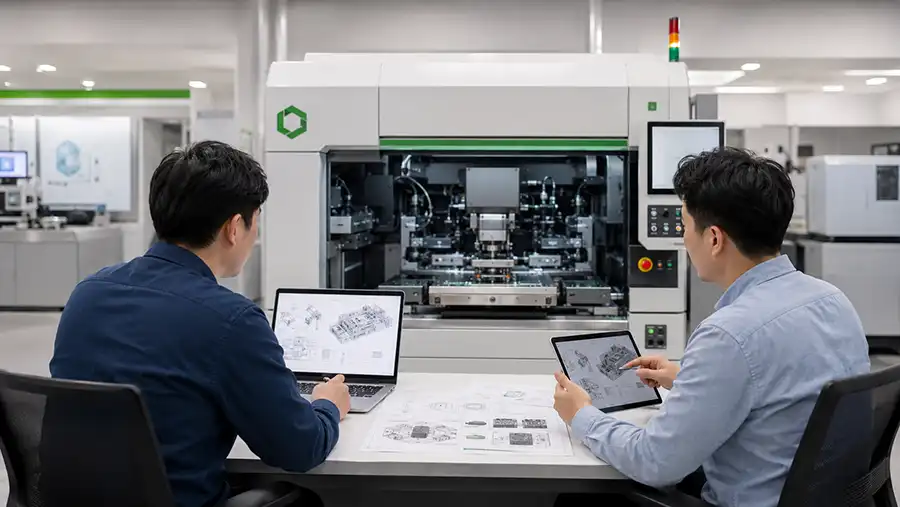
5. Vision, Inspection and Calibration
Some configurations may include upgraded vision, different cameras, process inspection options or application-specific optical arrangements. These systems should be checked against the real die, substrate, package reference marks and placement target.
For used equipment, calibration evidence is important. The machine may have a capable vision system in principle, but the practical result depends on the condition of cameras, optics, illumination, mechanics, software and calibration tools.
6. Controller, Software and Support Status
Two machines with a similar physical layout can differ significantly if their controller, PC, software environment, option files, backups and technical documentation are different. This can affect installation, troubleshooting, service access and process recovery.
Before purchase, confirm what will be delivered with the machine and what support is available after shipment.
Four Common DATACON 2200 evo Quote Comparison Mistakes
Mistake 1: Comparing Only the Purchase Price
A lower price may reflect missing heads, missing tooling, limited handling modules, unsupported software or no functional acceptance test. Compare the total project scope, not only the price shown on the first page of the quotation.
Mistake 2: Treating “Complete Machine” as a Technical Description
The phrase “complete machine” is too broad. It should be replaced by an itemized list of machine modules, bond heads, tools, fixtures, feeders, software, accessories, documentation and exclusions.
Mistake 3: Assuming Original Tooling Fits the New Product
Original tooling may be designed for a different die size, package geometry, material route or substrate format. Tooling compatibility must be reviewed against the actual product to be assembled.
Mistake 4: Accepting an Unloaded Motion Video as FAT Evidence
A video of moving axes may demonstrate basic activity, but it does not prove that the system can perform material handling, vision alignment, pickup, placement, tool changing, process sequencing or error recovery.
What to Request Before Comparing Two DATACON 2200 evo Offers
Machine nameplate photo and serial number
Exact model designation and production generation
Configuration list for working heads and process modules
Wafer, tray, carrier, strip and substrate handling list
Bond tools, nozzles, eject tools and fixture inventory
Vision, camera and illumination configuration
Controller, PC, software version and backup status
Maintenance, refurbishment and calibration information
Current high-resolution photos and functional videos
Factory Acceptance Test proposal
Packing, shipment, installation and support scope
A Practical DATACON 2200 evo Quote Comparison Checklist
| Comparison Area | Offer A | Offer B | Decision Question |
|---|---|---|---|
| Exact Model and Version | Confirm full designation | Confirm full designation | Are both quotations describing the same platform direction? |
| Bond Heads | List installed heads | List installed heads | Which offer has the required process head and tool interface? |
| Handling Modules | List included modules | List included modules | Which offer can support the required material flow with fewer additions? |
| Tooling | Inventory and condition | Inventory and condition | Which tools are compatible with the target product? |
| Vision and Alignment | Camera and optics details | Camera and optics details | Which system can support the required alignment workflow? |
| Software and Backup | Confirm delivery scope | Confirm delivery scope | Which offer provides the clearer recovery and support path? |
| FAT Scope | Defined test sequence | Defined test sequence | Which supplier can demonstrate the most relevant functional evidence? |
When Should You Explore a Different BESI Platform?
A DATACON 2200 evo may be a useful starting point for configurable Multi Module Attach, multi-chip die attach and selected flip chip routes. However, a different platform direction may be more suitable when the process requires a substantially different production approach, mass-reflow flip chip workflow, high-volume standard die bonding route, specialized thermal process or advanced interconnect method.
The purpose of configuration review is not to force every project into one platform family. It is to identify whether the actual machine, process route, tooling and support scope align before the project moves to shipment and qualification.
Final Recommendation: Compare the Configuration, Not the Nameplate
The BESI DATACON 2200 evo family is widely associated with flexible Multi Module Attach and multi-chip die bonding. But a specific DATACON 2200 evo machine should always be evaluated as a complete configured system.
Before approving a quotation, verify the exact version, bond heads, material process modules, handling route, vision package, tooling inventory, controller status, software backups, refurbishment evidence and FAT scope. This approach helps reduce the risk of buying a suitable platform with an unsuitable configuration.
Related BESI DATACON Resources
Frequently Asked Questions About BESI DATACON 2200 evo Configurations
Are all BESI DATACON 2200 evo machines the same?
No. Machines within the DATACON 2200 evo family can differ in version, bond head configuration, force capability, vision package, material handling, tooling, controller generation, software options and process modules.
What is the difference between DATACON 2200 evo and evo plus?
Both belong to the DATACON 2200 evo Multi Module Attach family, but evo plus is associated with further development in areas such as camera technology, thermal compensation, accuracy stability and image-processing capability. The exact offered machine configuration still needs to be confirmed.
What is DATACON 2200 evo hF used for?
DATACON 2200 evo hF is positioned for multi-chip die bonding applications that require a higher-force configuration. Buyers should confirm the installed high-force hardware, tooling, material process route and application-specific modules before purchase.
What is DATACON 2200 evo advanced?
DATACON 2200 evo advanced is a higher-accuracy direction within the Multi Module Attach platform family. It is associated with updated gantry, controller and vision architecture, but the actual capability of a used machine depends on its installed configuration and condition.
Can a DATACON 2200 evo machine be used for flip chip applications?
Some DATACON 2200 evo configurations can be evaluated for selected flip chip workflows. The offered machine should be checked for the required flip tools, handling modules, vision alignment, material route, inspection functions and package-specific tooling.
How do I compare two DATACON 2200 evo quotations?
Compare the full machine configuration rather than the platform name or purchase price. Review version, bond heads, material modules, handling hardware, tooling, vision, controller, software, refurbishment scope, FAT plan and installation support.
Should original tooling be included with a used DATACON 2200 evo?
Original tooling can be valuable, but it may not match a new product or package route. Request a complete tooling inventory and verify compatibility with the intended die, substrate, material and process sequence.
What should a DATACON 2200 evo Factory Acceptance Test include?
A useful FAT can include machine initialization, safety checks, axis movement, bond head operation, vision verification, handling-module checks, tooling review, controller and software confirmation, plus a representative placement or handling test when suitable materials are available.
Need Help Comparing DATACON 2200 evo Configurations?
Share the machine photos, serial number, available configuration list, package drawing, die and substrate format, material route, target output and current tooling details. A useful comparison starts with the actual process requirement and the physical configuration of each offered machine.