 EN
EN id
id sk
sk sr
sr sv
sv it
it pt
pt bn
bn ms
ms be
be nl
nl fr
fr th
th vi
vi ru
ru ja
ja ko
ko de
de hy
hy az
az bs
bs bg
bg my
my cs
cs da
da dv
dv el
el et
et fil
fil fi
fi ga
ga gl
gl gn
gn he
he hi
hi km
km hr
hr hu
hu is
is kn
kn rw
rw lo
lo lv
lv lt
lt lb
lb lg
lg mi
mi mt
mt ne
ne no
no ny
ny or
or om
om per
per pl
pl ro
ro sa
sa so
so es
es sw
sw ta
ta tr
tr uk
uk ur
ur cy
cy xh
xh
A used BESI die bonder can look complete in a quotation and still create months of qualification delay after delivery. The highest-risk issues are often not visible in a product photo: missing bond tools, unsupported software, incomplete wafer handling, unknown controller status, unverified vision performance, or a factory acceptance test that proves only that the machine can power on.
Whether the offered system is described as a BESI DATACON machine, a DATACON die bonder, an Esec die bonder, or a general die bonding machine, the production value depends on its exact configuration. The model name is only the first step. Engineering teams should verify the installed bond heads, process modules, material handling, tooling, vision package, software environment, calibration evidence and acceptance-test scope before approving shipment.
This guide explains the 12 checks procurement and engineering teams should complete before buying a used BESI die bonding machine for semiconductor assembly production.

In Brief: What Should Be Checked Before Buying a Used BESI Die Bonder?
Before committing to a used DATACON or Esec system, verify the exact machine identity, intended process fit, bond head configuration, material handling modules, vision package, included tooling, controller and software status, refurbishment evidence, FAT scope, installation conditions, spare-part plan and total project cost.
Do not approve a machine based only on its platform name or exterior condition.
Do not assume original tooling, software backups or process modules are included.
Do not treat an unloaded motion video as proof of production readiness.
Do not release payment before the offered configuration is documented clearly.
Why a Machine Name Is Not Enough
A quotation may identify a machine as a BESI DATACON 2200, DATACON 8800, Esec die bonder, or another BESI die bonding platform. That name provides useful direction, but it does not confirm the machine can support a specific package route.
Two systems from the same family may have different bond heads, force capability, vision options, heating functions, wafer handling modules, tray systems, feeders, software versions, process tooling and controller generations. In used semiconductor equipment, those differences can have a greater impact on project readiness than the platform name itself.
Procurement principle: Buy the verified configuration, not only the machine label.
12 Checks Before Buying a Used BESI Die Bonding Machine
1. Confirm the Exact Machine Identity
Start with the serial number, exact platform version, production generation and installed configuration. Request clear photographs of the machine nameplate, controller cabinet, bond heads, handling modules and all included accessories.
Ask the supplier to provide a written configuration list rather than relying on broad wording such as “BESI die bonder,” “DATACON machine,” or “complete system.” The list should identify what is physically installed and what is excluded from the offer.
Machine model and serial number
Production generation or controller generation
Installed bond heads and process modules
Wafer, tray, carrier, strip or leadframe handling modules
Included tools, feeders, fixtures and calibration references
2. Match the Machine to the Real Process Route
Before comparing DATACON and Esec systems, define the intended process. A die bonding machine that is suitable for one route may not be ready for another without additional tooling, material modules or process hardware.
Clarify whether the project involves epoxy die attach, soft solder, sinter material, multi-chip assembly, flip chip placement, thermal processing, tray handling, leadframe flow or a specialized substrate route.
The procurement review should answer one simple question: Can the offered machine perform the required sequence using the actual die, substrate, material and handling method?
3. Review the Bond Head Configuration
The bond head is one of the most process-critical areas of a die bonder. A machine may include one or more heads, but the available configuration may not match the required force, heating, rotation, tool holder, pickup method or placement sequence.
Request details about the installed bond head or heads, including the tool interface, force-control arrangement, thermal options, motion condition, rotation capability where applicable, and the availability of suitable pickup and placement tools.
What bond head is installed?
What tool holder or nozzle interface is present?
Does the process require heat, rotation, force control or special tooling?
Are the required eject tools, nozzles and pickup tools included?
Can the bond head function be demonstrated during FAT?
4. Verify Wafer, Tray and Substrate Handling
Material handling is often overlooked during used equipment evaluation. A platform can appear suitable while the required wafer frame, carrier, tray, strip, Gel-Pak®, leadframe or substrate module is missing.
Confirm the full material path from loading through pickup, placement, unloading and recovery. This is especially important when replacing an existing production machine, because current tooling and material formats may not transfer directly to the offered system.
Request photographs and a written list of all handling modules included in the sale. If a required module is not included, identify whether it can be sourced, adapted or replaced before approving the project.
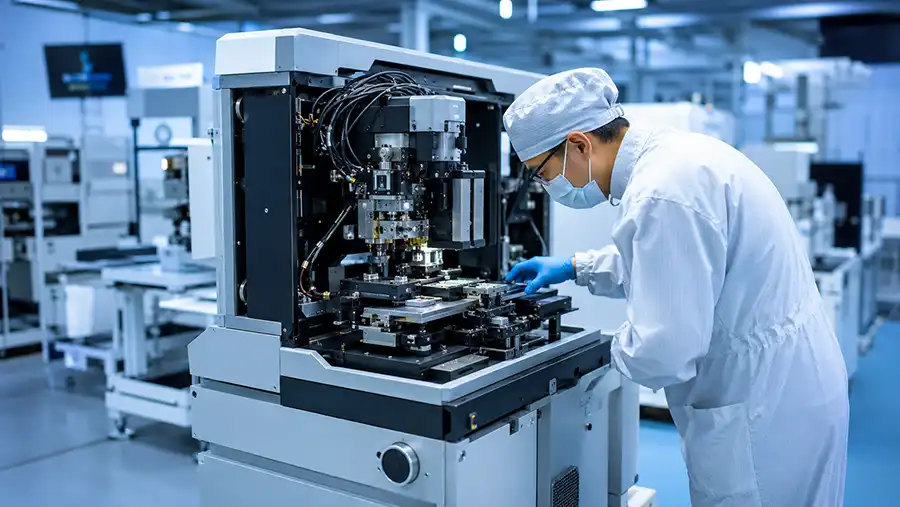
5. Check Vision, Camera and Alignment Capability
Installed cameras do not automatically confirm that the machine can support the intended alignment task. Vision performance depends on optics, illumination, field of view, focus, calibration condition, software functions and the actual die or substrate being processed.
For a used BESI die bonding machine, request evidence that the vision system can initialize, acquire images, detect alignment references and complete a repeatable placement sequence. Where possible, this should be tested using representative material or a defined inspection target.
Camera and optics condition
Illumination and image quality
Alignment reference method
Calibration status or available calibration tools
Vision performance with representative die and substrate features
6. Confirm Tooling, Fixtures and Process Accessories
A used die bonder can be mechanically complete but commercially incomplete. Missing nozzles, eject tools, fixtures, carrier plates, feeders, substrate holders, calibration artifacts or specialized tooling can delay qualification and increase total project cost.
Do not accept generic wording such as “tooling included.” Request an itemized inventory with photographs wherever possible. The list should identify tool part numbers, quantities, condition and known compatibility with the intended package route.
For custom package work, confirm whether existing tools can be adapted or whether new tools must be designed and manufactured after delivery.
7. Review Controller, Software and Backup Status
Controller and software recovery should be treated as a purchase-critical item. A system may power on normally but still lack usable backups, enabled options, recovery media, machine data, passwords, documentation or compatible controller hardware.
Before purchase, request details about the industrial PC, controller generation, motion cards, I/O configuration, operating software, option files, available backups and documentation. This information becomes especially important during installation, troubleshooting and future service work.
Controller and industrial PC condition
Software version and enabled options
Machine parameter backups
Recovery media or recovery procedure
Electrical documentation and manuals
Alarm history or known controller issues
8. Ask What “Refurbished” Actually Means
The word refurbished can describe very different levels of work. In some cases, it refers mainly to cleaning and cosmetic restoration. In other cases, it may include mechanical inspection, motion recovery, controller servicing, vision calibration, replacement parts, safety checks and functional testing.
Ask for a clear refurbishment scope. A useful scope should identify which systems were inspected, repaired, replaced, calibrated or tested. It should also identify what was not included in the refurbishment work.
Exterior appearance can be helpful, but it should never replace functional evidence.
9. Define a Meaningful Factory Acceptance Test
A useful FAT should demonstrate more than machine power-on, axis movement or an empty dry cycle. The acceptance test should be agreed in advance and tied to the actual machine configuration and intended process route.
Where representative materials and tooling are available, the FAT should include a practical sequence such as loading, pickup, alignment, placement, handling transfer, basic inspection and error recovery.
| FAT Area | What Should Be Verified |
|---|---|
| Power and Safety | Main power, emergency stops, interlocks, safety doors, alarms and initialization sequence. |
| Motion System | Homing, axis travel, repeatability, vibration behaviour, movement response and basic recovery. |
| Bond Head | Tool movement, force-related response where applicable, tool mounting and process head operation. |
| Vision | Image quality, illumination, alignment response, calibration status and reference recognition. |
| Material Handling | Wafer, tray, carrier, strip, leadframe, substrate or fixture modules included with the machine. |
| Software and Backup | Controller access, available software, option files, backups, recovery documentation and alarms. |
10. Confirm Site Installation Conditions
Qualification delays can begin before the machine is installed. The receiving site should confirm utility requirements, installation space, floor loading, electrical conditions, compressed air, vacuum, exhaust, environmental limits, network access and any cleanroom constraints.
Ask the supplier for the machine footprint, utility connection details, installation requirements and shipping dimensions. If the system requires special lifting, positioning, leveling or environmental control, define those requirements before the equipment leaves the supplier facility.
11. Plan Spare Parts, Service and Support
Used semiconductor equipment should be evaluated with a support plan, not only a purchase price. The plan should cover common wear items, critical spare parts, tooling replacement, controller recovery, calibration responsibility, installation support and future troubleshooting.
A machine may be a good fit technically but still create risk if no one can support its controller, process tools, vision system, material modules or software environment after installation.
Before purchase, ask which parts are included, which parts are available separately and which components are considered obsolete, difficult to source or process-specific.
12. Calculate the Total Project Cost, Not Only the Machine Price
The purchase price of a used BESI die bonder is only one component of the project budget. Tooling, packing, shipment, insurance, installation, utilities, spare parts, software recovery, engineering time, qualification samples and process adaptation can materially change the total cost.
A lower-priced system may become more expensive if the required bond tools, handling modules, controller recovery resources or process accessories are not available. A higher-priced machine with documented configuration, verified tooling and a meaningful FAT may provide a lower overall project risk.
DATACON vs Esec: Which Buying Questions Change?
DATACON and Esec equipment should be evaluated through the same core purchasing framework, but the process emphasis can change depending on the offered platform and intended assembly route.
| Equipment Direction | Questions That Often Matter Most During Purchase Review |
|---|---|
| DATACON Multi-Module Attach | Confirm installed process modules, bond heads, tool changers, custom fixtures, wafer or tray handling, camera package, application-specific tooling and multi-step process sequence. |
| Esec Die Bonder | Confirm bonding process route, material flow, leadframe or substrate handling, thermal configuration, automation path, production tooling and software readiness. |
| Flip Chip Configuration | Confirm flip tools, bumped-die handling, fluxing or dipping route, vision alignment, substrate tooling, inspection sequence and carrier handling. |
| Replacement for an Existing Line | Confirm recipe transfer, current tooling compatibility, existing material formats, operator familiarity, utility compatibility, controller generation and spare-part continuity. |
Documents to Request Before Paying a Deposit
A professional used-equipment offer should be supported by documentation. The absence of every historical record does not automatically make a machine unsuitable, but missing information should be treated as a project risk that needs to be addressed before payment.
Machine serial number and exact configuration list
Current high-resolution machine photos and video
Installed bond head, vision and handling-module list
Tooling, nozzle, fixture and accessory inventory
Software version, option status and backup information
Available manuals, electrical drawings and service documentation
Maintenance, inspection or refurbishment records where available
FAT proposal with defined acceptance criteria
Packing, shipment, installation and training scope
Spare-part list and post-installation support terms
7 Red Flags When Buying a Used BESI DATACON or Esec Die Bonder
No serial number or unclear machine identity. The supplier cannot verify the exact platform, generation or installed configuration.
Photos do not match the stated configuration. The quotation describes modules, tools or options that are not visible in the provided machine images.
No tooling list is included. The offer does not identify nozzles, eject tools, fixtures, feeders, carrier plates or calibration artifacts.
The only evidence is an unloaded movement video. A dry cycle does not confirm material handling, vision alignment, tool compatibility or placement readiness.
Vision or handling modules cannot be demonstrated. The machine may have cameras or material modules installed, but they are not functionally verified.
No software backup or recovery path is available. A controller issue after shipment could create a much larger recovery project.
FAT terms are vague. The supplier cannot define what will be tested, what materials will be used or what conditions must be met before shipment approval.
What a Useful FAT Should Prove
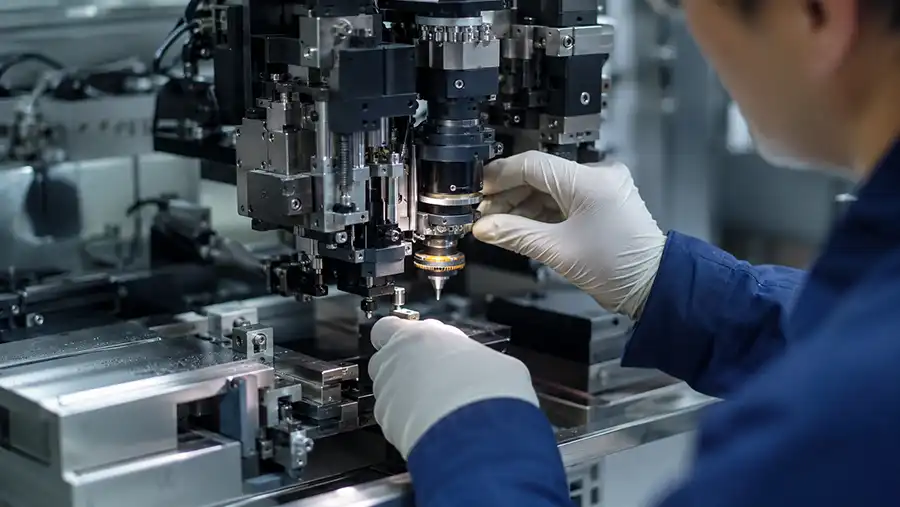
A meaningful factory acceptance test does not need to duplicate a full production qualification. However, it should prove that the offered machine is identifiable, functional and capable of completing an agreed technical sequence.
For most used die bonding machine projects, the FAT should show that the system can initialize safely, home the motion axes, operate the included bond head, acquire vision images, move material through included handling modules and complete a defined placement or handling test where representative tooling and samples are available.
It is also useful to document the FAT with photos, videos, configuration screenshots, test records and a final accessory checklist. This creates a clearer handover reference for shipment, installation and future troubleshooting.
Total Cost of Ownership: What Happens After the Machine Arrives?
A used BESI die bonder project should be evaluated through total ownership cost. This includes not only the equipment price, but also the cost of shipping, insurance, site preparation, utilities, installation, calibration, tooling, spare parts, process engineering, trial materials and possible controller or software recovery.
For replacement projects, consider the cost of production interruption, operator retraining, recipe redevelopment, fixture changes and qualification cycles. The best purchase decision is not always the lowest initial quotation. It is the option that provides the clearest path to verified installation and process readiness.
Final Buying Recommendation
A used BESI DATACON or Esec die bonding machine can be a practical investment when the offered configuration matches the intended package route and the project is supported by a documented inspection, tooling review, software plan and FAT scope.
Before approving shipment, confirm that the machine identity, process modules, handling configuration, tooling package, vision condition, controller status, documentation and support responsibilities are understood. This approach helps engineering and procurement teams reduce avoidable qualification delays after delivery.
Frequently Asked Questions About Buying a Used BESI Die Bonder
How do I verify the exact configuration of a used BESI die bonding machine?
Request the machine serial number, nameplate photographs, written configuration list, controller information, bond-head details, handling-module list, tooling inventory and current machine photos. The configuration should be verified against the actual offered unit rather than a generic platform description.
Is a machine power-on video enough before buying a used die bonder?
No. A power-on or unloaded movement video can show that basic machine functions are active, but it does not confirm tooling compatibility, material handling, vision alignment, process sequencing, software recovery or placement performance.
What should be included in a used DATACON machine quotation?
The quotation should identify the exact machine, installed modules, bond heads, handling configuration, included tools, fixtures, controller and software status, refurbishment scope, FAT terms, packing scope, shipment terms and available support.
How important is original tooling when buying a used die bonder?
Original tooling can be highly important because nozzles, eject tools, fixtures, carrier plates and calibration references may be specific to a process or machine interface. Missing tooling can add cost and delay qualification.
What should a BESI die bonder FAT include?
A useful FAT can include safety checks, machine initialization, axis homing, bond-head movement, vision verification, handling-module checks, tooling review, controller and software confirmation, plus a representative process or placement test when materials are available.
Can a used DATACON machine be installed without software backups?
Installation may still be possible, but the project risk is higher. Software backups, option files, machine parameters, recovery media and documentation can be important for restoration, troubleshooting and future support.
What is the biggest hidden cost when buying a used die bonding machine?
The biggest hidden costs often come from missing process-critical items such as tooling, handling modules, software recovery resources, spare parts, installation work, calibration, engineering time and unexpected qualification delays.
Should I buy a machine based on its model name or installed configuration?
The installed configuration should drive the decision. The model name helps identify the platform family, but the real production capability depends on bond heads, tooling, process modules, handling systems, vision, controller condition and available support.
Need a Used BESI Die Bonder Configuration Review?
Share the available machine photos, serial information, package drawing, die and substrate format, material route, target output and current tooling details. A practical review should begin with the real production requirement and the actual offered machine configuration.