
A used ASM AD838 die bonder can look complete in a quotation and still create major qualification delays after delivery. The highest-risk issues are often not obvious in a product photo: missing nozzles, incomplete wafer handling, unsuitable carrier tools, unverified vision calibration, unsupported software, unavailable backups, or a factory acceptance test that proves only that the machine can power on.
Whether the offer is described as an ASM AD838 die bonder, an AD838 die bonding machine, an ASM die bonder, or a general die bonding machine, the real production value depends on the exact configuration of the offered unit. The platform name is only the first checkpoint.
This buying guide explains the 12 checks engineering and procurement teams should complete before approving a used ASM AD838 die bonder for shipment, installation and production qualification.
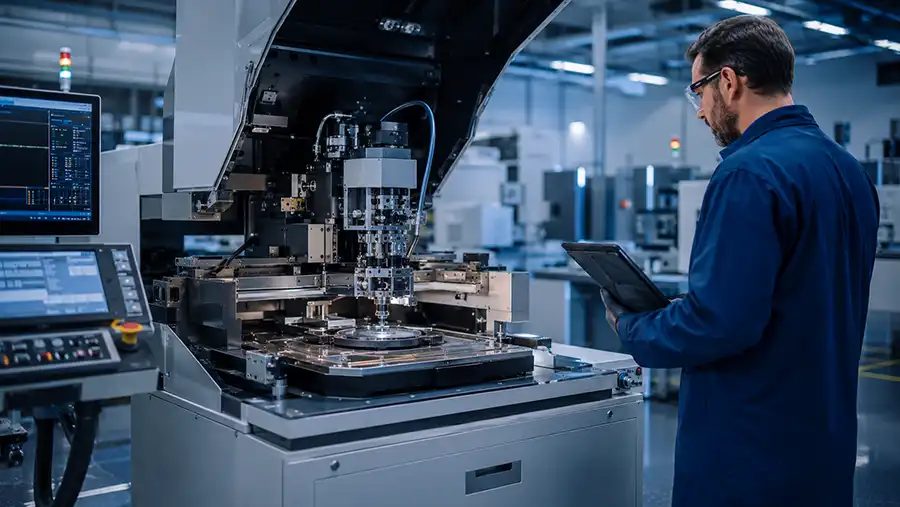
In Brief: What Should Be Checked Before Buying a Used ASM AD838 Die Bonder?
Before purchasing a used ASM AD838 die bonding machine, verify the exact machine identity, wafer and carrier handling setup, bond head configuration, tooling inventory, material process modules, vision condition, controller and software status, refurbishment evidence, FAT scope, utility requirements, spare-part plan and total project cost.
Do not approve an AD838 machine only because the exterior condition looks clean.
Do not assume all AD838-family machines have the same wafer, carrier, tooling or process capability.
Do not assume original nozzles or fixtures are compatible with a new die or substrate route.
Do not treat an empty movement video as proof of process-ready operation.
Why an ASM AD838 Nameplate Is Not Enough
In used semiconductor equipment, a machine nameplate identifies the platform family, but it does not confirm that the offered system can support the intended application. An ASM AD838 machine may differ from another AD838 unit in wafer handling, carrier handling, bond head setup, material process modules, camera configuration, tooling package, controller generation and software environment.
This becomes especially important when a buyer is replacing an existing die bonder or preparing a new LED, photonics, optoelectronics or semiconductor assembly route. A machine that was previously configured for one product may require new tools, fixtures, software setup or material modules before it can support another product.
Procurement principle: Buy the verified configuration, not only the ASM AD838 model name.
12 Checks Before Buying a Used ASM AD838 Die Bonder
1. Confirm the Exact Model, Variant and Serial Number
Start with the machine nameplate, serial number, production year where available and complete model designation. Do not assume that AD838, AD838L, AD838L-Plus and AD838L-G2 are interchangeable descriptions.
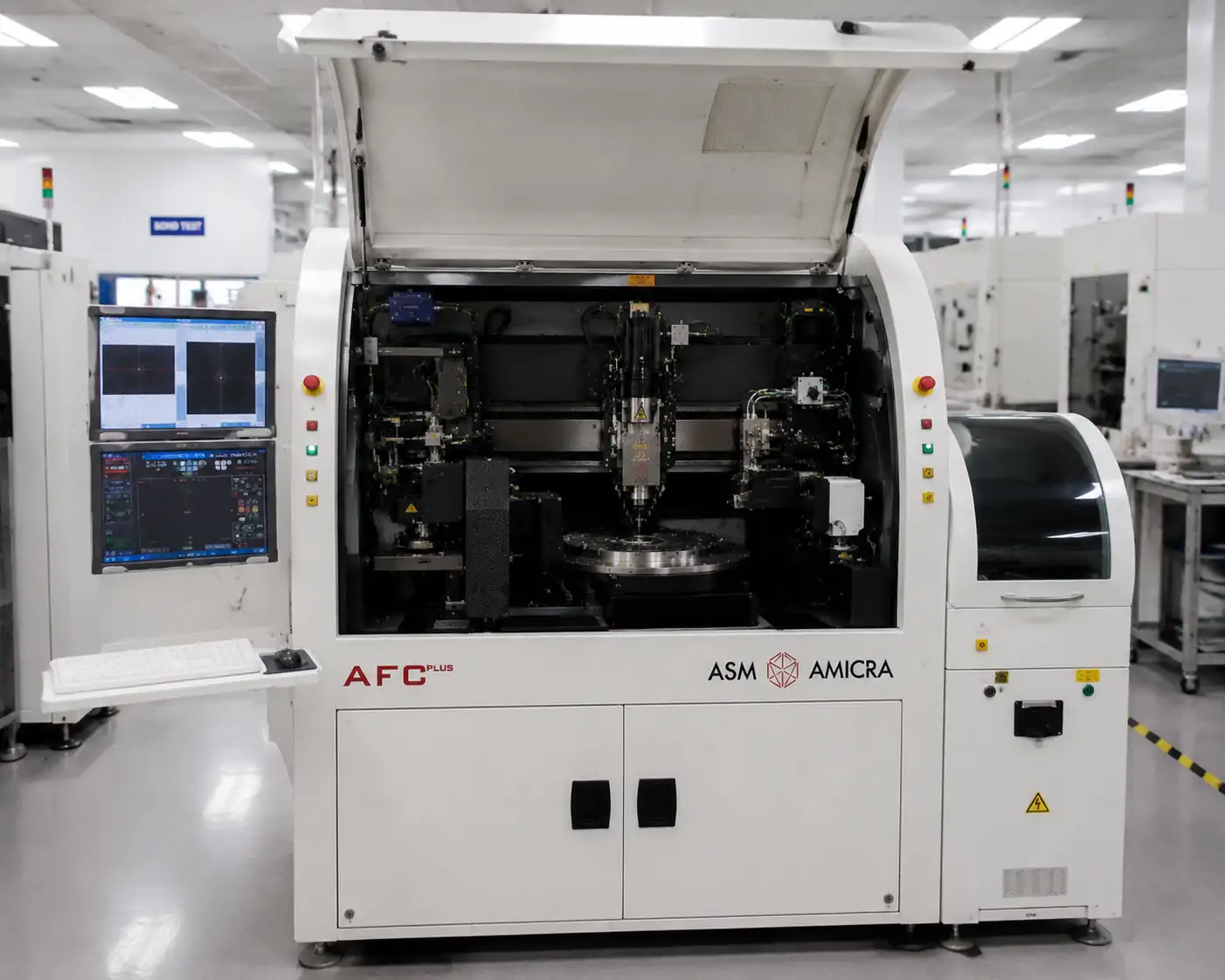
Request clear photographs of the nameplate, machine exterior, process area, bond head, wafer handling area, control cabinet and all included accessories. The physical machine should match the written quotation.
Exact model designation
Serial number and machine identity records
Production generation or controller generation
Installed process modules
Included tools, feeders, fixtures and accessories
2. Match the Machine to the Intended Die Attach Process
Before evaluating machine condition, define the target process route. Clarify whether the application uses epoxy die attach, dispensing, stamping, flip-chip handling, LED die placement, photonics assembly, carrier-based placement, wafer-level pickup or another application-specific sequence.
The important question is not only whether the machine can place a die. The important question is whether the offered configuration can complete the required chain from die source to material preparation, pickup, alignment, placement, inspection and unloading.
3. Review Wafer, Ring and Material Handling
Wafer handling is one of the most important configuration areas in an ASM AD838 die bonder. Confirm the supported wafer size, wafer frame style, ring condition, expander compatibility, die source configuration and available loading or unloading hardware.
If the process uses trays, waffle packs, Gel-Pak®, carriers, strips, boats or custom holders, request a detailed handling-module list. Missing material-handling hardware can delay installation even when the machine itself is operational.
4. Verify Carrier, Substrate and Fixture Compatibility
The receiving substrate or carrier is as important as the die source. A used AD838 may include tools for one substrate dimension or fixture style but not another.
Before purchase, confirm the size, thickness, material, locating method, heating need and physical stability of the target substrate. Compare these requirements against the included carrier tools, fixture plates, substrate stages and alignment references.
5. Inspect Bond Head and Tool Interfaces
The bond head configuration determines how the machine picks, positions and places the die. Ask for a written description of the installed head, tool holder, nozzle interface, eject system, force-related setup, heating options and any rotation or special-placement functions.
A machine may be mechanically complete while missing the process-critical pickup tools, placement nozzles, eject needles or calibration tools required for the intended product.
Bond head type and working condition
Tool holder and nozzle interface
Pickup tool and eject tool inventory
Heating or thermal process tools where applicable
Included calibration references and setup tools
6. Confirm Dispensing, Stamping or Material Preparation Modules
Many die attach processes require more than placement. The machine may need dispensing, stamping, adhesive handling, fluxing, dipping, heating or another material-preparation function.
Request confirmation of which modules are installed, whether they are operational and whether they match the required material route. A platform that can place dies may still be unsuitable if the material-preparation portion of the process is missing or incompatible.
7. Check Vision, Camera and Alignment Capability
Installed cameras do not automatically prove that the machine can support the target alignment task. Vision performance depends on optics, illumination, field of view, focus, software, calibration status and the physical features of the die and substrate.
Ask the supplier to demonstrate image acquisition, reference recognition and a repeatable alignment sequence. Where possible, use representative die, substrate or alignment samples during the inspection.
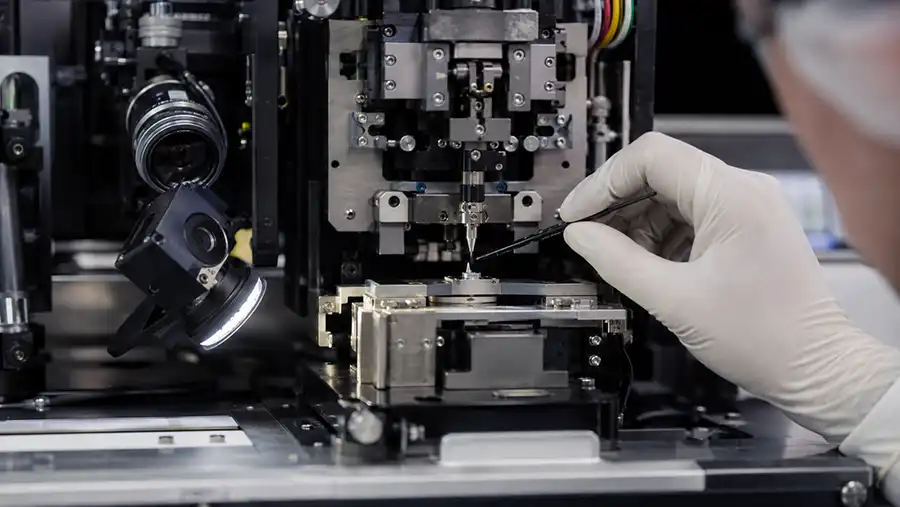
8. Review Controller, PC and Software Recovery
A machine may power on normally but still lack usable backups, option files, controller support, parameter files, recovery media or technical documentation. This creates a significant risk during installation and later troubleshooting.
Request information about the industrial PC, controller hardware, motion cards, I/O configuration, machine software, enabled options, available backups, alarm history and recovery procedure.
9. Ask What “Refurbished” Actually Includes
The word refurbished can mean anything from cosmetic cleaning to documented mechanical recovery, calibration, replacement of worn components, controller repair, software restoration and functional testing.
Ask for a written refurbishment scope that identifies what was inspected, cleaned, repaired, replaced, calibrated and tested. Also ask what is excluded from the scope.
10. Define a Real Factory Acceptance Test
A useful FAT should verify more than machine start-up and empty-axis movement. It should be agreed before shipment and should reflect the actual configuration included in the quotation.
| FAT Area | What Should Be Verified |
|---|---|
| Machine Identity | Model, serial number, installed modules, accessories and included tools match the quotation. |
| Safety and Initialization | Emergency stops, safety doors, alarms, interlocks, power-up and machine initialization sequence. |
| Motion and Bond Head | Axis homing, stage travel, bond head movement, tool mounting and basic recovery functions. |
| Vision and Alignment | Camera image quality, illumination, reference recognition and basic alignment response. |
| Material Handling | Included wafer, tray, carrier, substrate or fixture modules under an agreed sequence. |
| Software and Handover | Controller access, software status, backup files, documentation and final machine configuration list. |
11. Confirm Installation and Utility Requirements
Do not wait until delivery to confirm power, compressed air, vacuum, exhaust, network access, cleanroom environment, installation footprint, floor loading and shipping access.
Request machine dimensions, utility details, installation drawings, packing dimensions and required lifting or positioning instructions before approving shipment.
12. Calculate Total Project Cost, Not Only Machine Price
The purchase price of a used ASM die bonder is only one part of the project cost. Tooling, fixtures, shipping, insurance, installation, spare parts, software recovery, calibration, engineering support, trial materials and qualification time can change the real budget substantially.
A higher-priced unit with the correct handling modules, documented tooling, verified controller condition and a meaningful FAT may be a lower-risk investment than a cheaper machine with missing process-critical components.
7 Red Flags in a Used ASM AD838 Die Bonder Offer
No serial number or unclear model identification.
Photos do not match the written machine configuration.
No tooling, nozzle or fixture inventory is provided.
No clear wafer, carrier or substrate handling description is available.
The only proof is an unloaded movement video.
No software backup, controller information or documentation is included.
The FAT scope is vague or does not match the quoted process modules.
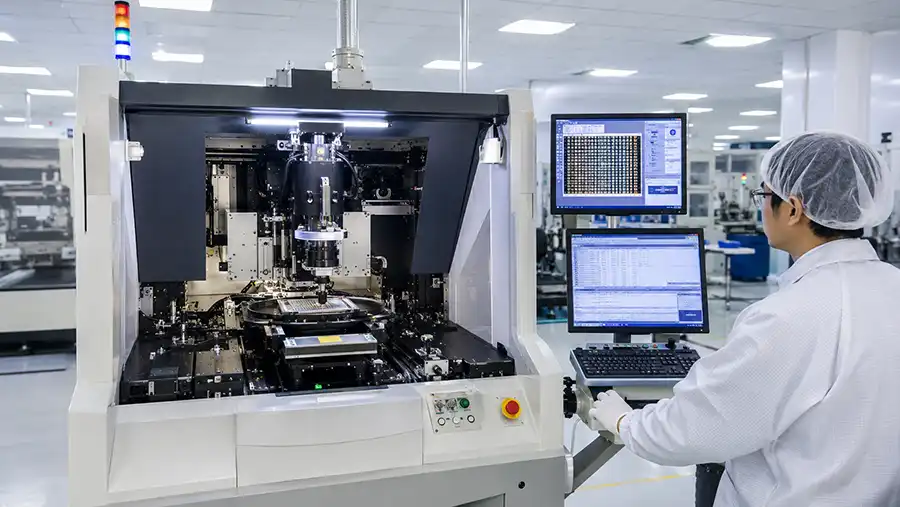
Final Buying Recommendation
A used ASM AD838 die bonder can be a practical investment when the exact machine configuration matches the intended die attach route and the project includes a clear tooling, software, inspection and FAT plan.
Before approving payment or shipment, verify the machine identity, wafer handling, substrate handling, bond head, tools, vision package, controller status, refurbishment scope and acceptance-test criteria. This reduces the risk of buying a suitable platform with an unsuitable installed configuration.
Related ASM Die Bonder Resources
Frequently Asked Questions About Buying a Used ASM AD838 Die Bonder
Are all ASM AD838 die bonders configured the same way?
No. Used ASM AD838 machines can differ in wafer handling, carrier modules, bond head setup, tooling, vision package, process hardware, controller generation and software configuration.
What should be checked first on a used AD838 die bonding machine?
Start with the exact model, serial number, physical configuration, included handling modules, bond head, tooling inventory, controller status and available documentation.
Is a machine power-on video enough before buying an ASM die bonder?
No. A power-on video can show basic activity, but it does not confirm tooling compatibility, material handling, vision alignment, process readiness or software recovery.
Why are original AD838 tools important?
Original tools can be important because nozzles, eject tools, fixtures and calibration references may be specific to a die size, substrate format or process route. They must still be checked against the intended application.
What should an ASM AD838 Factory Acceptance Test include?
A useful FAT should include machine identity verification, safety checks, motion, bond head operation, vision review, included material handling, tooling confirmation, software status and a representative process sequence when suitable materials are available.
Can a used ASM AD838 machine be installed without software backups?
Installation may be possible, but project risk increases without backups, recovery media, machine parameters, option files and technical documentation.
What is the biggest hidden cost in a used AD838 project?
Common hidden costs include missing tools, fixtures, handling modules, controller recovery, spare parts, installation support, calibration, engineering time and qualification delays.
Need an ASM AD838 Configuration Review?
Share machine photos, serial information, die size, wafer or carrier format, substrate details, material route, available tools and target production conditions. A useful evaluation starts with the actual process requirement and the physical configuration of the offered machine.