

A K&S IConn PLUS wire bonding machine should not be released to production because it powers on, homes correctly or completes an empty cycle. Production readiness depends on the complete wire bonding process: capillary condition, wire feed, free-air ball formation, first bond, second bond, loop profile, vision alignment, workholder stability, recipe control and recovery behavior.
For semiconductor assembly teams using a K&S IConn PLUS wire bonder, K&S IConn wire bonder or another K&S wire bonding machine, a structured qualification sequence helps reduce avoidable problems after shipment, installation, product changeover or refurbishment.
This guide explains 10 production-readiness checks that should be completed before releasing an IConn PLUS wire bonding machine for a defined package route.
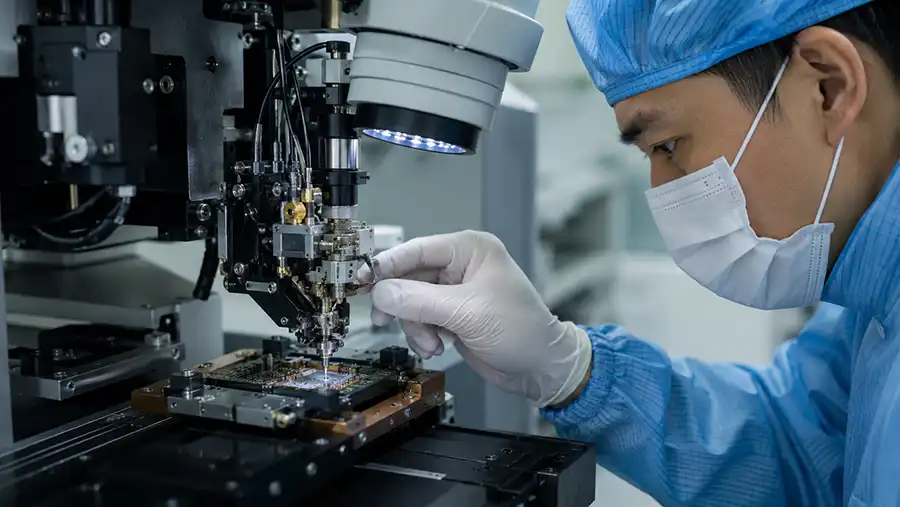
In Brief: What Should an IConn PLUS Production Qualification Prove?
A practical qualification should prove that the offered machine can safely initialize, run the installed bond head, feed the intended wire, form consistent free-air balls, complete first and second bonds, maintain the required loop profile, recognize package references, support the required workholder and preserve the relevant recipe and recovery data.
Verify process behavior with the actual wire, capillary and package materials.
Validate first bond and second bond separately.
Review looping across central, edge and long-span package locations.
Confirm vision and teach-point stability before product release.
Document recipes, tools, materials and requalification limits.
Why Production Readiness Is Different From a Basic Machine Test
A machine test can show that motion axes, cameras and safety systems are active. Production readiness is different. It requires the machine to complete the actual bonding process using the intended package, wire material, capillary, workholder, thermal conditions and alignment strategy.
A process may look stable during a short dry cycle but still show wire-feed variation, FAB inconsistency, first-bond drift, second-bond defects, loop-height variation or alignment problems once real materials are introduced.
Qualification rule: Validate the package, material, tool and machine as one process system.
10 K&S IConn PLUS Production-Readiness Checks
1. Confirm Machine Identity and Process Baseline
Before running a qualification, document the exact machine model, serial number, bond head configuration, capillary holder, workholder, installed software, controller condition and available recipe environment.
This baseline helps engineering teams identify what changed later if the process needs to be requalified or if another machine is added to the line.
2. Verify Wire Material and Wire-Feed Path
Confirm the wire material, wire diameter, spool condition, routing path, wire guide cleanliness, clamp response and feed behavior. A change in wire type, diameter, supplier lot or storage condition should be treated as a process change.
Stable wire feed is required for repeatable FAB formation, bond consistency and loop geometry.
3. Inspect Capillary Geometry and Tool Condition
The capillary affects ball formation, first-bond footprint, second-bond stitch, loop profile and package clearance. Review capillary geometry, wear, contamination, damage, installation stability and compatibility with the target wire and package.
Do not use an existing capillary simply because it was installed on the machine. Confirm that it fits the current product route.
4. Establish Consistent Free-Air Ball Formation
FAB consistency should be verified before optimizing first-bond settings. Review EFO condition, wire-tail length, clamp action, wire feed, capillary setup and repeated ball formation.
An inconsistent FAB can create first-bond variation even when force, ultrasonic energy and bond time appear correct.
5. Validate First Bond on Representative Die Pads
First-bond qualification should use actual or representative die pads. Review pad surface condition, alignment, ball deformation, bond location, repeatability, capillary behavior, force, ultrasonic energy, bonding time and workholder temperature.
Do not tune multiple variables at once. Use a controlled method that identifies whether variation comes from the die pad, FAB, capillary, alignment, thermal condition or bond settings.
6. Validate Second Bond and Stitch Formation
Second-bond quality depends on the receiving surface, package support, capillary condition, wire tension, stitch settings, thermal behavior and loop trajectory. A stable first bond does not guarantee a stable second bond.
Check second bonds at different package positions, including edge locations and long-span positions where fixture support, surface condition or geometry may vary.
7. Confirm Loop Profile Across the Entire Package
Loop height, span, heel shape, clearance and repeatability should be reviewed across the entire bonding pattern. A loop profile that looks correct at one central bond location may not be stable at package edges, long spans or positions near neighboring wires.
Review loop behavior against die-to-lead distance, package geometry, mold clearance, wire sweep concerns and any later process requirements.
8. Verify Vision, Alignment and Teach-Point Stability
Vision setup must be validated using the target package. Confirm camera focus, illumination, pad recognition, lead or bond-finger recognition, teach points, reference stability and response at different package positions.
When vision is unstable, review not only software settings but also package position, fixture flatness, local surface features, optics, lighting and calibration condition.
9. Confirm Workholder, Heater and Package Support
Package support is a process variable. The workholder, heater plate, clamp system, carrier plate and fixture condition can influence alignment, thermal response, first-bond consistency, second-bond quality and loop repeatability.
Verify that the package remains stable under real production conditions. For thermal-sensitive packages, check whether workholder temperature is stable across the bonding area.
10. Record Recipe, Recovery and Requalification Conditions
Before release, document the wire, capillary, bond settings, loop program, workholder, heater conditions, vision teach points, inspection observations and recipe backup location.
Define the changes that require requalification. These can include wire material changes, capillary replacement, workholder changes, die source changes, package geometry changes, substrate finish changes, controller replacement, vision changes or major software recovery work.
Practical IConn PLUS FAT Sequence
| Step | Qualification Activity | Release Evidence |
|---|---|---|
| 01 | Verify machine identity, head configuration and included process tools. | Configuration sheet, machine photos and serial information. |
| 02 | Install verified workholder, capillary and wire material. | Tool records, wire identification and fixture reference. |
| 03 | Check wire feed, clamp function, tail formation and EFO behavior. | FAB observations and wire-feed test record. |
| 04 | Validate first bonds on representative die pads. | Bond appearance review and parameter record. |
| 05 | Validate second bonds on actual leadframe or substrate surfaces. | Stitch appearance review and location check. |
| 06 | Review loop profile at central, edge and long-span positions. | Loop inspection images and program record. |
| 07 | Verify vision teach points and alignment stability. | Camera setup, teach-point reference and alignment result. |
| 08 | Confirm alarm response, recovery sequence and recipe backup. | Backup confirmation, alarm test and handover checklist. |
Common Wire Bonding Symptoms and the First Checks to Make
| Observed Symptom | First Variables to Review |
|---|---|
| Inconsistent free-air ball | EFO condition, wire feed, clamp movement, tail length, capillary condition and wire material. |
| First-bond inconsistency | Die pad condition, capillary geometry, FAB condition, force, ultrasonic energy, time, temperature and alignment. |
| Second-bond variation | Leadframe or substrate surface, stitch settings, wire tension, capillary wear, fixture support and heater stability. |
| Loop-height drift | Loop recipe, wire feed, tail control, clamp timing, capillary condition, workholder stability and machine calibration. |
| Wire breaks | Wire path, guide condition, clamp response, capillary damage, EFO behavior and parameter balance. |
| Alignment drift | Vision teach points, camera focus, illumination, package fixture, stage condition and reference features. |
When an IConn PLUS Wire Bonding Process Should Be Requalified
Requalification should be considered whenever a process-critical input changes. This may include a change in wire material, wire diameter, capillary type, die pad finish, leadframe plating, substrate finish, package geometry, workholder, heater condition, vision setup, controller, software environment or major bonding-head maintenance.
Requalification does not always require rebuilding the entire process. However, the changed variable should be identified, assessed and validated against the actual package route before production release.
What Should Be Documented Before Production Release?
Machine model, serial number and installed configuration
Wire material, wire diameter and supplier lot
Capillary type, condition and replacement criteria
Workholder, fixture and heater setup
Wire-feed, clamp and EFO settings
First-bond and second-bond process parameters
Loop profile, loop height and package clearance requirements
Vision teach points, camera settings and alignment method
Inspection observations and acceptance criteria
Recipe backup location and requalification triggers
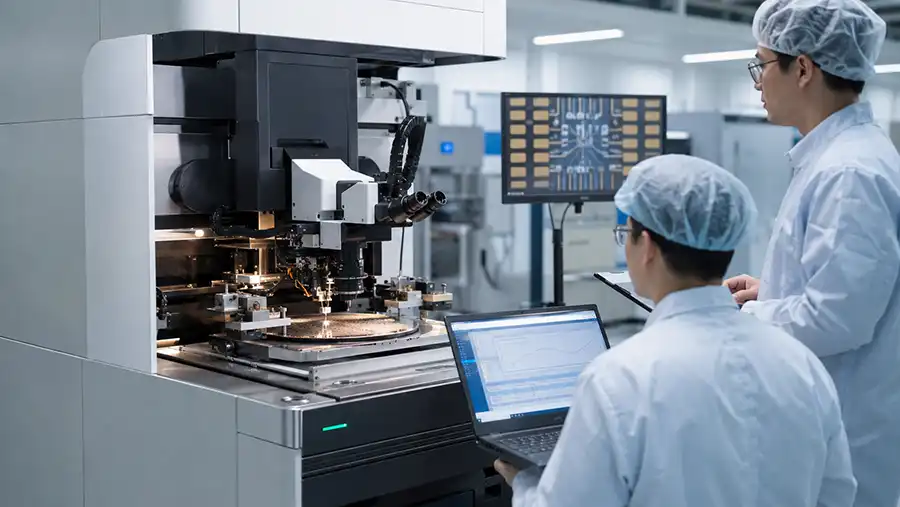
Final Recommendation: Validate the Entire Bonding Process
A K&S IConn PLUS wire bonder can be production-ready only when the machine, wire, capillary, workholder, package, vision setup and recipe are validated together.
Before production release, confirm stable FAB formation, first-bond quality, second-bond consistency, loop profile, alignment stability, workholder support and recipe recovery. This avoids a common wire-bonding mistake: approving a machine cycle without validating the actual package process.
Related Wire Bonder Resources
Frequently Asked Questions About K&S IConn PLUS Production Qualification
What should be checked before releasing an IConn PLUS wire bonder to production?
Confirm machine configuration, wire material, capillary condition, wire feed, FAB formation, first bond, second bond, loop profile, vision alignment, workholder stability, recipe backup and recovery procedure.
Why is free-air ball formation important in wire bonding?
The free-air ball is the starting condition for the first bond. Inconsistent ball size, shape or wire-tail behavior can cause unstable first-bond results even when other parameters appear unchanged.
What affects loop height on a K&S wire bonder?
Loop height is influenced by loop programming, wire feed, tail control, clamp timing, capillary condition, wire material, die-to-lead distance, package geometry and fixture stability.
Why can first bond be stable while second bond varies?
Second-bond quality is affected by the receiving leadframe or substrate surface, stitch settings, wire tension, fixture support, thermal condition and capillary wear. It must be validated independently.
When should a wire bonding recipe be requalified?
Requalification should be considered after changes in wire material, capillary type, die pad condition, package geometry, leadframe or substrate finish, workholder, bonding head, vision setup, controller or software environment.
Can one capillary be used for multiple package designs?
Sometimes, but suitability depends on wire diameter, die pad geometry, bonded-ball requirement, lead or substrate design, loop target and clearance conditions. Compatibility should be validated for each package route.
What should be included in an IConn PLUS wire bonder FAT?
A useful FAT should include machine identity verification, safety checks, bond-head movement, capillary mounting, wire feed, clamp behavior, FAB formation, first bond, second bond, loop inspection, vision alignment, workholder verification and recipe backup confirmation.
What is the most important production-release document for a wire bonding process?
The key documentation should record the complete qualified process: machine configuration, wire, capillary, workholder, bonding parameters, loop program, vision settings, inspection criteria, recipe backup location and requalification triggers.
Need Help Reviewing a K&S IConn PLUS Wire Bonding Process?
Share the package drawing, die pad layout, leadframe or substrate details, wire material, wire diameter, capillary type, workholder information, target loop profile and expected production conditions. A useful review begins with the full package process rather than one bonding parameter alone.