 EN
EN id
id sk
sk sr
sr sv
sv it
it pt
pt bn
bn ms
ms be
be nl
nl fr
fr th
th vi
vi ru
ru ja
ja ko
ko de
de hy
hy az
az bs
bs bg
bg my
my cs
cs da
da dv
dv el
el et
et fil
fil fi
fi ga
ga gl
gl gn
gn he
he hi
hi km
km hr
hr hu
hu is
is kn
kn rw
rw lo
lo lv
lv lt
lt lb
lb lg
lg mi
mi mt
mt ne
ne no
no ny
ny or
or om
om per
per pl
pl ro
ro sa
sa so
so es
es sw
sw ta
ta tr
tr uk
uk ur
ur cy
cy xh
xh
A used ASM AERO wire bonder can look complete in a quotation and still create serious qualification delays after delivery. The highest-risk issues are often not visible in a product photo: missing capillary tools, unknown wire-feed condition, incomplete workholders, unsupported software, unverified bond-head behavior, unavailable process recipes, or a factory acceptance test that proves only that the machine can power on.
Whether the offered system is described as an ASM AERO wire bonder, Eagle AERO, AERO PRO, or a general ASM wire bonding machine, the real production value depends on the exact installed configuration. The platform name is only the first checkpoint. Bond head condition, transducer setup, capillary interface, wire clamp behavior, EFO condition, workholder configuration, vision package, controller status and FAT scope must be reviewed before shipment.
This guide explains the 12 checks engineering and procurement teams should complete before approving a used ASM AERO wire bonding machine for shipment, installation and production qualification.
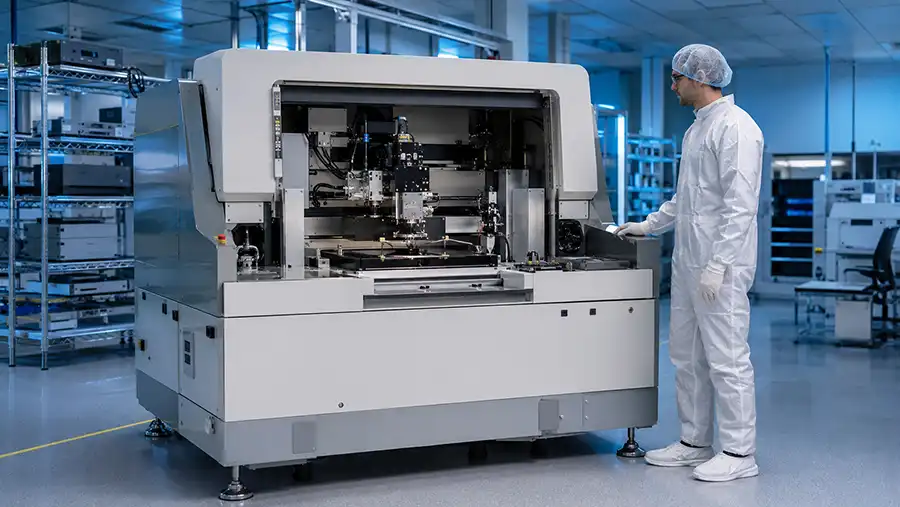
In Brief: What Should Be Checked Before Buying a Used ASM AERO Wire Bonder?
Before purchasing a used ASM AERO wire bonder, verify the exact machine identity, installed bond heads, capillary interface, wire-feed path, clamp condition, EFO system, workholders, heater setup, vision package, looping capability, controller and recipe status, refurbishment evidence, FAT scope and available support.
Do not approve a wire bonder based only on its platform name or exterior appearance.
Do not assume every AERO-family machine has the same bond head, capillary tooling, automation or monitoring configuration.
Do not assume existing capillaries and workholders are compatible with a new package design.
Do not treat an unloaded motion video as proof that the machine can run a real wire bonding process.
Why an ASM AERO Nameplate Is Not Enough
In used semiconductor equipment purchasing, the machine name identifies the product family, but it does not confirm process readiness. Two AERO wire bonders can differ in their bond head setup, wire spool handling, capillary holder, EFO system, heater configuration, workholder tooling, camera package, controller generation, enabled software options and automation hardware.
This difference matters when a buyer is replacing an existing bonder or introducing a new package. A machine may have been configured for a specific BGA, QFN, memory, discrete, sensor or other package route, while the new project requires different wire material, pad geometry, loop profile, leadframe, substrate, fixture or thermal condition.
Procurement principle: Buy the verified bond configuration and process hardware, not only the ASM AERO model name.
12 Checks Before Buying a Used ASM AERO Wire Bonder
1. Confirm the Exact Model, Variant and Serial Number
Start with the machine nameplate, serial number, full model designation and available configuration record. Do not assume that Eagle AERO, AERO PRO, AERO CAM or another AERO-family system has the same physical modules or process capability.
Request clear current photos of the machine exterior, bond area, working heads, wire-feed path, controller cabinet, monitor, workholder area and included accessories. The physical machine should match the written quotation.
Exact machine model and serial number
Controller generation and industrial PC condition
Installed bond heads and working stations
Included capillary holders and process tooling
Available workholders, heater plates and package fixtures
2. Review Bond Head and Transducer Condition
The bond head is one of the most process-critical parts of a wire bonder. It controls the movement and energy delivery required for repeatable first bonds, second bonds and loop formation.
Ask for evidence of bond head movement, vertical motion, transducer condition, tool-holder stability and any known replacement or repair history. A machine can appear mechanically complete while still requiring work on the bonding head, motion system, cable routing or associated electronics.
For each installed head, request confirmation of its intended process role and whether it can be demonstrated during FAT.
3. Check the Capillary Holder and Tool Interface
Capillary compatibility is a central part of wire bonding process readiness. The capillary geometry must match the wire material, wire diameter, bonded-ball target, pad layout, package structure, loop profile and intended bonding surface.
Request an itemized inventory of included capillaries, holders, collets, setup tools and calibration references. Existing capillaries can be valuable, but they should not be assumed to fit a new package or material route.
Capillary holder type and mounting interface
Included capillary inventory and condition
Known wire diameter and previous package use
Tool wear, contamination and damage inspection
Availability of replacement capillaries for the intended process
4. Verify Wire Feed, Clamp and Tail-Control Condition
Stable wire movement depends on more than the spool itself. Wire routing, tension behavior, clamp condition, feed path cleanliness, tail formation and the interaction between wire feed and capillary must all be considered.
Before purchasing a used ASM AERO wire bonder, request a demonstration of wire threading, clamp opening and closing, tail formation and wire feed behavior. Inconsistent wire movement can lead to unstable FAB formation, first-bond variation, loop drift or wire breaks.
5. Check the EFO System and Free-Air Ball Formation
The EFO system is critical for ball bonding processes because it affects free-air ball formation before the first bond. A machine may power on normally while its EFO hardware, electrode condition, gas path, timing, wire feed or clamp behavior still needs adjustment.
During FAT, ask for a practical demonstration of repeated FAB formation under agreed conditions. The review should consider ball consistency, wire-tail stability and whether the available capillary and wire setup match the intended package process.
6. Confirm Workholder, Heater and Package Fixture Setup
The receiving package must be held securely and consistently during bonding. Workholders, heater stages, clamps, package supports, leadframe tools, substrate fixtures and carrier plates are not minor accessories. They are part of the bonding process.
Request details about included fixtures and verify whether they fit the target package dimensions, thickness, leadframe layout, substrate geometry and thermal requirements. A suitable wire bonder can still be unusable for a new product if the required workholder is unavailable.
7. Review Vision, Alignment and Process Monitoring
Vision capability should be reviewed against the actual die pads, leads, substrate features or package references used in production. Cameras, optics, illumination, focus, reference recognition, teach points and software functions can all affect process setup and repeatability.
A visible camera does not prove that the machine can support the target package. Ask for a demonstration of alignment behavior using representative material, a sample package or a defined optical reference.
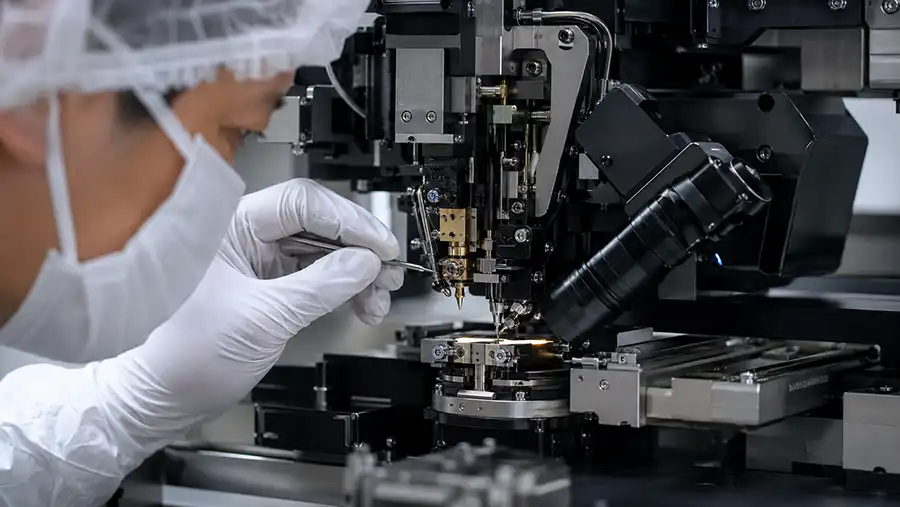
8. Match Looping Capability to the Target Package
Looping is not a generic machine setting. The target loop profile depends on wire material, wire diameter, capillary geometry, die-to-lead distance, loop height, span, package architecture, clearance requirements and later process conditions.
Ask whether the machine can demonstrate a repeatable loop profile relevant to the proposed package. A previous recipe may be useful as a reference, but it should not be treated as proof that the same settings will work for a different die, substrate or leadframe design.
9. Review Controller, Software, Recipes and Backups
A used wire bonder can be mechanically functional while still carrying high recovery risk if the controller, PC, software, recipe files, option status or backup environment is unclear.
Request information about the industrial PC, software version, controller generation, enabled options, available recipes, backup files, recovery media, machine parameters, alarm history and documentation. These items become important during installation, troubleshooting and future engineering changes.
10. Ask What “Refurbished” Actually Includes
The term refurbished can mean anything from exterior cleaning to a documented process of mechanical inspection, component replacement, bond head recovery, motion calibration, software restoration, safety testing and functional validation.
Ask for a written refurbishment scope. It should identify what was inspected, repaired, replaced, calibrated and tested, as well as what remains outside the supplier scope.
11. Define a Meaningful Factory Acceptance Test
A useful FAT should prove more than machine initialization and empty-axis movement. It should be agreed before shipment and should reflect the quoted machine configuration, included tools and intended package route.
| FAT Area | What Should Be Verified |
|---|---|
| Machine Identity | Model, serial number, installed heads, workholders, accessories and included tools match the quotation. |
| Safety and Initialization | Power-up, emergency stops, safety doors, alarms, interlocks and machine initialization sequence. |
| Bond Head Operation | Axis homing, bond head movement, capillary holder stability, tool mounting and basic recovery behavior. |
| Wire Feed and EFO | Wire threading, clamp operation, tail control, free-air ball formation and repeatable cycle behavior. |
| Vision and Alignment | Camera image quality, illumination, reference recognition and basic alignment function. |
| Package Handling | Included workholders, heater stages, clamps, carrier tools or fixture modules under an agreed sequence. |
| Software and Handover | Controller access, software status, recipe availability, backup files, documentation and final configuration list. |
12. Plan Spares, Installation and Process Support
Used wire bonding equipment should be purchased with a support plan. This should include capillaries, common wear parts, wire clamps, EFO-related components, workholder items, controller support, software recovery, process setup ownership and post-installation troubleshooting.
The purchase price is only one part of the project cost. Capillary tools, fixtures, spare parts, shipping, installation, setup, qualification samples and engineering time can materially affect the real project budget.
Documents to Request Before Paying a Deposit
Machine serial number and nameplate photos
Exact installed configuration list
Bond head, capillary holder and tool inventory
Wire feed, clamp and EFO system information
Workholder, heater and fixture inventory
Vision package and camera configuration details
Controller, PC, software and backup status
Refurbishment or maintenance records where available
FAT proposal and acceptance criteria
Packing, shipment, installation and support scope
7 Red Flags When Buying a Used ASM AERO Wire Bonder
No serial number or unclear machine identity.
AERO model name is stated, but no installed configuration list is available.
No capillary, workholder or package fixture inventory is provided.
No wire-feed, clamp or tail-control test can be demonstrated.
Only an empty movement video is available.
No recipe backup, controller recovery information or technical documentation is included.
The FAT does not include FAB formation, first bond, second bond or loop verification.
Final Buying Recommendation
A used ASM AERO wire bonder can be a practical investment when the actual machine configuration matches the intended package route and the project includes a documented tooling, software, inspection and FAT plan.
Before approving payment or shipment, verify the machine identity, bond head, capillary interface, wire-feed condition, EFO system, workholder, vision package, controller status, refurbishment scope and acceptance-test criteria. This helps reduce the risk of purchasing a suitable platform family with an unsuitable installed configuration.
Related ASM Wire Bonder Resources
Frequently Asked Questions About Buying a Used ASM AERO Wire Bonder
Are all ASM AERO wire bonders configured the same way?
No. AERO-family systems can differ in bond head configuration, capillary holder, wire-feed hardware, workholders, heater setup, vision package, automation options, controller generation and software configuration.
What should be checked first on a used ASM AERO wire bonder?
Start with the exact machine model, serial number, bond head configuration, capillary interface, included workholders, wire-feed condition, controller status and available documentation.
Why are capillary tools important for wire bonding?
Capillaries influence ball formation, first bond, second bond, loop behavior and overall package compatibility. Their geometry and condition must match the wire material, wire diameter and target package route.
Is a machine power-on video enough before buying a wire bonder?
No. A power-on video can show basic movement, but it does not confirm FAB formation, wire feed, capillary compatibility, bonding behavior, looping capability, vision alignment or software recovery.
What should an ASM AERO wire bonder FAT include?
A useful FAT should include machine identity verification, safety checks, bond head movement, capillary mounting, wire feed, clamp behavior, FAB formation, vision review, workholder verification, software status and a representative bonding sequence when suitable materials are available.
Can a used AERO machine run without original recipes?
It may be possible to develop new recipes, but project risk and qualification time increase when original software backups, machine parameters, setup data and process documentation are unavailable.
What is the biggest hidden cost in a used wire bonder project?
Common hidden costs include missing capillaries, fixtures, workholders, software recovery, controller repair, spare parts, installation, process setup, qualification materials and production delays.
How do I verify whether an AERO machine fits my package?
Provide the package drawing, die pad layout, leadframe or substrate details, wire material, wire diameter, target loop requirements, workholder conditions, expected output and available tooling information for configuration review.
Need an ASM AERO Wire Bonder Configuration Review?
Share available machine photos, serial information, package drawing, wire material, wire diameter, capillary details, workholder information, target loop profile and intended production conditions. A useful review starts with the actual bonding process and the physical configuration of the offered machine.